
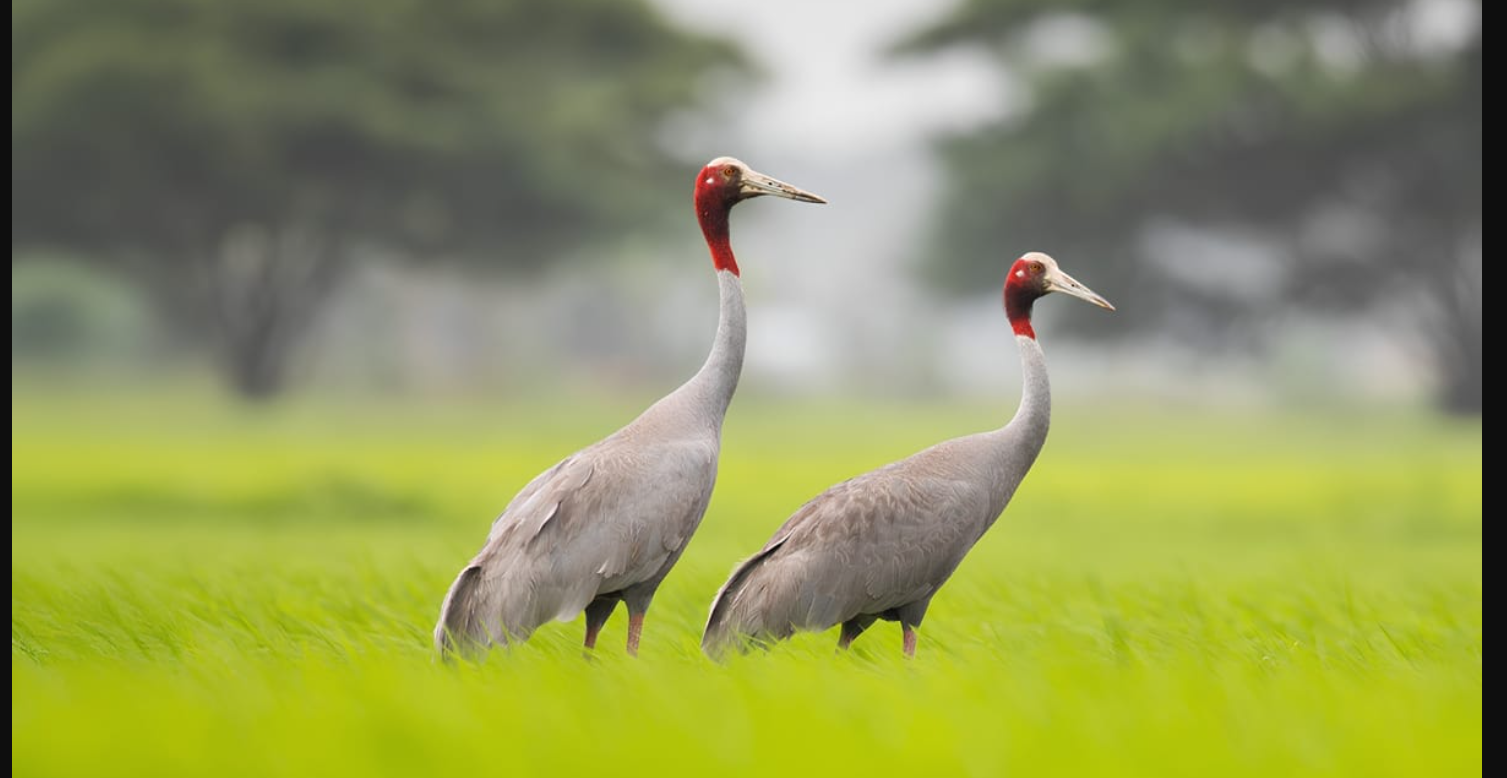

The Khyber Pakhtunkhwa Wildlife Department has allowed the live capture of Sarus cranes during the 2026 season. The season began on September 1 and will continue until October 15, according to an official statement.
The decision has placed the rare bird species under renewed attention, particularly amid previous concerns about large-scale hunting in Pakistan.
Under the department’s latest arrangement, 100 camps have been allocated across different districts of Khyber Pakhtunkhwa.
Each camp will receive permission to capture a maximum of 15 Sarus cranes during the season.
The arrangement sets a defined limit for each camp while allowing live capture to continue across designated areas.
Sarus Crane Capture Limited to the Allocated Quota
The wildlife authorities have set a total camp quota for the 2026 capture season across the province. However, the department has also placed restrictions on what hunters can capture during this period.
Hunters will not be allowed to catch other bird species while the Sarus crane capture season remains underway. This restriction specifically limits the activity to Sarus cranes within the permitted framework.
At the same time, the wildlife department has maintained a ban on hunting and capturing Sarus cranes in certain specified areas.
However, the department has not provided further details about the locations where capture will remain prohibited.
As a result, the exact boundaries of those restricted areas remain unclear from the available official information.
Conservation Concerns Surround Sarus Crane Hunting
The decision comes against a backdrop of concerns raised by wildlife conservationists over the large-scale hunting of Sarus cranes in Pakistan.
Conservationists have previously identified Khyber Pakhtunkhwa as the province where the birds face large-scale hunting.
Balochistan and Punjab have also been identified among the provinces where Sarus cranes are hunted.
The continuation of live capture therefore comes as conservation concerns remain part of the wider discussion surrounding the species.
The latest season has established specific quotas, but conservationists have previously warned about the pressure placed on Sarus crane populations.
Why the Sarus Crane Is So Distinctive
The Sarus crane is recognised as the world’s tallest flying bird, making it one of the most distinctive crane species.
Its striking appearance comes from its impressive height, long legs and characteristic physical features.
The species stands out because of its unusual size and graceful appearance compared with other birds.
Its distinctive nature has also made the Sarus crane a notable species within discussions about wildlife conservation in Pakistan.
However, concerns over hunting and capture continue to draw attention to the pressures faced by these birds.
KP Sets Rules for the 2026 Season
The 2026 Sarus crane capture season will remain open until October 15 after beginning on September 1.
During this period, the wildlife department has authorised 100 camps across different districts. Each camp can capture no more than 15 Sarus cranes under the allocated quota.
The department has also prohibited hunters from capturing other bird species during the season. Furthermore, Sarus crane hunting and capture will remain prohibited in certain specified locations.
The wildlife department has not yet disclosed the specific areas covered by that prohibition. For now, the rules establish the permitted period, camp allocation and capture limit for the 2026 season.
However, the lack of details about prohibited areas leaves an important part of the arrangement unspecified.
With Sarus crane hunting already drawing concern from conservationists, the latest decision has renewed attention on how the species will be managed during the season.

