

The World Meteorological Organization (WMO) warned that El Nino has an 80-percent chance of developing between June and August. It said the phenomenon may increase the risk of extreme global weather events.
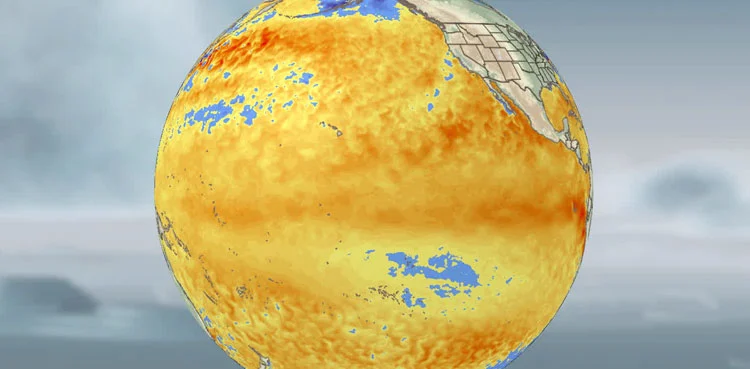
The UN weather agency said unusually warm waters in the tropical Pacific are driving the shift. As a result, global temperature and rainfall patterns may change significantly.
The WMO confirmed that global models show a strong transition toward El Nino conditions. Therefore, the probability reaches around 80 percent for the June to August period.
Understanding the El Nino pattern
El Nino is a natural climate event. It warms surface waters in the central and eastern Pacific Ocean. Consequently, it disrupts wind, pressure, and rainfall systems across the world.
The phenomenon usually occurs every two to seven years. It typically lasts between nine and twelve months. In contrast, La Nina represents the cooling phase of the cycle.
The WMO stated that the likelihood of El Nino developing by November may rise above 90 percent. It also warned that the event could range from moderate to strong intensity.
Climate risks and global impact
WMO chief Celeste Saulo said the world must prepare for stronger climate impacts. She explained that El Nino can intensify droughts, heavy rainfall, and heatwaves across land and oceans.
Additionally, the organization noted that even moderate El Nino events increase extreme weather risks. Past events contributed to record global temperatures in recent years.
The agency also reported above-normal sea surface temperatures in the Pacific. It said atmospheric indicators are already consistent with developing El Nino conditions.
UN Secretary-General Antonio Guterres called it an urgent climate warning. He urged stronger climate action, faster renewable energy transition, and improved early warning systems worldwide.
The WMO added that El Nino may reduce rainfall in South Asia and Africa while increasing heat conditions globally.

