
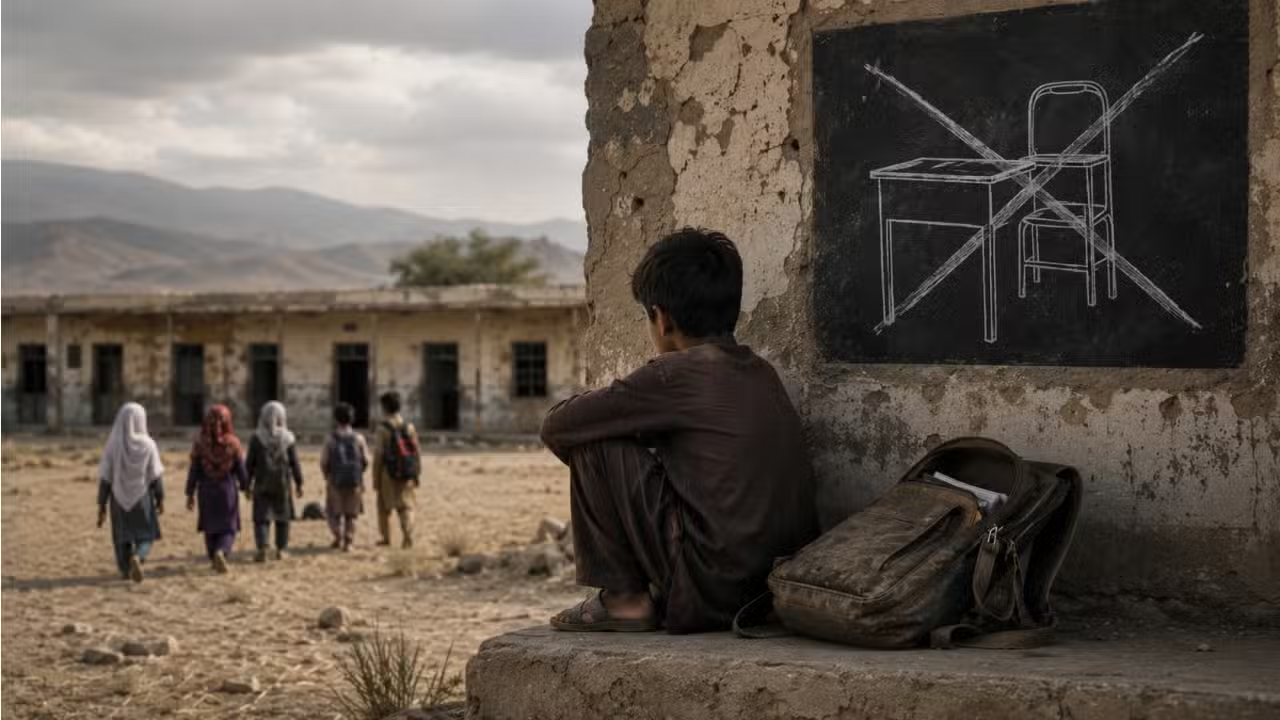

A hidden crisis continues to quietly devastate Pakistan’s future as over 25 million children remain completely locked out of the classroom. Despite the federal government declaring a high-profile national education emergency more than two years ago, a damning new policy report reveals that the entire initiative has failed to fix the broken system. The study exposes a grim reality where chronic underfunding, weak governance, fragmented policymaking, and poor implementation paralyze progress across the country.
This shocking stagnation stems directly from severe structural failures. The Civil Services Academy prepared a comparative policy review warning that while provinces designed ambitious roadmaps under the National Education Action Plan 2026, authorities consistently fail to translate these plans into actual results. Consequently, Pakistan now carries one of the world’s heaviest burdens of educational deprivation, openly violating the constitutional guarantee of free and compulsory education under Article 25-A.
Regionally, the crisis manifests in devastating ways. Punjab bears the heaviest load with over 9.6 million out-of-school children, while Sindh faces massive dropout rates and climate disruptions. Meanwhile, Khyber Pakhtunkhwa battles insecurity, and Balochistan struggles with vast distances and completely inactive schools.
The policy review concludes that political declarations alone will never solve this deep-rooted emergency. Instead, each province urgently requires decentralized governance, massive funding increases, and tailored infrastructure development to rescue these forgotten millions.

