
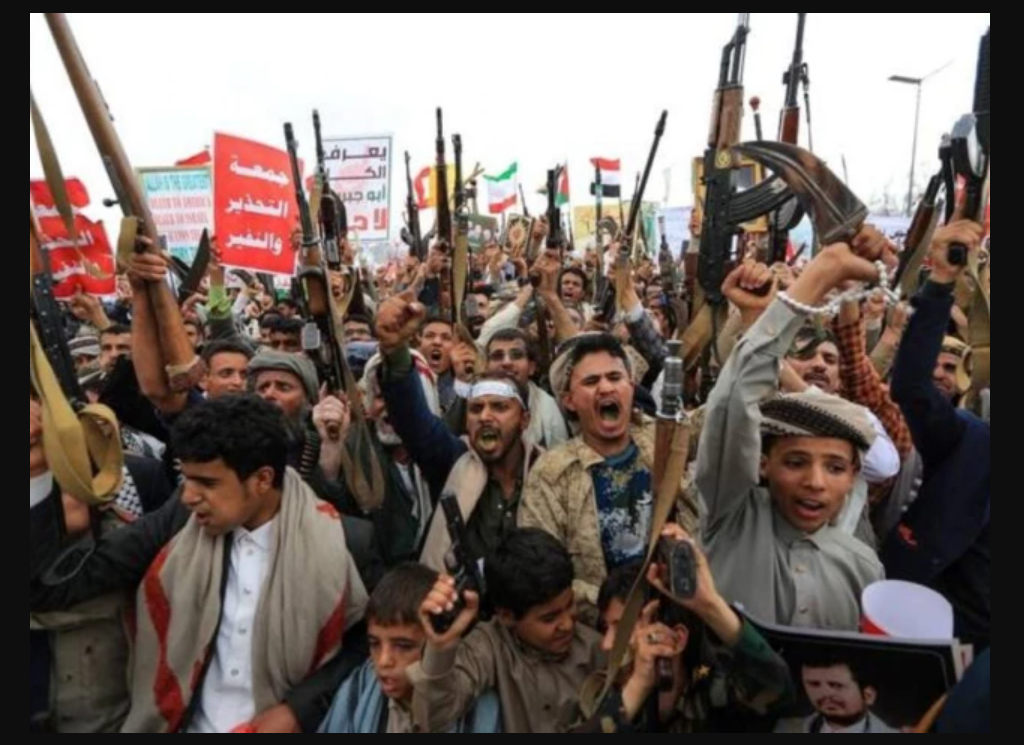

A series of Houthi missile and drone attacks killed at least 38 Yemeni government troops on Thursday, marking one of the deadliest days in the country’s conflict in recent years.
Medical sources reported that another 29 soldiers sustained injuries during the coordinated strikes. The attacks targeted multiple military positions across Yemen, highlighting the fragile security situation despite years of diplomatic efforts.
Military Camps Came Under Coordinated Attack
According to military officials, Houthi forces targeted a military camp in the Al-Ruwaik area of Marib province in central Yemen. In addition, attacks struck military camps in the Al-Abr and Al-Wadiah areas of Hadramawt, close to the Saudi border.
One of the deadliest strikes reportedly hit soldiers while they were assembled for their morning formation inside the Marib camp.
A military source said the missile strike was particularly devastating, “killing and wounding at least 45 personnel”.
Officials indicated that casualty figures could rise further as some injured troops remain in critical condition.
Conflict Continues to Escalate
Yemen has remained trapped in conflict for more than a decade. However, recent regional developments have intensified the situation.
Last month, Yemen became increasingly entangled in the broader confrontation involving the United States and Iran after the Iran-backed Houthi movement ended the relative calm established under the 2022 truce with the Saudi-backed government.
The Houthis later welcomed an Iranian aircraft into the capital, Sanaa. Subsequently, tensions escalated through reciprocal attacks.
The group also announced a maritime blockade targeting Saudi Arabia and later began attacking Saudi oil tankers.
Violence Persists Despite Earlier Truce
The latest attacks follow another deadly incident last month, when Houthi forces killed 16 government-aligned soldiers south of the port city of Hodeidah.
Although a United Nations-brokered truce in 2022 significantly reduced large-scale fighting, the agreement later expired.
Even so, much of the frontline fighting had remained relatively limited until recent weeks. Now, the renewed violence has raised concerns about another prolonged phase of conflict.
A Long-Running Humanitarian Crisis
The conflict began in 2014 after the Houthis seized Yemen’s capital, Sanaa, and expanded their control across much of northern Yemen.
Today, the group continues to control Sanaa and large parts of the country’s densely populated north. Meanwhile, the internationally recognised government maintains control over much of southern Yemen.
Over the past decade, the conflict has claimed hundreds of thousands of lives and created one of the world’s most severe humanitarian crises.
The latest missile and drone attacks underscore the continued volatility of the conflict. Furthermore, they highlight the growing challenges facing regional security as military confrontations intensify once again across Yemen.

