

Pakistan has reaffirmed its commitment to helping restore dialogue between the United States and Iran under the Islamabad Memorandum of Understanding (MoU).
The Foreign Office said the government is making every effort to bring both countries back to the negotiating table. At the same time, officials stressed that diplomacy remains the only practical path to easing tensions in the Middle East.
The remarks come as the regional security situation remains fragile despite a brief period of relative calm.
Pakistan Urges Return to Dialogue
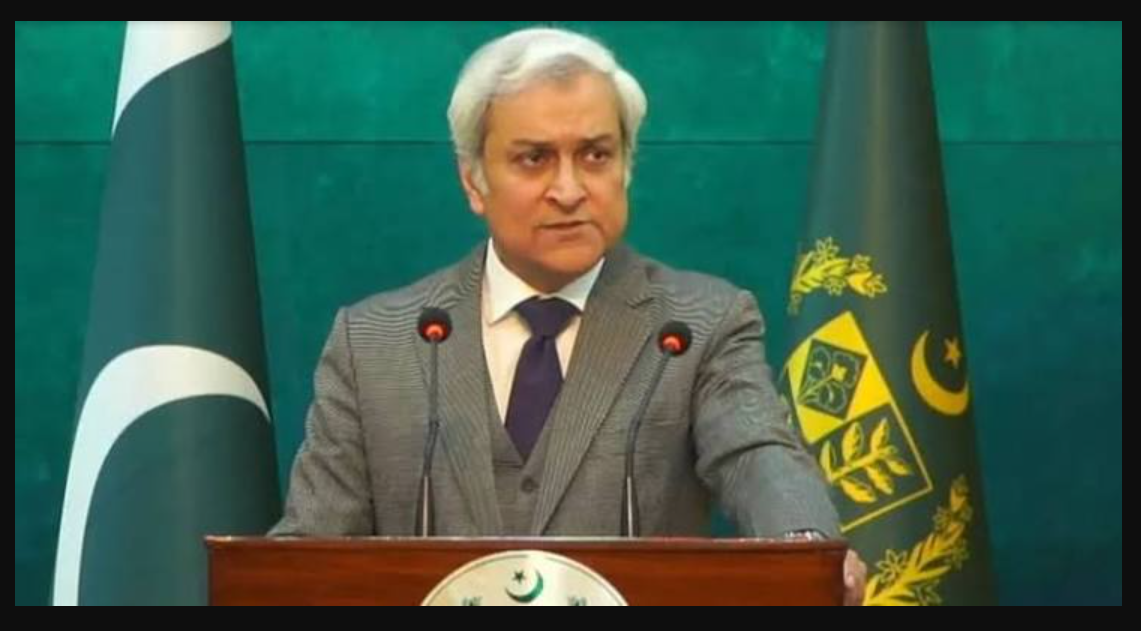
Speaking during a weekly media briefing, Foreign Office spokesperson Tahir Andrabi expressed concern over the latest developments in the Middle East.
He said the recent calm had created hope for a lasting ceasefire and renewed diplomatic engagement.
However, he warned that the regional security situation remains uncertain.
“We welcome all efforts aimed at sustaining cessation of hostilities and resumption of dialogue between Iran and the US,” he said.
He added that Pakistan remains actively engaged in efforts to support the diplomatic process.
Focus Remains on Islamabad MoU
According to Andrabi, negotiations between the concerned parties are continuing to restore stability.
“Let me add that the negotiations between parties are ongoing to normalise the situation, particularly the situation in the Strait of Hormuz, as well as to de-escalate,” he stated.
He further said Pakistan is doing its “utmost” to bring both countries back to the Islamabad MoU.
According to him, the objective is to resolve outstanding issues in line with the agreement and the Pakistan-Qatar joint statement issued on June 22.
The spokesperson also urged both Washington and Tehran to exercise “maximum restraint and fully adhere to their commitment to resume technical-level talks”.
Islamabad MoU and Rising Regional Tensions
The Islamabad MoU was signed on June 18 following weeks of diplomatic engagement.
The agreement sought to reopen the Strait of Hormuz and reduce tensions through continued negotiations.
However, hostilities resumed on July 7 after Iran targeted commercial shipping in the Strait of Hormuz, including a Qatari liquefied natural gas tanker.
Iran accused the United States of violating the understanding.
The incident triggered multiple rounds of US military strikes on Iranian targets.
Meanwhile, the conflict expanded further after the Houthis in Yemen imposed a naval blockade on Saudi Arabia, affecting another strategic maritime route.
On Wednesday, new attacks were reported across the region.
Explosions struck a natural gas loading port in Egypt, while a US-owned floating storage tanker was reportedly hit by a drone.
On the same day, the United States and Saudi Arabia carried out joint strikes against Iran-backed paramilitary groups in Iraq following attacks on US troops and Saudi oil facilities.
After nearly a week-long pause, the United States also launched fresh strikes on Iran in response to attacks on American bases in Jordan.
Pakistan Rejects DW Documentary
During the briefing, Tahir Andrabi also rejected a recently aired documentary concerning Pakistan’s nuclear programme.
He described the production as “nothing but a regurgitation of hackneyed and speculative commentary and biased sourcing”.
According to him, the documentary presents an inaccurate understanding of Pakistan’s nuclear programme and its historical development.
He also criticised the broadcaster for airing what he described as one-sided material.
“The documentary reflects either a profound misunderstanding of, or a deliberate disregard of the history, evolution and rationale of Pakistan’s nuclear programme,” he said.
Commenting further, Andrabi stated, “By lending a platform to such poorly-sourced and one-sided content, DW risks undermining its own credibility and reputation for professional fact-finding journalism.”
He added, “Responsible journalism demands rigorous verification, balanced context, not amplification of recycled conjecture and unfounded insinuations.”

