
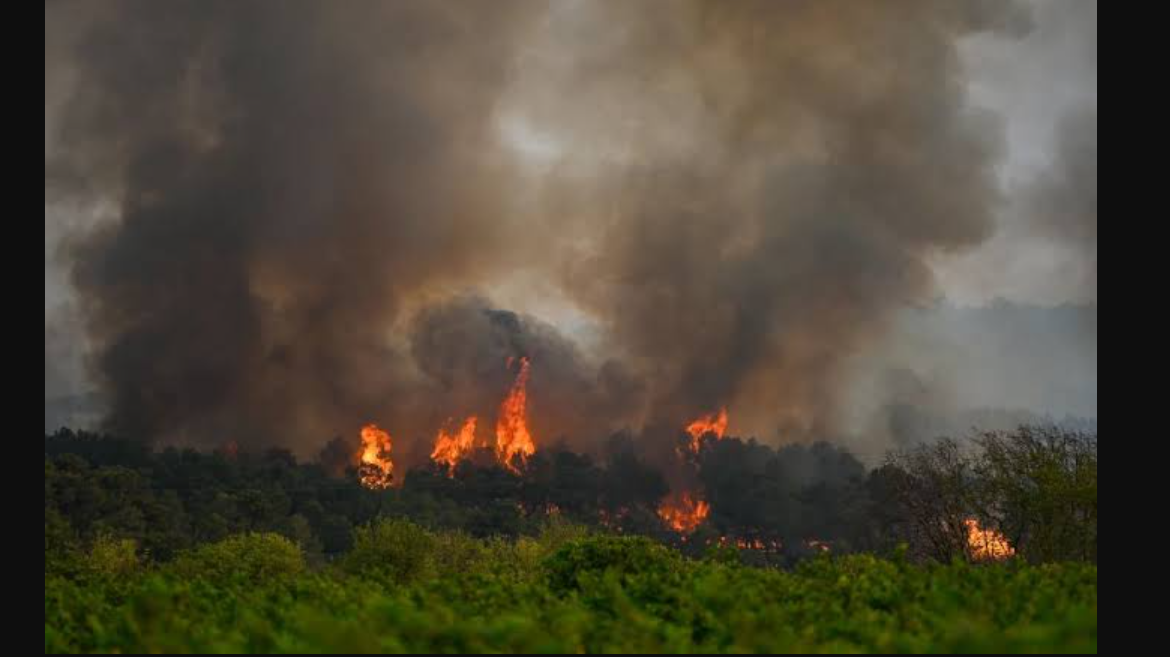

Increasingly intense wildfires and heat waves could threaten global efforts to improve air quality. They could also create greater risks for human health.
The World Meteorological Organisation (WMO) raised the warning in its annual report on air quality and climate. The agency said climate change is making international air quality targets harder to achieve.
According to the report, air pollution and climate change remain closely connected. Therefore, governments should address both challenges through coordinated policies.
The WMO warned that meeting the World Health Organization’s air quality guidelines could become increasingly difficult. Extreme wildfires are expected to become more likely as the climate continues to warm.
Wildfires becoming a major pollution source
Wildfires are emerging as a growing source of harmful air pollution. This trend comes despite stricter regulations that have reduced industrial and transport emissions in many developed countries.
Smoke from major fires can travel long distances. As a result, even areas with relatively clean air can experience deteriorating air quality.
“No matter how clean your city or your region is … if you have a lot of pollution brought about by wildfires, that has the potential to negatively impact air quality in those regions as well,” Lorenzo Labrador, scientific officer at the WMO, told Reuters.
The warning highlights how wildfire smoke can affect communities far from the original fire. Therefore, improving local emissions controls alone may not always protect air quality.
PM2.5 and ozone pose health risks
The report highlights the growing impact of fine particulate matter, known as PM2.5. It also identifies ground-level ozone as a major air pollutant.
Both pollutants have been linked to respiratory and cardiovascular diseases. Consequently, rising concentrations can create serious risks for public health.
Wildfire smoke can contain a complex mixture of harmful substances. Fine particles can also travel deep into the respiratory system when people breathe polluted air.
Labrador said wildfire particulate matter is particularly harmful because it contains a range of toxic chemicals. He also explained that inhalation can trigger inflammation throughout the body.
According to Labrador, that inflammation can contribute to pulmonary disease. Therefore, prolonged exposure to wildfire smoke can pose risks beyond temporary breathing difficulties.
WMO calls for better pollution monitoring
The WMO also called for improved monitoring of pollutants and aerosols in the atmosphere.
The agency specifically highlighted black carbon and microplastics. It said these substances remain poorly tracked despite their widespread presence in the atmosphere.
Better monitoring could help scientists understand how pollution changes across regions. It could also improve assessments of the health and environmental effects of atmospheric pollutants.
Meanwhile, climate change continues to influence conditions that support extreme heat and wildfire activity. This connection makes coordinated monitoring increasingly important.
Extreme heat and wildfires intensify
This year has brought extreme heat and destructive wildfires across several parts of Europe. Spain, France and Greece have experienced severe wildfire activity.
The WMO has previously warned that extreme heat is becoming more frequent. It is also becoming more intense and lasting longer as global temperatures rise.
The latest report further highlights the relationship between heat, fires and air pollution. Hot and dry conditions can increase wildfire risks and worsen smoke pollution.
Therefore, communities facing extreme heat may also need to prepare for worsening air quality. The combination can create additional pressure on public health systems.
Canada, Russia and Africa recorded higher PM2.5 levels
The WMO report found that PM2.5 concentrations during 2025 exceeded long-term averages in several regions.
Northern Canada recorded higher concentrations amid increased fire activity. Parts of Russia and western-central Africa also experienced elevated PM2.5 levels.
Northwestern Spain emerged as another hotspot. The region experienced exceptional late-summer fires that contributed to higher pollution levels.
These findings demonstrate how wildfire activity can influence air quality across different parts of the world. They also highlight the broader environmental effects of increasingly intense fires.
Extreme fire-smoke events have tripled
The report cited a study that found extreme fire-smoke events have tripled globally since the 1990s.
The study also estimated that these events may have contributed to nearly 100,000 additional deaths annually between 2010 and 2018.
The figures underline the potential human cost of increasing exposure to wildfire smoke. However, the effects vary depending on exposure levels, local conditions and population vulnerability.
Fine particulate pollution remains a particular concern because of its ability to enter the human respiratory system.
Labrador stressed that wildfire particles can contain numerous toxic chemicals. Once inhaled, these particles can contribute to inflammation throughout the body.
That inflammation can affect the lungs and potentially contribute to pulmonary disease. Therefore, wildfire smoke remains an important public health concern.
Climate change complicates air quality efforts
The WMO’s findings show why climate policy and air quality policy cannot be treated separately.
Efforts to reduce pollution from industry and transport have improved air quality in many developed countries. However, increasingly intense wildfires can undermine some of those gains.
At the same time, extreme heat can create conditions that increase wildfire risks. Consequently, climate change can make it harder for countries to maintain progress toward cleaner air.
The WMO has urged stronger coordination between climate and air quality policies. Improved monitoring will also remain important as wildfire smoke becomes a growing source of pollution.
For communities, the challenge is becoming increasingly clear. Cleaner air will require action against both traditional pollution sources and climate-driven pollution events.
As extreme heat and wildfires intensify, protecting air quality could become more difficult. The latest WMO warning highlights the growing need to address these threats together.

