
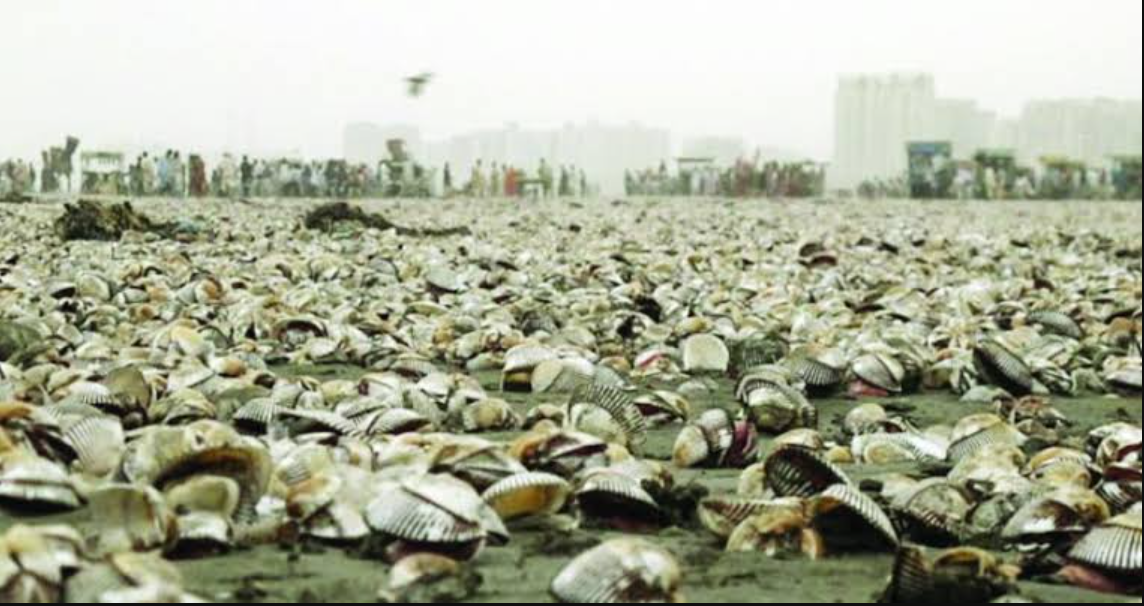

Thousands of seashells have appeared along Karachi’s Clifton Beach, drawing the attention of visitors and residents alike.
The unusual sight has sparked curiosity among beachgoers. However, marine experts say the phenomenon is a natural occurrence linked to seasonal weather conditions.
According to experts, stronger monsoon waves and changing ocean currents have carried large numbers of shells onto the shoreline.
As a result, Clifton Beach has become covered with shells, creating a striking scene for people visiting the coast.
Monsoon Waves Behind the Shell Wash-Up
Marine experts explain that seashells commonly wash ashore when natural ocean currents, tidal movements, and storm surges carry discarded or dead mollusk shells toward the coastline.
In Karachi, large-scale shell washups along Clifton Beach and Hawke’s Bay often occur during periods of intense monsoon activity.
Additionally, severe heatwaves and seasonal shifts in wind patterns can contribute to the movement of shells from deeper waters to the shore.
These natural processes become more noticeable during the monsoon season because stronger waves transport greater numbers of shells onto beaches.
Experts Identify the Shell Species
According to WWF technical adviser Moazzam Khan, the shells appearing along Clifton Beach are known as blood cockles.
He explained that their distinctive reddish colour comes from the presence of haemoglobin. Furthermore, he said blood cockles are considered a delicacy in several countries around the world.
However, he strongly advised people not to consume shells collected from Karachi’s beaches. He warned that marine pollution may contaminate the shellfish, making them potentially harmful to human health.
Marine Pollution Raises Environmental Concerns
Alongside the seashells, large amounts of plastic waste and other garbage have also washed onto the beach.
According to Moazzam Khan, this waste contributes to unpleasant odours and creates additional environmental problems along the coastline.
He noted that pollution continues to threaten Karachi’s marine ecosystem.
Moreover, he said increasing human activities are reducing aquatic life in the sea and causing long-term environmental damage.
Consequently, experts believe protecting coastal waters is becoming increasingly important for preserving marine biodiversity.
Natural Phenomenon Highlights Growing Environmental Challenges
Although the appearance of thousands of seashells is a natural seasonal event, it also highlights broader environmental concerns affecting Karachi’s coastline.
Stronger monsoon waves continue to transport shells to the shore every year.
However, the presence of plastic waste alongside them serves as a reminder of the growing impact of pollution on marine habitats.
Experts continue to encourage the public to appreciate the natural phenomenon while avoiding the consumption of shellfish collected from polluted coastal areas.
They also stress the importance of reducing marine pollution to protect Karachi’s beaches and preserve the health of its marine ecosystem for future generations.

