

Gulf states have backed an Omani proposal that could allow Iran to collect voluntary fees from ships using the Strait of Hormuz. The proposal aims to reduce tensions and restore confidence in one of the world’s busiest energy corridors.
The plan comes as diplomatic efforts continue following the suspension of recent US airstrikes on Iran. At the same time, uncertainty remains over future negotiations between Washington and Tehran.
Gulf States Support Omani Proposal
According to the proposal, Iran would not have sole control over the Strait of Hormuz. Instead, the waterway would operate under a regional mechanism supported by Gulf countries.
The suggested system would allow ships to make voluntary contributions rather than mandatory payments. Those funds would support navigation, environmental protection and search-and-rescue operations.
The proposal follows a model similar to the Strait of Malacca, where users voluntarily contribute to maintaining the waterway instead of paying compulsory transit fees.
If implemented, the mechanism could provide a regional solution while addressing concerns over navigation through the strategically important strait.
Strait of Hormuz Remains a Global Energy Lifeline
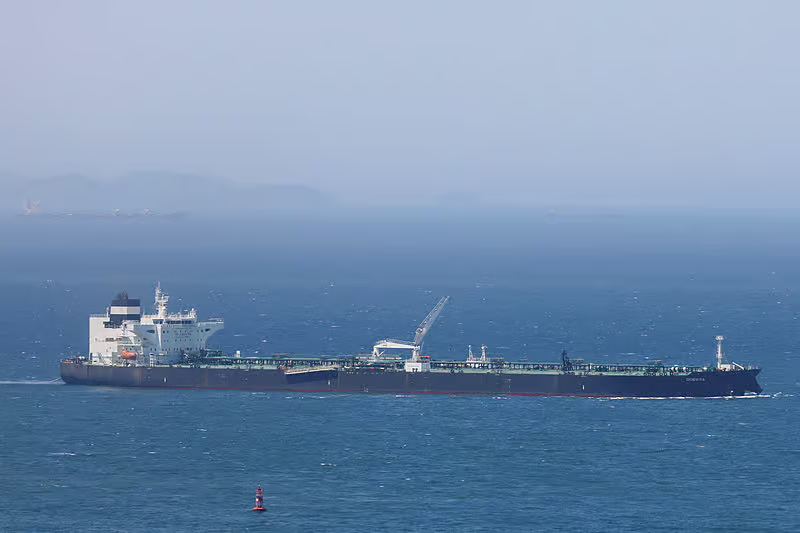
The Strait of Hormuz remains one of the world’s most important maritime routes. Before the conflict, nearly one-fifth of global oil and liquefied natural gas shipments passed through the narrow waterway.
The latest proposal follows months of disruption caused by the conflict involving the United States, Israel and Iran.
Iran had restricted maritime traffic after military operations began earlier this year. Although an agreement partially reopened the route, that arrangement later collapsed following renewed tensions.
Iran has maintained that it wants to manage the strait jointly with Oman while introducing service fees. However, Washington continues to oppose mandatory charges, arguing that international shipping should move freely without compulsory payments.
Trump Signals Diplomacy but Issues Warning
US President Donald Trump said negotiations with Iran were making progress. However, he also warned that military action could resume if diplomacy failed.
“I think there’s a good chance that something could happen, and if it does, good, if it doesn’t, we go back to doing what we were doing two days ago.”
Despite Trump’s remarks, Iran has stated that it has not sought new negotiations with the United States. Tehran argues that Washington violated the framework agreed upon last month for future talks.
Meanwhile, Trump is expected to meet Israeli Prime Minister Benjamin Netanyahu in Washington as discussions over regional security continue.
Regional Diplomacy Continues
Iranian Foreign Minister Abbas Araqchi discussed developments surrounding the Strait of Hormuz with his Omani and Saudi counterparts.
According to Iran’s Foreign Ministry, he stressed “the need to strengthen cooperation and advance joint diplomatic efforts to establish stability in the region, and lift the insecurity imposed on the Strait of Hormuz due to the aggressive actions of the United States.”
The discussions highlight growing regional efforts to prevent further escalation while keeping one of the world’s busiest shipping routes operational.
Oil Prices Extend Decline
Oil markets reacted positively after the United States suspended its air campaign over the weekend.
Brent crude prices continued to decline following the announcement, extending earlier losses as investors hoped diplomacy could prevent further disruption to global energy supplies.
Market sentiment also improved because traders expect uninterrupted shipping if negotiations continue.
Key Differences Still Remain
Although diplomatic engagement has resumed, major disagreements continue.
Washington insists that the previous framework requires unrestricted passage through the Strait of Hormuz. Iran, however, argues that the agreement allows it to supervise transit through the strategic waterway.
Consequently, negotiations remain sensitive despite renewed diplomatic contacts.
The proposed regional mechanism now offers a possible compromise. Whether all parties ultimately accept the arrangement will likely determine the future stability of one of the world’s most critical maritime trade routes.

