
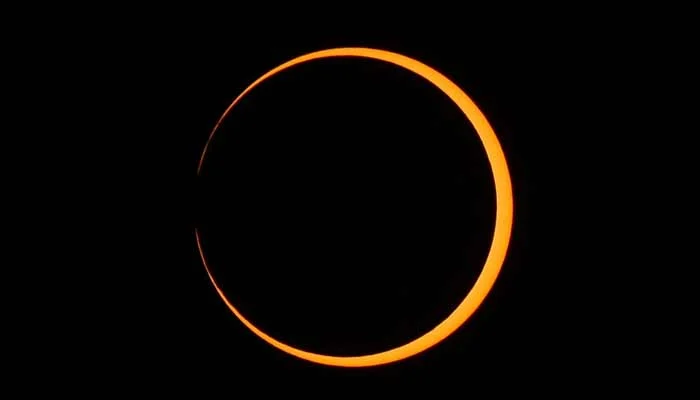

Northern Spain is preparing for a remarkable celestial event on August 12, 2026. The Moon will move directly across the Sun, briefly turning daylight into darkness. The total solar eclipse will create a narrow path of darkness across several regions. For people inside this path, the Moon will completely block the Sun for a short period. The event will also mark the first total solar eclipse visible from mainland Europe since 2006.
What Happens During a Total Solar Eclipse?
A solar eclipse occurs when the Moon passes between the Sun and Earth. As a result, the Moon casts its shadow across part of the planet.
During totality, daytime conditions can change dramatically. Temperatures may fall, while shadows can appear unusual.
Some animals may also respond to the sudden darkness by behaving as though night has arrived.
Ancient civilizations often viewed these unusual changes as supernatural signs. However, scientists describe the phenomenon as a remarkable cosmic coincidence.
The Sun is roughly 400 times wider than the Moon. At the same time, it is also around 400 times farther away from Earth.
Therefore, the two objects can appear almost identical in size from Earth. This alignment allows the Moon to cover the Sun completely and reveal its outer atmosphere, known as the corona.
Where Will the Eclipse Be Visible?
The eclipse will first reach totality in a remote area of northern Russia on August 12.
Afterward, its path will cross Greenland and Iceland before reaching Spain. It will then pass through the northeastern tip of Portugal.
In Spain, the path will broadly extend from Oviedo toward Mallorca. Several areas along the route have also experienced severe wildfires in recent years.
Scientists have linked the increasing likelihood of extreme fires to human-driven climate change.
Beyond the path of totality, a partial eclipse will be visible across much of Europe. Parts of Canada, the northern United States and northwest Africa will also see the partial phase.
How Long Will the Eclipse Last?
The total eclipse will be relatively brief for viewers in Spain. Totality will occur shortly before sunset and will last less than two minutes.
For example, observers in Burgos will experience approximately one minute and 48 seconds of darkness.
The total phase will last slightly longer across parts of Russia and Greenland. Even there, however, totality will remain under two-and-a-half minutes.
The partial eclipse will provide a much longer viewing period. Its beginning and ending phases will continue for around one hour and 45 minutes.
When Will Another Total Eclipse Reach Spain?
Total solar eclipses happen roughly once or twice worldwide each year. However, their narrow paths make them rare experiences for specific locations.
A particular region may wait centuries before witnessing totality again.
Spain will not have to wait that long. Another total solar eclipse will cross southern Spain on August 2, 2027.
The 2027 eclipse will also pass across northern Africa and the Arabian Peninsula. Totality will last up to six minutes and 23 seconds.
A longer total eclipse will not occur until 2114.
Spain will experience another major eclipse on January 26, 2028. That event will be an annular eclipse, creating the famous “ring of fire” effect.
How to Watch the Solar Eclipse Safely
Watching a solar eclipse requires proper eye protection. Looking directly at the Sun can cause severe and permanent eye damage. Regular sunglasses cannot provide sufficient protection. Instead, viewers should use specially designed eclipse glasses. Experts recommend products that filter ultraviolet radiation and meet the ISO 12312-2:2015 safety standard.
Importantly, eye damage may not cause immediate pain. Human eyes lack pain receptors that can alert the brain during the injury. Therefore, damage may only become noticeable later. The safest approach is simple: use certified eclipse glasses and never look directly at the Sun without appropriate protection.
The August 12 eclipse promises a spectacular moment for viewers along its narrow path. However, the event should be enjoyed with safety as the first priority.
With totality lasting only minutes, preparation will help observers experience the rare darkness without risking their eyesight.

