
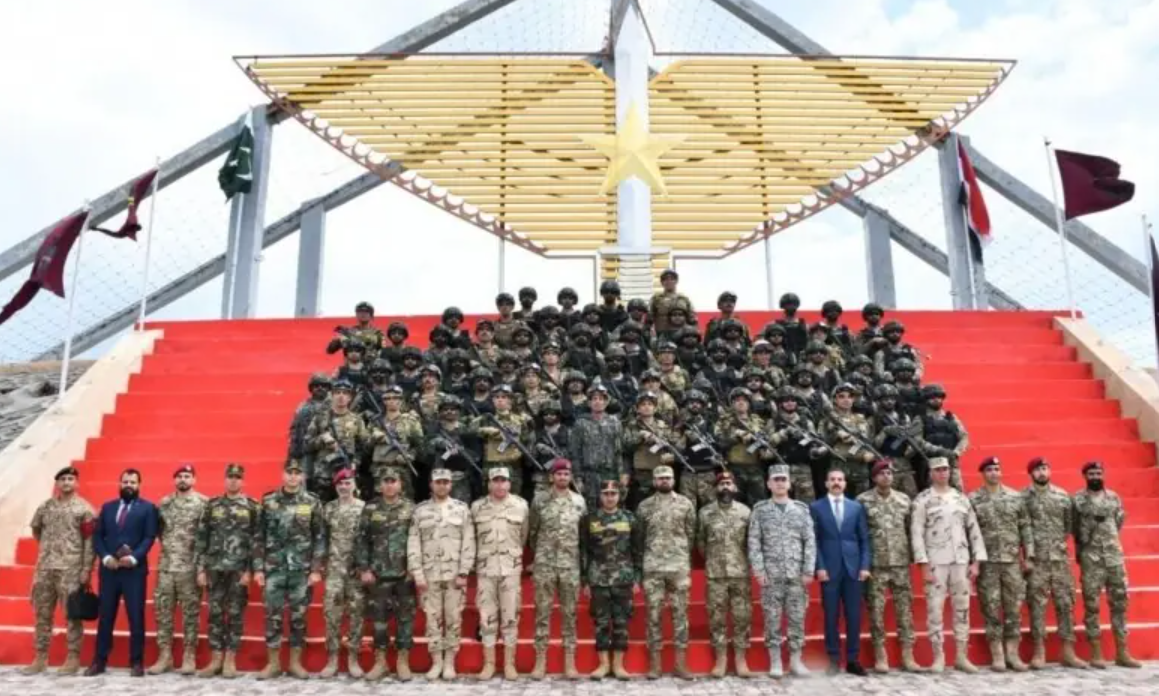

Pakistan and Egypt have successfully concluded a two-week-long counterterrorism exercise. The joint drill, named Thunder-II, took place in Cherat, Khyber Pakhtunkhwa. This location hosts the military’s premier Special Operations School.
The exercise brought together elite forces from both countries. It focused on strengthening coordination and operational efficiency. As a result, both sides gained valuable experience in joint counterterrorism strategies.
Focus on Interoperability and Combat Readiness
The primary aim of Thunder-II was to enhance interoperability between the two militaries. Participants worked on refining drills, procedures, and tactical techniques. These efforts targeted improved performance during real-world counterterrorism operations.
“[The] two-week-long exercise was designed to enhance interoperability by refining drills, procedures, and techniques related to counterterrorism operations through joint training,” ISPR said.
Moreover, the training emphasized teamwork and rapid response capabilities. Soldiers practiced coordinated missions under simulated high-risk conditions. Consequently, both forces improved their readiness for complex security challenges.
Elite Forces Showcase Skills and Professionalism
Specialized combat units played a central role in the exercise. Troops from Pakistan Army’s Special Services Group and Egyptian Special Forces actively participated. Their involvement ensured high-level tactical engagement throughout the drill.
The participants demonstrated strong discipline and operational expertise. Observers noted their ability to adapt quickly during challenging scenarios. Therefore, the exercise highlighted the professionalism of both forces.
The military’s media wing stated that participants displayed “exceptional professionalism and operational skill throughout the exercise”.
High-Level Attendance at Closing Ceremony
Senior military officials attended the closing ceremony in Cherat. The event marked the successful completion of the joint training program. It also reflected the importance both nations attach to defence cooperation.
Among those present were senior commanders from both sides. Their participation underscored the strategic value of the exercise. Additionally, the ceremony celebrated the achievements of all participants.
Strengthening Longstanding Military Relations
Thunder-II also served a broader diplomatic purpose. It reinforced the longstanding military relationship between Pakistan and Egypt. Both countries have maintained close defence ties over the years.
“The exercise also served to further strengthen the longstanding and historic military-to-military relations between the two friendly nations,” ISPR added.
Furthermore, such exercises build trust and mutual understanding. They create opportunities for future collaboration in security and defence sectors.
Continued Commitment to Defence Cooperation
Pakistan and Egypt continue to expand their defence partnership. Recent high-level meetings have emphasized the importance of military cooperation. Leaders from both countries have expressed commitment to strengthening these ties.
Joint exercises like Thunder-II play a crucial role in this process. They not only improve operational skills but also deepen strategic alignment. As a result, both nations remain better prepared to tackle evolving security threats.
Conclusion
The successful completion of Thunder-II highlights growing defence cooperation between Pakistan and Egypt. Through joint training and shared expertise, both countries have enhanced their counterterrorism capabilities. This partnership is expected to strengthen further in the coming years.

