
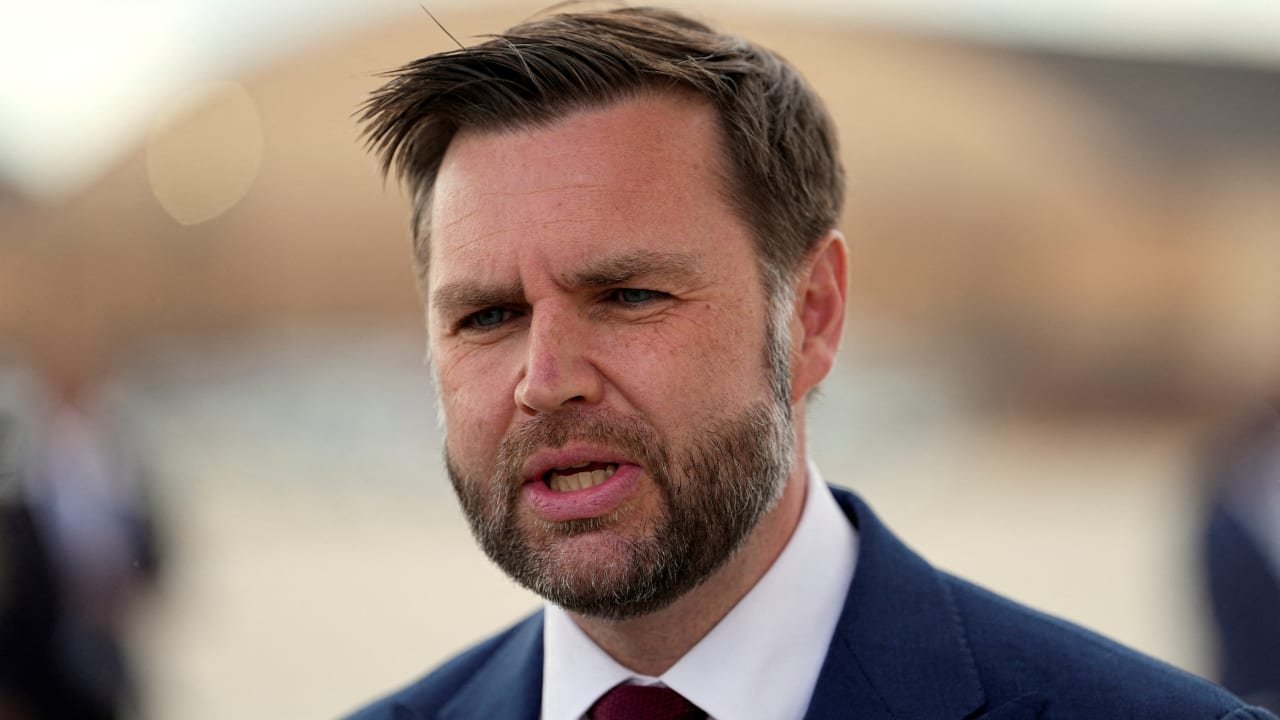

Vice President Highlights Uranium Removal and Economic Incentives
WASHINGTON: US Vice President JD Vance defended the recently announced US-Iran memorandum of understanding (MoU), saying the agreement is designed to ensure Iran abandons its nuclear ambitions while gaining access to economic opportunities and international investment.
Speaking in an interview with CBS News on Monday, Vance said Washington wants Iran to operate as a “normal country” and benefit from improved economic conditions if it complies with the commitments outlined in the agreement.
According to Vance, one of the most significant provisions focuses on Iran’s stockpile of enriched uranium. He stated that the material would be eliminated under the supervision of the International Atomic Energy Agency (IAEA) and the United States.
Furthermore, he stressed that the agreement seeks a long-term commitment from Tehran not to pursue nuclear weapons development. In return, Iran could gain economic benefits and improved international engagement.
Vance Rejects Comparisons with Obama-Era Nuclear Accord
During the interview, Vance dismissed comparisons between the new framework and the 2015 Joint Comprehensive Plan of Action (JCPOA), negotiated during the administration of former US President Barack Obama.
Responding to comments from Obama suggesting the new arrangement would closely resemble the earlier accord, Vance argued that the situations are fundamentally different.
He maintained that the previous agreement merely paused Iran’s nuclear programme, whereas the current framework seeks to permanently prevent its reconstruction. Vance said the Trump administration’s approach focuses on ensuring that Iran cannot rebuild its nuclear capabilities in the future.
Regional Support and Israeli Concerns Addressed
Meanwhile, Vance said several Gulf countries have welcomed the agreement, arguing that it could promote greater stability and economic prosperity across the Middle East.
Addressing concerns regarding Israel’s role in the process, he acknowledged that allies may occasionally disagree on policy matters. However, he expressed confidence that the agreement would ultimately strengthen regional security and contribute to a safer environment for Israel and its neighbours.
The vice president added that discussions with regional partners would continue as the agreement moves toward implementation.

