
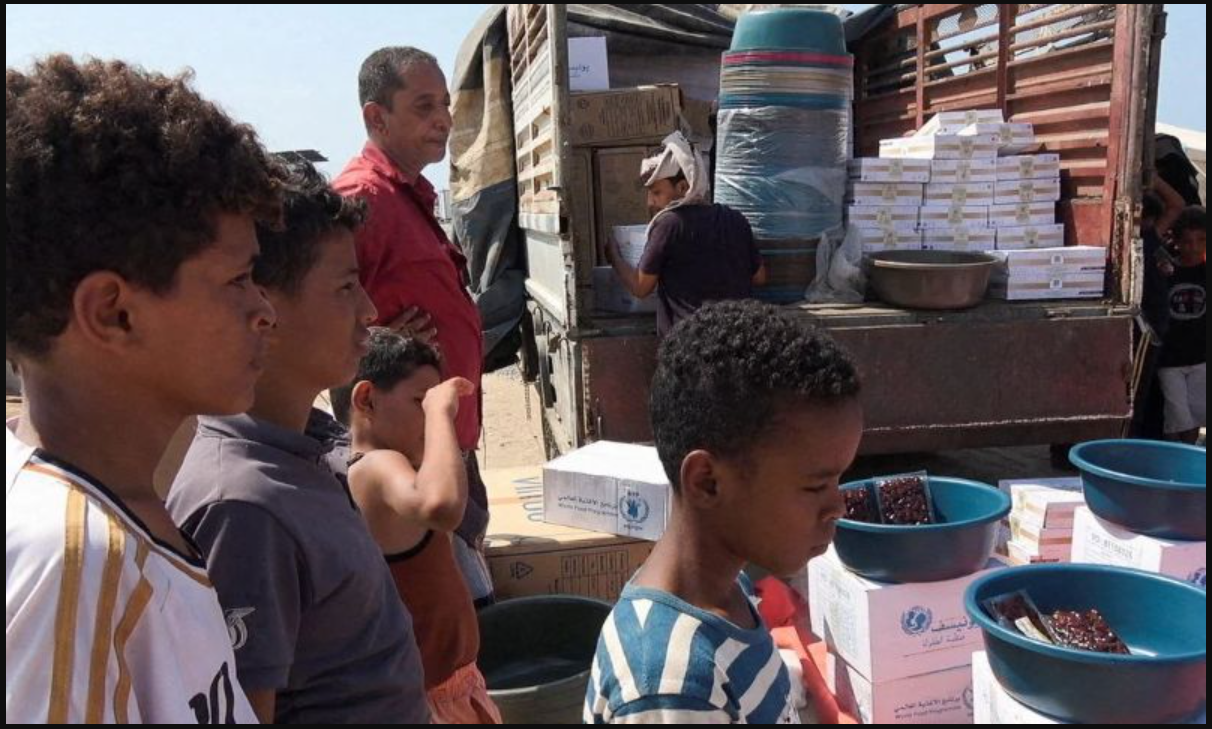

Millions of vulnerable people could lose access to essential food assistance as conflicts disrupt international grain shipments and humanitarian supply routes. The World Food Programme (WFP) has warned that growing shipping difficulties could increase its operational costs by $727 million by mid-2027.
The additional expenses could threaten food assistance for another 7.3 million people worldwide. WFP Executive Director Luke Lindberg raised the alarm on Monday, highlighting the consequences of conflicts in the Middle East and Ukraine.
He warned that disruptions across major maritime routes could deepen the global food crisis. Moreover, climate-related challenges, including El Niño, are adding further pressure on already vulnerable food systems.
Shipping Disruptions Threaten Global Food Supplies
Lindberg told the United Nations Security Council that restrictions affecting food exports and agricultural supplies were creating serious concerns. The disruptions involve three important maritime routes: the Strait of Hormuz, the Bab el-Mandeb Strait and the Black Sea.
These waterways play a significant role in international food and agricultural supply chains. However, ongoing conflicts and maritime insecurity have made transporting essential commodities increasingly difficult.
The WFP chief called for renewed diplomatic efforts to protect humanitarian shipments of Ukrainian and Russian grain through the Black Sea. He also urged international representatives to consider arrangements similar to the UN-brokered Black Sea Grain Initiative.
“It’s an unthinkable scenario, and it could not come at a worse time,” Lindberg said.
He urged diplomats to find rapid solutions to ensure that approximately 10 million tons of Ukrainian and Russian grain stored in silos reach people facing hunger.
266 Million People Already Facing Acute Hunger
The warning comes as food insecurity continues to affect millions across the world. According to Lindberg, approximately 266 million people are already experiencing acute hunger.
Furthermore, parts of Sudan, South Sudan and Somalia face the risk of famine. These countries remain particularly vulnerable to disruptions in international food supplies.
Lindberg also highlighted the importance of Black Sea grain exports for countries such as Somalia and Yemen. Both countries import approximately 90 per cent of their food, making reliable international supply routes particularly important.
He said resolving the Black Sea shipping situation remained critical because the region serves as one of the world’s major grain-producing areas.
WFP Calls for Revival of Black Sea Grain Initiative
Lindberg urged diplomats to consider restoring a humanitarian corridor similar to the Black Sea Grain Initiative. The UN-brokered agreement, reached in July 2022, enabled the safe export of nearly 33 million metric tons of Ukrainian grain.
However, Russia withdrew from the agreement in 2023, arguing that obstacles were affecting its food and fertiliser exports.
Lindberg said any renewed arrangement would need to accommodate both Russian and Ukrainian exports to secure acceptance.
“It’s untenable to have full grain silos in Ukraine and Poland and the region, and then you have empty stomachs in other parts of the world … If a diplomatic solution can be reached, we stand ready to move grain from both Russia and Ukraine,” he said.
Meanwhile, the movement of agricultural shipments through the Black Sea has declined considerably.
Lindberg said 63 per cent fewer wheat and maize vessels had passed through the Bosphorus by mid-October compared with the same period in 2025.
He also reported more than 300 attacks and at least 40 crew member deaths. Consequently, approximately 10 million tons of Russian and Ukrainian wheat could fail to reach global markets this year.
According to Lindberg, that quantity would be sufficient to feed approximately 44 million people.
Latvia Supports Renewed Efforts to Protect Grain Shipments
Latvian President Edgars Rinkevics expressed support for a possible new Black Sea initiative. His country currently holds the rotating presidency of the UN Security Council.
He said Latvia would support efforts to resume Ukrainian grain exports and strengthen maritime security. He also highlighted the severe challenges facing developing countries across Africa and Asia.
“If that is possible, we would be applauding such or any of the initiatives. Whether that’s going to happen or not remains to be seen. But some efforts are ongoing. Unfortunately, I don’t see momentum as we speak today,” he said.
His remarks highlighted the difficulties surrounding diplomatic efforts to restore safe maritime transportation.
Rising Food and Fertiliser Costs Add to Global Hunger Concerns
Shipping disruptions are also contributing to rising food prices and agricultural production costs. Lindberg said the United Nations Food and Agriculture Organization’s food price index reached a nearly four-year high in September.
Meanwhile, wheat prices increased almost 10 per cent compared with January. Higher energy and transportation expenses have also pushed grocery prices upward, particularly in countries dependent on food imports.
Additionally, fertiliser shortages could affect agricultural production during the next growing season. Around 30 per cent of global fertiliser supplies pass through the Strait of Hormuz, making disruptions along this route particularly concerning.
As a result, farmers could face additional difficulties obtaining essential agricultural inputs. Lower fertiliser availability could also contribute to reduced crop yields during the next season.
WFP Faces Higher Costs and Potential Aid Reductions in 2027
The growing disruption has already affected the WFP’s humanitarian operations and increased its expenses.
The agency has reduced its food assistance target for 2027 to 91 million people, compared with 110 million people this year. However, rising operational costs could force further reductions in the number of people receiving assistance.
The WFP recorded total expenses of nearly $12.2 billion last year. An additional $727 million by mid-2027 would represent an increase of almost 6 per cent.
Furthermore, the agency warned that these costs could rise further if current conditions persist.
The latest warning highlights how conflicts, shipping disruptions and rising agricultural costs can threaten humanitarian operations far beyond conflict zones. Without progress on protecting essential maritime routes, millions more people could struggle to access food assistance when they need it most.
For the latest updates, visit and follow The Truth International website (www.thetruthinternational.com) and subscribe to the YouTube Channel.

