
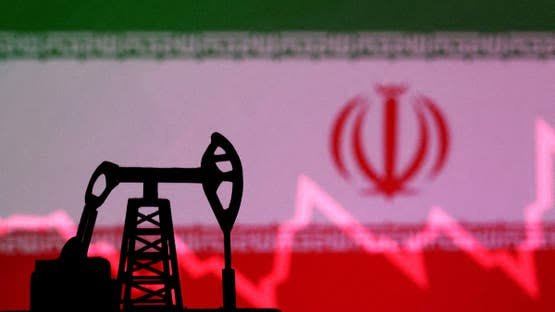

The United States has announced fresh sanctions against four Iranian oil traders and government-linked individuals accused of helping Tehran sell petroleum abroad while allegedly withholding billions of dollars in revenue. The latest action has raised questions about Iran’s oil trade, financial networks and its ability to recover money from overseas sales.
The US Treasury Department announced the sanctions on Friday, November 20, 2026. Officials said the targeted individuals were involved in networks that helped Iran conduct international oil transactions despite extensive American restrictions.
The measures form part of Operation Economic Outcast, a wider US campaign aimed at restricting Iran’s access to international financial markets and disrupting revenue sources linked to its government.
According to the Treasury Department, the sanctions were imposed under two executive orders. One targets Iran’s petroleum, petrochemical and aviation sectors. The other concerns individuals and organizations accused of supporting activities covered by US counterterrorism sanctions.
US Treasury Secretary Scott Bessent accused Iranian authorities of prioritizing their political and financial interests while ordinary citizens face economic difficulties.
He claimed Iran was struggling to recover money from oil previously sold through international intermediaries. According to Washington, some individuals responsible for handling the revenue allegedly retained substantial amounts for personal benefit.
The Treasury Department described these intermediaries as oil trustees. They allegedly helped arrange petroleum sales and manage payments through networks operating outside Iran.
Washington claims that members of these networks owe billions of dollars to the Iranian government.
However, the exact amounts allegedly withheld by each individual were not publicly established in the sanctions announcement. The accusations remain claims made by US authorities.
The latest restrictions specifically target Mohammad Javad Bavand and Majid Taj, whom American officials accuse of managing an international oil trading network.
Bavand is a former intelligence officer of Iran’s Islamic Revolutionary Guard Corps (IRGC). According to the Treasury Department, he played a leading role in coordinating oil sales and recovering payments held in foreign countries.
US officials alleged that Bavand maintained connections with several individuals involved in petroleum trading. These contacts allegedly helped facilitate transactions involving Iranian oil.
Majid Taj, the brother of the Iranian Football Federation’s president, was also identified as an important member of the network.
Washington claims Bavand and Taj continued facilitating oil sales despite outstanding payments owed to the Iranian government from earlier transactions.
Both individuals were designated under sanctions targeting Iran’s petroleum industry.
Two additional individuals, Mohammadhossein Servati and Mojtaba Arabnejad, were sanctioned over alleged links to organizations supporting Iran’s military and aviation activities.
Servati is the son of IRGC Brigadier General Mohsen Servati. American officials said he previously held senior positions in companies associated with Sepehr Energy Jahan Nama Pars Company.
The United States has designated that company over its alleged role in facilitating oil transactions connected with Iran’s armed forces.
According to the Treasury Department, one associated company, Xin Rui Jin Trad Co., Limited, helped arrange Iranian oil shipments to independent refineries in China.
Such refineries are commonly known as teapot refineries because they operate on a smaller scale than major state-owned processing facilities.
The allegations highlight Washington’s concerns about international companies and intermediaries involved in Iran’s petroleum trade.
Mojtaba Arabnejad, meanwhile, is the son of Hamid Arabnejad, the chief executive of Mahan Air.
US authorities accused Mojtaba Arabnejad of using his connections to arrange aircraft parts and military equipment purchases.
Officials also alleged that he supervised oil transactions whose proceeds supported Mahan Air.
Washington has previously sanctioned the airline over alleged links to the IRGC-Quds Force.
The latest designation adds financial restrictions on individuals accused of assisting the airline and other sanctioned organizations.
The US Treasury also made significant claims about Iran’s ability to export oil during the continuing regional conflict.
According to American officials, Iranian oil shipments have faced severe disruption following restrictions introduced under Operation Economic Outcast.
The Treasury claimed that no Iranian oil had been loaded onto vessels since the campaign began on August 24, 2026.
It also asserted that no Iranian oil remained at sea outside the US military blockade.
These statements reflect Washington’s official position. The full extent of Iranian oil shipments and the blockade’s effectiveness has not been independently established by the available reporting.
US officials believe the restrictions have increased pressure on Tehran by limiting its ability to generate revenue from petroleum exports.
Oil has historically been an important source of foreign currency for Iran. Restrictions on exports can therefore affect government finances, international trade and broader economic activity.
The latest sanctions also carry financial consequences for the designated individuals.
Under US sanctions rules, their assets and property interests within American jurisdiction are blocked.
US citizens and companies are generally prohibited from conducting transactions involving the designated individuals unless specifically authorized.
Businesses owned at least 50 percent by one or more blocked individuals may also become subject to restrictions.
Foreign financial institutions could face additional sanctions exposure if they knowingly facilitate significant prohibited transactions.
These measures aim to discourage banks, traders and international businesses from maintaining financial relationships with sanctioned networks.
The developments come amid continuing tensions between Washington and Tehran.
The United States has expanded financial restrictions during the ongoing regional conflict. American officials say the measures are intended to limit funding available for Iran’s military activities.
Iran has repeatedly criticized US economic pressure and restrictions on its international trade.
The broader confrontation has also disrupted energy markets and commercial shipping in the Middle East.

