

Washington cites defense concerns as disagreements deepen over security commitments and global strategy
WASHINGTON: The United States has suspended its participation in a joint military consultation body with Canada, signaling growing strains in relations between the two allies amid broader disagreements over defense priorities and international strategy.
The Pentagon’s policy chief, Elbridge Colby, announced the decision on Monday, stating that Washington would pause involvement in the Permanent Joint Board on Defense while reassessing its value for North American security cooperation.
According to Colby, Canada has not made sufficient progress on defense commitments despite ongoing discussions about strengthening regional security frameworks. He added that shared security partnerships require stronger action and greater responsibility rather than political messaging alone.
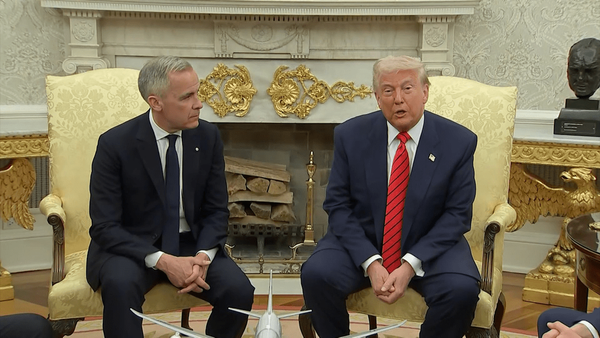
Meanwhile, the announcement comes against a backdrop of increasing tensions between President Donald Trump and Canadian Prime Minister Mark Carney. Earlier this year, Carney called on middle powers to work together and reduce dependence on dominant global powers, remarks widely viewed as criticism of changing US foreign policy dynamics.
Furthermore, relations between the two countries have experienced additional strain in recent months. Reports indicate that disputes emerged over trade, defense spending and military procurement decisions, including Canada’s ongoing review of plans to purchase 88 F-35 fighter jets.
The military consultation body dates back to August 1940, when US President Franklin D. Roosevelt and Canadian Prime Minister William Lyon Mackenzie King established it during World War II. Since then, the organization has served as a platform for military and civilian officials from both countries to exchange defense advice and policy recommendations.
However, Canadian officials maintain that the country continues increasing military investments and strengthening defense capabilities. Analysts also warn that prolonged disagreements could affect future cooperation and influence major defense purchasing decisions between both allies.

