
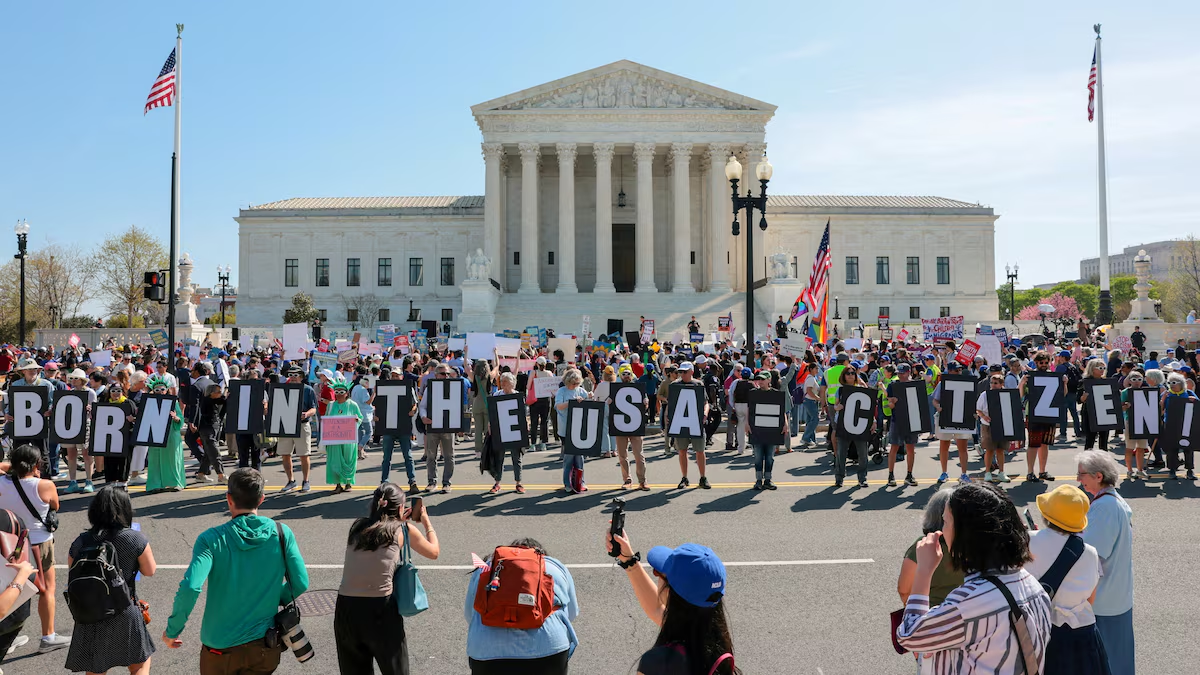

Landmark immigration case could redefine constitutional protections
The US Supreme Court is expected to deliver a landmark ruling on Tuesday on whether President Donald Trump can enforce his executive order restricting birthright citizenship, a key pillar of his immigration agenda.
The order directs federal agencies to deny automatic citizenship to children born in the United States if neither parent is an American citizen nor a lawful permanent resident. However, a lower court blocked the policy, ruling that it may conflict with the Citizenship Clause of the 14th Amendment, which grants citizenship to most individuals born on US soil.
The decision, expected on the court’s final day of its current term, could significantly influence immigration policy and constitutional interpretation ahead of the United States’ Independence Day celebrations.
Constitutional debate centers on meaning of citizenship
The legal challenge stems from a class-action lawsuit filed in New Hampshire by families who argue that the executive order violates long-established constitutional protections. They also cite the 1898 Supreme Court ruling in United States v. Wong Kim Ark, which affirmed birthright citizenship for children born in the country, subject to limited exceptions such as children of foreign diplomats.
Meanwhile, the Trump administration argues that the constitutional phrase “subject to the jurisdiction” excludes children born to undocumented immigrants and temporary visa holders. Officials maintain that citizenship should apply only to those whose parents have permanent legal allegiance to the United States.
Legal experts estimate the order could affect the citizenship status of up to 250,000 newborns annually if implemented. The Supreme Court’s conservative majority has recently supported several Trump immigration policies while rejecting others, making Tuesday’s ruling one of the most closely watched constitutional decisions of the year.

