
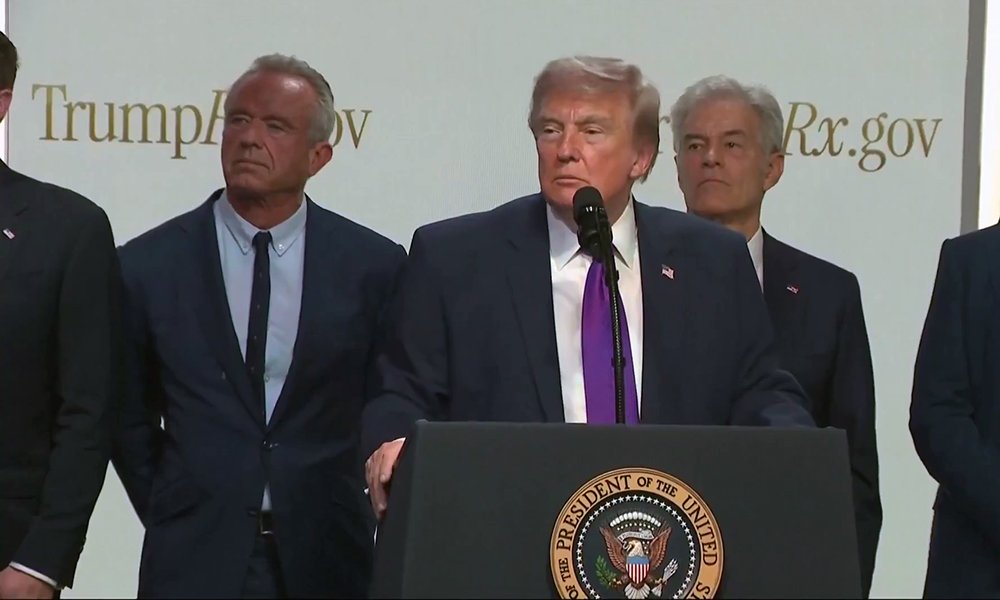

Senior aides to US President Donald Trump are reportedly trying to prevent the Iran war from escalating before the November 3 midterm elections.
Four people familiar with internal discussions said the administration wants to keep military action limited until voters go to the polls.
The strategy is aimed at preventing the unpopular conflict from becoming a major political issue for Republicans.
However, recent US-Iran attacks have made the strategy increasingly difficult to maintain.
Trump Administration Favors Economic Pressure on Iran
For now, the Trump administration is reportedly prioritising economic pressure instead of expanding military operations.
Officials hope stronger sanctions and restrictions will force Iran to make concessions in future negotiations.
One White House official said the administration was continuing to increase pressure on Iran, while acknowledging that the November elections remained a priority.
The approach comes after months of military confrontation failed to secure the concessions Washington had sought from Tehran.
The United States has also maintained a blockade around the Strait of Hormuz and expanded sanctions aimed at isolating Iran economically.
However, analysts have warned that increased economic pressure could itself provoke further military retaliation from Iran.
Renewed Attacks Raise Fears of Wider War
The effort to keep the conflict contained is facing growing challenges as the US and Iran continue exchanging attacks.
The fighting is currently less intense than during major clashes earlier in the year. However, both sides have carried out strikes in recent days.
Over the weekend, US forces targeted rocket launchers on Iran’s Larak Island.
Iran responded by launching missiles towards Jordan and the United Arab Emirates.
The United States then carried out additional strikes against Iranian targets around the Strait of Hormuz.
The latest escalation reportedly caused military and civilian casualties in Iran.
Analysts say Iran has strong incentives to continue targeting US and allied Gulf interests.
Potential targets could include military bases, ships and energy infrastructure.
Any Iranian attack could create pressure on Washington to respond. A cycle of retaliation could then push both countries back towards a broader air war.
Political Pressure and Military Limits
The conflict is also creating political pressure for the Trump administration.
A recent Reuters/Ipsos poll found that only 31 percent of Americans approved of the war, while around 63 percent disapproved.
High fuel prices have also become a major concern for voters.
Trump’s approval rating has reportedly fallen from 40 percent to 33 percent since the conflict began.
Trump has warned that Iran would face a stronger response if it retaliates against recent US attacks.
At the same time, he has said he does not expect the renewed military campaign to continue for long.
The administration is also facing military and logistical constraints.
Reports in August indicated that US forces had used almost all of their supplies of certain precision missiles.
Senior US military leaders have reportedly warned that prolonging the war could reduce military readiness in other regions.
The Pentagon, however, maintains that US forces have the resources required to continue their mission.
Gulf Allies Push for De-escalation
US allies in the Gulf are also urging Washington to avoid further escalation.
Some regional governments previously supported aggressive action against Iran. However, diplomats say several have recently pressed the White House to reduce tensions.
Vice President JD Vance and Secretary of State Marco Rubio are reportedly among senior officials supporting efforts to keep the conflict relatively contained until November.
The administration has instead intensified its economic campaign against Iran.
Washington has threatened severe sanctions against countries and entities that continue trading with Tehran.
However, the effectiveness of the strategy remains uncertain.
Iran has lived under extensive US and international sanctions for decades. Despite the economic damage, previous sanctions have failed to force its leadership to abandon its core policies.
China has also indicated that it will not fully support Washington’s efforts to isolate Iran.
This could weaken the impact of the latest sanctions campaign.
What Happens After November?
The administration’s current strategy could change after the November 3 elections.
Officials may consider expanding military action once the political pressure surrounding the vote decreases.
However, a return to full-scale war is not guaranteed.
Much could depend on Iran’s response to US strikes, the effectiveness of economic pressure and the condition of American military stockpiles.
The biggest challenge for Washington will be preventing limited exchanges from developing into a larger conflict.
With both sides continuing to threaten retaliation, even a strategy designed to keep the war “quiet” could become increasingly difficult to control.

