
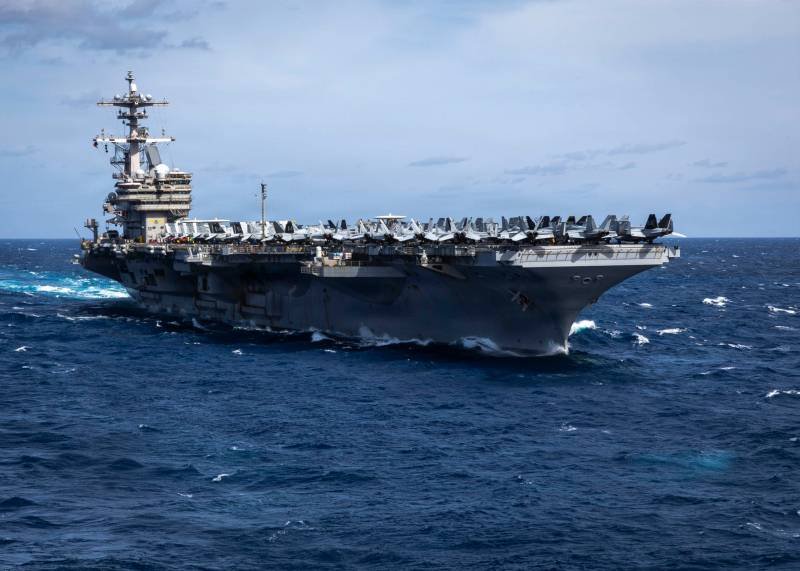

The United States has increased its military presence in the Middle East as the USS George H.W. Bush arrived in the region, raising the total number of deployed carriers to three. According to US Central Command, the carrier entered the Indian Ocean within its area of responsibility on April 23, accompanied by a full air wing and support vessels.
This development comes during a fragile ceasefire that temporarily halted a weeks-long US-Israeli air campaign against Iran. Consequently, the additional deployment signals continued strategic pressure despite the pause in active hostilities.
Three Carrier Groups Strengthen US Naval Presence
Meanwhile, the USS Gerald R. Ford is currently operating in the Red Sea, while the USS Abraham Lincoln remains active in the broader region. Together, these carrier strike groups represent a rare concentration of US naval power not seen in the area for years.
Each carrier travels with multiple escort ships, significantly boosting operational capability. As a result, the US military can project air power, secure maritime routes, and respond rapidly to emerging threats across the region.
Recent Operations and Repairs Highlight Ongoing Activity
Earlier, the USS Gerald R. Ford temporarily sailed to Croatia for repairs following a fire onboard in March. However, it has since resumed operations after maintenance and redeployment.
Additionally, the Ford has spent nearly 10 months at sea, participating in missions ranging from counter-narcotics operations in the Caribbean to maritime security efforts linked to Venezuela. This extended deployment underscores the carrier’s operational flexibility.
Overall, the presence of three carriers highlights Washington’s continued focus on the region as geopolitical tensions persist.

