
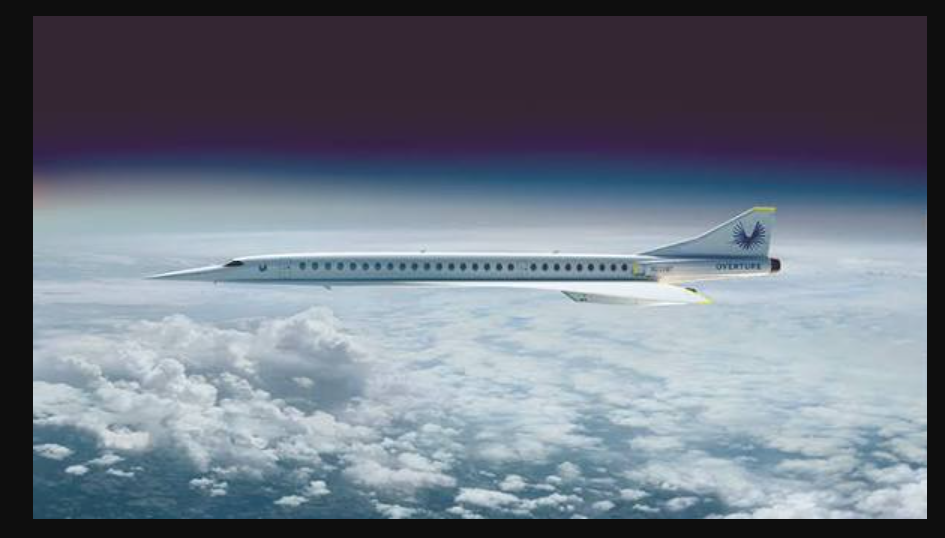

The United States is taking a major step toward the return of supersonic passenger travel. New plans could allow commercial aircraft to fly faster than the speed of sound over American land for the first time in decades.
The US Federal Aviation Administration (FAA) is preparing to replace its long-standing ban on civilian supersonic flights with a new framework based on aircraft noise levels. As a result, future passenger jets may be permitted to exceed Mach 1, provided they remain within approved sound limits.
The proposed rules are expected to be finalized by mid-2027.
Why the FAA Wants to Change the Rules
The FAA believes technological advances have significantly changed the future of supersonic aviation. Modern aircraft designs aim to reduce the loud sonic booms traditionally associated with high-speed flight.
FAA Administrator Bryan Bedford said newer technologies could help eliminate disruptive noise while allowing faster travel.
Consequently, regulators are considering a shift away from the blanket ban introduced more than 50 years ago. Instead, aircraft would be evaluated according to their actual noise impact on communities.
This approach could create new opportunities for commercial aviation while addressing public concerns about excessive noise.
Why Supersonic Flights Were Banned
The original restriction dates back to 1973. At the time, public opposition to sonic booms played a major role in shaping aviation policy.
Aircraft flying faster than sound create shock waves that can reach the ground as powerful booms. During the 1960s, several tests demonstrated the impact of these sounds on communities.
Officials reported broken windows, property damage, and widespread public complaints during sonic boom experiments.
As a result, the FAA concluded that available technology could not adequately protect the public. Therefore, civilian aircraft were prohibited from flying above Mach 1 over US territory.
Concorde Operated Under Strict Restrictions
Although the ban remained in place, the famous Concorde passenger jet still operated flights to the United States.
Air France and British Airways flew Concorde services to New York’s John F. Kennedy International Airport. However, the aircraft had to remain below the speed of sound while flying over American land.
The London-to-New York route became Concorde’s most successful service. It attracted business travelers, executives, and celebrities seeking faster international travel.
Nevertheless, operational costs and other challenges eventually led to Concorde’s retirement.
New Aircraft Could Change the Industry
Several aerospace companies are now developing a new generation of supersonic passenger jets. Unlike earlier aircraft, these designs focus on quieter operation and improved fuel efficiency.
Among the leading companies is Boom Supersonic. The company is developing the Overture aircraft, which is expected to carry between 60 and 80 passengers.
According to the company, major airlines have already placed pre-orders for the aircraft.
Meanwhile, Spike Aerospace is working on the Diplomat jet. The aircraft is designed to accommodate up to 18 passengers and target premium travel markets.
Both manufacturers aim to dramatically reduce travel times on international routes.
What Faster Air Travel Could Mean
If the FAA approves the new regulations, commercial aviation could enter a new era.
Passengers may eventually travel between major international destinations in significantly less time than current flights require. Some future aircraft could complete transatlantic journeys in under four hours.
At the same time, regulators will continue focusing on noise control to ensure communities are protected.
While several regulatory and technological hurdles remain, the proposed FAA changes represent a major shift in aviation policy. Consequently, the return of supersonic passenger travel now appears closer than it has in decades.

