

FCC Targets Technology Linked to AI and Critical Infrastructure
The United States has introduced new restrictions on Chinese robots and connected power inverters.
The Trump administration announced the measures on Tuesday.
The Federal Communications Commission issued the restrictions as part of a wider technology security campaign.
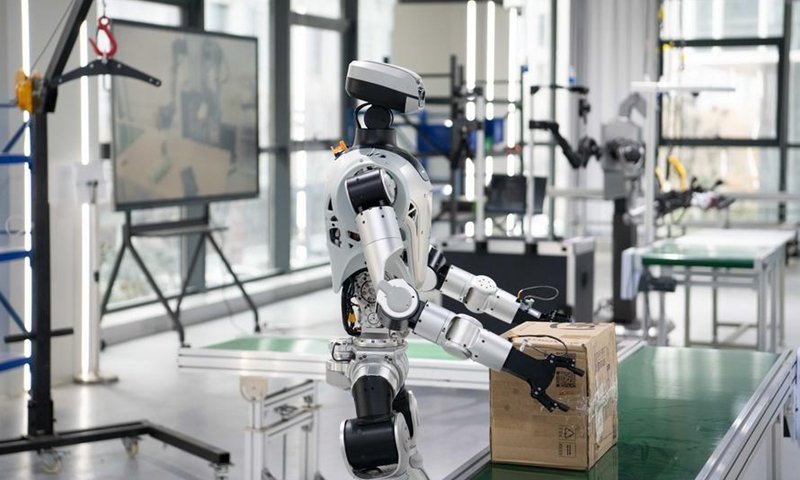
The new rules target Chinese-made humanoid robots and quadruped robots.
They also cover connected power inverters used in renewable energy systems, batteries, electricity grids and data centres.
Humanoid robots are designed to resemble and perform tasks like humans.
Quadruped robots move on four legs and can operate in factories, laboratories, security sites and dangerous environments.
Power inverters serve a different but equally important role.
They convert electricity produced by solar panels and batteries into power that can be used by grids and connected equipment.
The FCC said these technologies could create serious supply chain and cybersecurity risks.
Officials fear remotely connected devices could be used for surveillance, data collection or operational disruption.
The agency also warned that compromised equipment could threaten American economic security and critical infrastructure.
The restrictions are designed to protect the rapidly expanding US artificial intelligence industry.
American technology companies are investing heavily in data centres, advanced computing systems and AI infrastructure.
These facilities require reliable energy equipment and secure connected devices.
Washington fears that dependence on Chinese equipment could give Beijing influence over essential US technology systems.
FCC Chairman Brendan Carr said the agency would continue securing critical American supply chains.
The administration also wants manufacturers to shift more production to the United States.
Officials believe domestic manufacturing could reduce foreign dependence and support the growing robotics and energy industries.
New Models Face Restrictions as Existing Products Remain Under Review
The restrictions took effect after their official publication.
They currently apply to robot and inverter models that have not yet been released in the United States.
Products already authorised are not automatically removed from the American market.
However, the FCC has the legal authority to reconsider or revoke earlier sales authorisations.
This means previously approved equipment could face additional action in the future.
The agency is expected to provide exemptions for many suppliers based outside China.
Similar exemptions were introduced after previous restrictions involving foreign drones and consumer routers.
The latest action follows a series of US measures against Chinese technology companies.
The FCC has already restricted equipment connected to Huawei, ZTE and several surveillance technology manufacturers.
Washington has also targeted Chinese drones, routers and telecommunications products over security concerns.
US officials argue that connected equipment can become an entry point for cyberattacks.
A compromised robot could collect sensitive visual, audio or industrial data.
It could also map buildings, observe employees or record protected research activities.
Officials fear such information could be transferred to foreign intelligence agencies.
The FCC said robots could potentially be remotely controlled by hostile actors.
Such access could allow attackers to interrupt factory operations or compromise sensitive facilities.
Power inverters create another security concern because many models remain connected to manufacturers through internet-based monitoring systems.
Remote access helps companies install updates and detect technical failures.
However, it can also create vulnerabilities when security protections are weak or foreign access is not properly controlled.
A coordinated attack involving connected inverters could disrupt solar farms, battery systems or parts of the electricity network.
These concerns have increased as the United States builds more data centres to support AI development.
Large data centres require stable electricity supplies.
A failure involving connected power equipment could interrupt computing services, cloud platforms or AI operations.
Unitree, Huawei and Sungrow Face Growing Pressure
Chinese robot manufacturer Unitree is expected to be among the companies most affected.
Unitree is a major producer of humanoid and quadruped robots.
Its machines are used by universities, researchers, technology companies and industrial customers.
The company holds a significant position in the emerging global humanoid robot market.
It is one of several Chinese manufacturers competing to lead the fast-growing industry.
Unitree was recently added to a Pentagon list of companies allegedly linked to China’s military.
Placement on the list does not automatically impose a complete commercial ban.
However, it can lead to stronger scrutiny and future restrictions.
Unitree has also worked with American chipmaker Nvidia.
The companies formed a partnership involving Nvidia’s advanced Blackwell computing technology.
The chips can provide the processing power needed to operate an AI-enabled robot.
Nvidia has said information produced by the robots would remain inside the United States.
It has also said many Unitree customers are American universities and research institutions.
Despite those assurances, US officials remain concerned about the information collected by advanced robots.
Modern robots use cameras, microphones, sensors and navigation systems.
These systems continuously collect data about their surroundings.
Security officials fear that foreign-controlled technology could be used to observe sensitive American industries.
Unitree did not immediately respond to requests for comment following the announcement.
Chinese power equipment manufacturers are also facing increasing pressure.
China is the world’s largest producer of power inverters.
Sungrow Power Supply and Huawei are among the leading companies in the sector.
Chinese manufacturers have expanded their position in Western markets by offering equipment at competitive prices.
However, officials in the United States and Europe have raised concerns about remote access and cybersecurity.
Huawei already faces extensive US sanctions and restrictions.
Sungrow has also attracted greater attention because of its growing role in international renewable energy projects.
Neither Huawei nor Sungrow immediately commented on the latest action.
Washington Seeks to Prevent Another Rare Earth Dependency
The new restrictions are also part of a wider effort to reduce American dependence on China.
US policymakers want to avoid repeating the situation involving rare earth minerals.
Rare earth elements are essential for electronics, electric vehicles, defence equipment and advanced technology.
China dominates several stages of the global rare earth supply chain.
Beijing has previously used export controls to strengthen its position during international negotiations.
American officials fear China could gain similar leverage through robots, power equipment and AI-related products.
The Trump administration wants alternative supply chains before these industries become more difficult to replace.
Humanoid robots are expected to become increasingly common in factories, warehouses, healthcare facilities and homes.
AI systems could allow them to perform complex physical tasks with limited human supervision.
Power inverters will also become more important as solar energy, batteries and data-centre construction expand.
Restricting Chinese equipment could create opportunities for American manufacturers.
However, the measures could also increase costs for companies that depend on affordable foreign products.
US businesses may need time to find alternative suppliers.
Domestic manufacturers will also need to increase production to meet future demand.
Washington believes the long-term security benefits outweigh the immediate commercial challenges.
The Department of Defence is already prohibited from purchasing certain solar equipment made by foreign entities of concern.
That restriction includes some Chinese manufacturers.
Lawmakers have also proposed legislation requiring national security reviews of Chinese robots.
Representative John Moolenaar welcomed the FCC action.
He said the decision would protect the country and strengthen the American robotics industry.
China Rejects US Security Allegations
China strongly criticised the latest restrictions.
The Chinese Embassy in Washington urged the United States to listen to business communities in both countries.
It accused Washington of damaging Chinese companies through allegations and sanctions.
The embassy also warned that Beijing could respond if the measures caused material harm to Chinese interests.
China has repeatedly rejected American claims that its technology companies create national security threats.
Beijing argues that Washington is using security concerns to limit Chinese commercial competition.
The dispute reflects growing tension between the world’s two largest economies.
Technology has become a central issue in their relationship.
The United States has restricted Chinese access to advanced chips and manufacturing equipment.
China has responded with controls involving critical minerals and other strategic materials.
US Treasury Secretary Scott Bessent has also warned that Chinese AI companies could face sanctions over alleged theft of American intellectual property.
The latest robot and inverter restrictions expand the dispute into two rapidly developing industries.
The move shows that Washington now considers physical AI systems and connected energy equipment important national security assets.
It also signals that future US restrictions may target technologies before they become widely established.
The immediate impact will fall mainly on new Chinese models seeking entry into the American market.
The longer-term consequences could reshape global supply chains for robotics, renewable energy and artificial intelligence infrastructure.

