
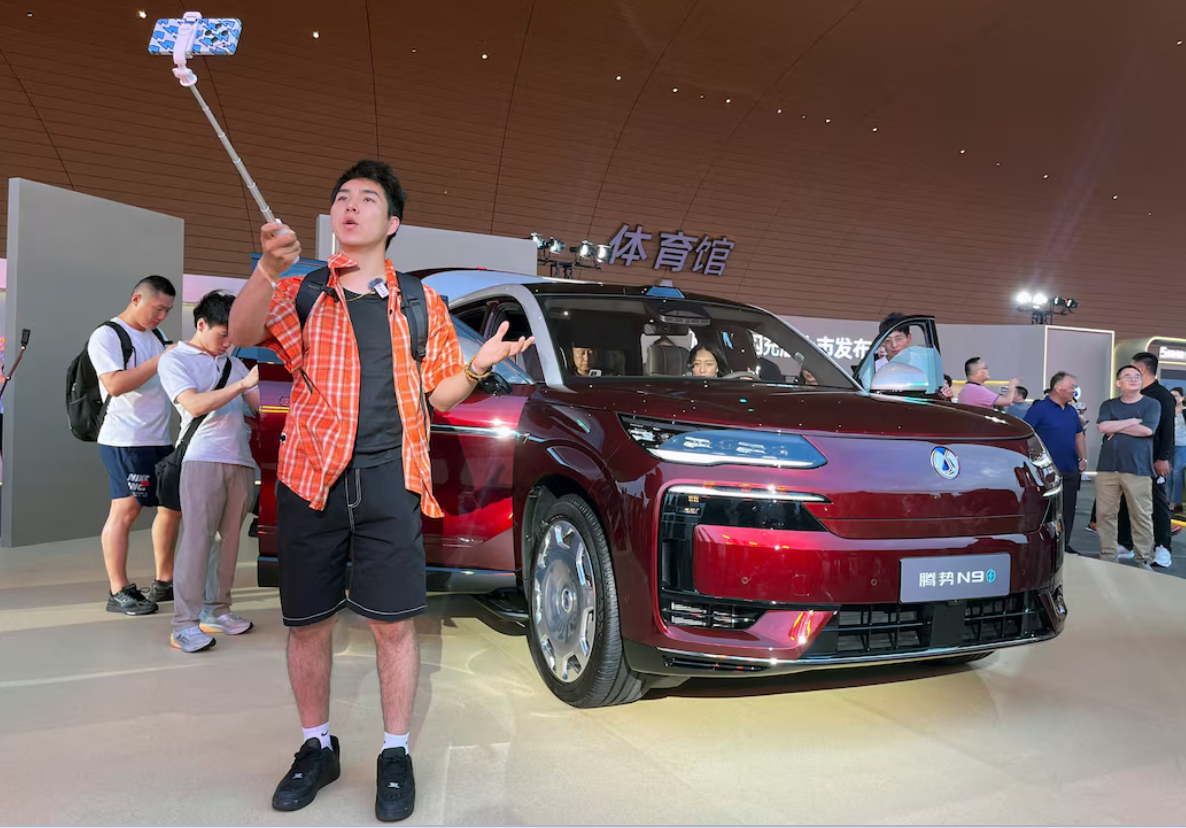

The United States has added several major Chinese technology and industrial companies, including Alibaba, Baidu, BYD, and NIO, to a government list of firms it believes are linked to China’s military activities.
The decision signals growing strategic competition between Washington and Beijing. It also comes shortly after renewed diplomatic engagement between both countries.
The updated list replaces an earlier version released in early 2025 and expands the scope of targeted companies across multiple technology sectors.
Broad Range of Chinese Tech Firms Included
The revised list now includes leading players in e-commerce, artificial intelligence, electric vehicles, robotics, semiconductors, and biotechnology.
Companies such as Alibaba, Baidu, BYD, NIO, CXMT, YMTC, WuXi AppTec, RoboSense Technology, Unitree, BOE Technology Group, and several solar and energy firms have been added.
The inclusion reflects Washington’s concerns about “military-civil fusion” strategies and advanced technology development linked to China’s defense modernization.
Officials stated that the listed firms are considered to be operating in sectors that may support military or strategic capabilities.
China Rejects Allegations and Calls Move Discriminatory
China strongly rejected the decision, calling the list unfair and politically motivated.
A foreign ministry spokesperson said the move “unreasonably suppressed” Chinese companies and confirmed that Beijing would respond to protect its firms.
The statement added:
“China will take necessary measures to firmly safeguard the legitimate rights and interests of Chinese enterprises,”
Beijing urged Washington to correct what it described as “mistaken practices” and accused the US of damaging global trade stability.
Companies Deny Military Links and Plan Legal Action
Several of the listed companies have firmly denied any connection to military activities.
BYD, a global leader in electric vehicles, stated that it strongly opposes the designation and will pursue legal and administrative action to defend its position. The company also said the decision harms “its development achievements in the United States.”
Alibaba rejected the inclusion, saying there is “no basis” for the designation and denied involvement in any military-civil integration programs.
Baidu also dismissed the claims, stating that the allegation that it is a military-linked company is “entirely baseless” and confirmed plans to challenge the listing.
Other companies, including WuXi AppTec and NIO, also said they would contest the decision and seek removal.
Impact on US-China Economic Relations
The updated list reflects a broader tightening of US restrictions on Chinese technology firms.
While the listing does not immediately impose sanctions, it restricts US government agencies and defense-related procurement from working with the named companies.
From later this year, the US military will be barred from direct contracts with listed firms. By 2027, indirect procurement restrictions will also take effect.
This move could significantly affect global supply chains and business partnerships involving these companies.
Strategic Competition Intensifies
Analysts say the decision highlights growing technological rivalry between the world’s two largest economies.
The inclusion of leading AI, semiconductor, and robotics firms shows that competition now extends beyond trade into advanced technology ecosystems.
Some experts believe the move reflects a broader US strategy to treat Chinese tech development as part of a unified national security challenge.
Outlook
The latest action is expected to deepen tensions between Washington and Beijing. However, many of the affected companies continue to operate globally and maintain confidence in their legal challenges.
As restrictions expand, the global tech landscape may face further fragmentation driven by geopolitical competition and security concerns.

