
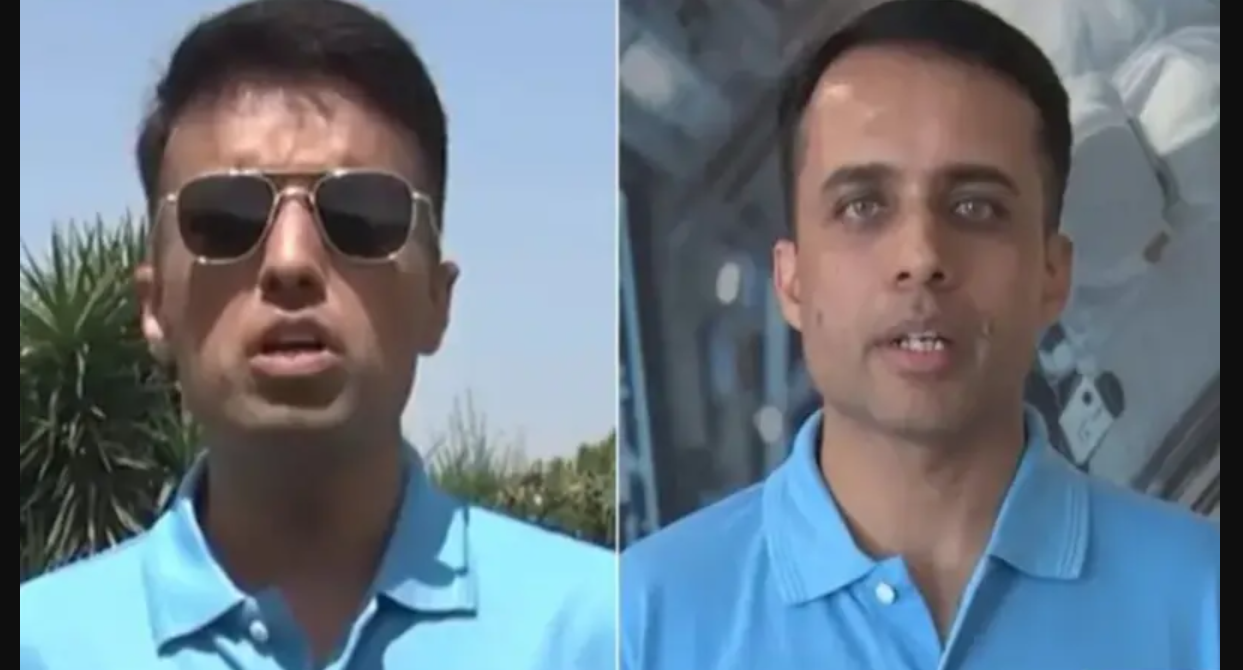

Two Pakistani pilots are undergoing intensive training in China as the country prepares for its first human spaceflight.
Zeeshan Ali and Khurram Daud are competing for a place aboard China’s Tiangong space station. The final selection is expected in mid-to-late October.
The chosen pilot could become Pakistan’s first astronaut and the first foreign astronaut to visit China’s orbital station. However, China has not yet announced which candidate will fly.
The mission is part of expanding space cooperation between Pakistan and China. Their collaboration already includes satellites, navigation systems and lunar exploration projects.
Two Pakistani Pilots Training for Tiangong
Zeeshan Ali and Khurram Daud have spent months training at the China Astronaut Research and Training Centre in Beijing.
Their preparation includes Mandarin language lessons and detailed spacecraft training. They are also learning how to operate equipment while experiencing the conditions of microgravity.
Furthermore, the pilots undergo centrifuge training to prepare for the intense forces experienced during launch. They are also learning how to eat, sleep and repair equipment in orbit.
The mission was conceived through cooperation between Pakistan and China in 2019. Since then, the programme has moved toward selecting and training Pakistani candidates.
The two pilots emerged from roughly 20 finalists selected from an initial pool of Pakistani pilots and scientists. Candidates underwent medical and psychological screening during the selection process.
Why Were Pilots Chosen Over Scientists?
The selection process also considered candidates’ ability to withstand high g-forces. According to SUPARCO Director of Artificial Intelligence Uzair Ansari, this requirement limited the number of suitable scientists.
“You cannot easily find scientists who are familiar with travelling and facing high-level g-forces,” he said.
The two candidates therefore brought experience from high-speed flying. Their backgrounds helped meet the demanding physical requirements of the planned mission.
The latest details provide a closer look at Pakistan’s preparations since the candidates began training in China.
What Will Pakistan’s Astronaut Do in Space?
The selected candidate will travel as a payload specialist rather than serving as the spacecraft’s pilot.
In practical terms, the astronaut will conduct Pakistan’s scientific experiments aboard Tiangong. The mission is expected to last about one week.
SUPARCO received more than 300 research proposals from universities in Karachi, Lahore and Islamabad. Chinese institutes subsequently selected four experiments for the mission.
The experiments focus on biotechnology and are intended to support research linked to food insecurity and climate change.
Each experiment is being developed and tested in SUPARCO laboratories before Chinese engineers approve it for the mission.
According to Ansari, this provides Pakistani technology with an opportunity to undergo validation on an international platform.
Pakistan’s Space Experiments on Tiangong
Pakistan’s scientific payload will be relatively small compared with Tiangong’s broader research programme.
The Chinese space station has already hosted more than 180 experiments. It has also produced over 500 research papers and 150 patents.
Tiangong consists of three main modules named Tianhe, Wentian and Mengtian. Together, they weigh about 77 metric tons.
The station contains around 14 experiment racks covering several scientific fields. These include life sciences, materials, fluid physics, combustion and radiation exposure.
Some experiments are also mounted outside the station. Such external payloads allow researchers to study materials and biotechnology under direct exposure to space.
What Happens After the Final Selection?
China has not announced the exact flight date or selected candidate. However, the final astronaut decision is expected in mid-to-late October.
The chosen pilot will remain in China until the mission launches. The astronaut will therefore travel directly into space from the Chinese training programme.
After returning to Earth, the astronaut will undergo a recovery period before travelling back to Pakistan.
The planned mission would represent Pakistan’s first human spaceflight. It would also make the selected pilot the first foreign astronaut to travel aboard Tiangong.
Pakistan Relies on China for the Mission
The mission depends heavily on Chinese space infrastructure and expertise. The Pakistani astronaut will fly aboard a Chinese-built spacecraft from a Chinese launch site.
Chinese instructors are also training the candidate, while communication aboard the station will take place in Mandarin.
Pakistan does not currently have an independent crewed spacecraft or launch vehicle. Therefore, the mission relies on China for transportation, training and access to Tiangong.
The Pakistani astronaut’s stay will also be much shorter than the regular missions of Chinese crew members. The planned visit is expected to last around one week.
Could Pakistan Send an Astronaut to the Moon?
The planned Tiangong mission has also raised questions about Pakistan’s future human spaceflight plans.
However, no official commitment has been made for a Pakistani astronaut to travel to the Moon.
Asked whether Islamabad had secured such a commitment, Amer Gilani said “there is no official commitment or discussion on this matter”.
He added that future plans would depend on how “our maiden mission” turns out.
Therefore, the Tiangong mission remains the immediate focus of Pakistan’s human spaceflight cooperation with China.
Pakistan’s Lunar Cooperation With China
Pakistan’s space cooperation with China extends beyond the planned astronaut mission.
A Pakistani-built lunar rover is expected to fly on China’s Chang’e 8 lunar mission around 2028. The rover will use artificial intelligence-based stereo imaging to navigate the lunar surface.
The system will help detect obstacles, assess depth and plan routes independently. This capability is important because Earth-based controllers cannot guide the rover in real time.
The lunar rover project is separate from the planned Pakistani astronaut mission. However, both projects reflect the expanding scientific cooperation between Islamabad and Beijing.
A Historic Opportunity for Pakistani Scientists
For Pakistan, the planned Tiangong mission represents a major step into human spaceflight.
The selected astronaut will not simply travel into orbit. Instead, the pilot will carry Pakistani scientific experiments and conduct research in microgravity.
That work could provide Pakistani researchers with experience in space-based experimentation. It could also create opportunities for future scientific projects involving international partners.
Ansari described the mission as a “once-in-a-lifetime opportunity” for Pakistani scientists.
For now, the final decision remains ahead. By mid-to-late October, one of the two trained pilots is expected to learn whether he will become Pakistan’s first astronaut.
SEO Keyphrase: Pakistan first astronaut Tiangong mission
For the latest updates, visit and follow The Truth International website (www.thetruthinternational.com) and subscribe to the YouTube Channel.

