

Moon mission will use domestically developed hybrid propulsion as Ankara expands satellites, launch capabilities and international space cooperation
ANKARA: Türkiye plans to launch its lunar spacecraft during the first months of 2027 using a domestically developed hybrid propulsion system, Industry and Technology Minister Mehmet Fatih Kacir announced.
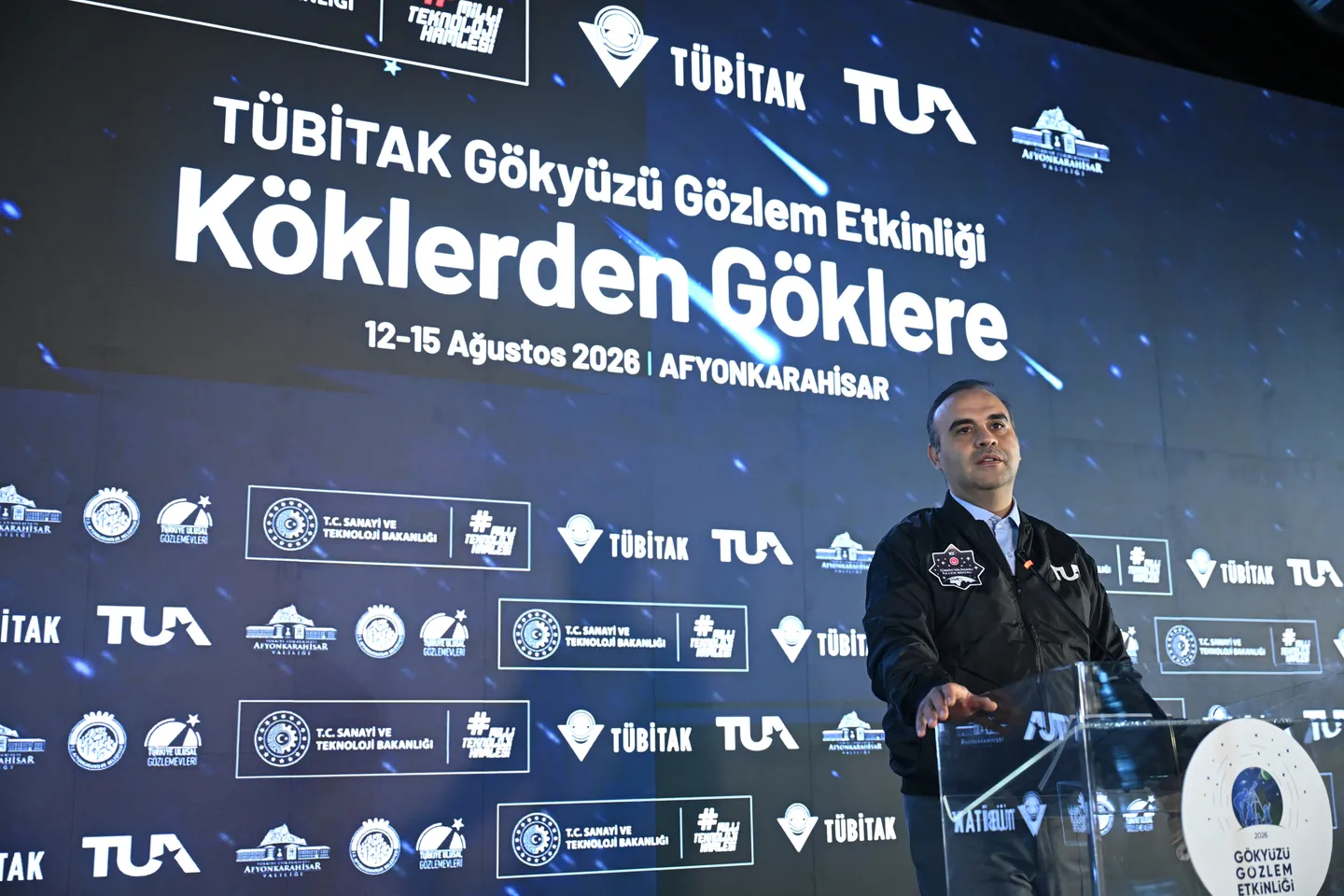
Speaking during the Scientific and Technological Research Council of Türkiye’s Sky Observation Event in Afyonkarahisar, Kacir said authorities had finalised the mission’s launch schedule.
According to the minister, engineers have completed all testing phases for the spacecraft’s hybrid propulsion system. He said the lunar mission would provide Türkiye with advanced technological capabilities currently available to only a limited number of countries.
Türkiye Pursues Independent Access to Space
Meanwhile, Kacir described space infrastructure as an increasingly important component of Türkiye’s strategic and defence capabilities.
He highlighted satellite programmes including Turksat 6A, Imece, Bilsat, Rasat and Gokturk-2 as examples of the country’s expanding technological capacity.
Furthermore, Türkiye is developing an equatorial spaceport in Somalia as part of its effort to secure independent and cost-effective access to space. Ankara eventually intends to use the facility to launch domestically produced satellites and spacecraft.
Kacir said Türkiye aims to develop rockets capable of placing its satellites into orbit independently. Equatorial launch locations can reduce costs by exploiting the Earth’s rotational velocity.
Domestic Space Ecosystem Continues Expanding
Additionally, Türkiye plans to establish a space technopark at Middle East Technical University to bring researchers, institutions and private companies together for technological development.
Ankara is also preparing international agreements covering components for future space stations and wants to participate in additional crewed scientific missions.
Meanwhile, Antalya will host the 77th International Astronautical Congress from October 5 to 9, attracting an expected 10,000 participants from more than 100 countries.
Officials expect discussions to cover emerging space companies, scientific cooperation and international security.
The gathering is also expected to produce the Antalya Declaration, focusing on peace, security and stability as geopolitical competition increasingly extends into the global space sector.

