
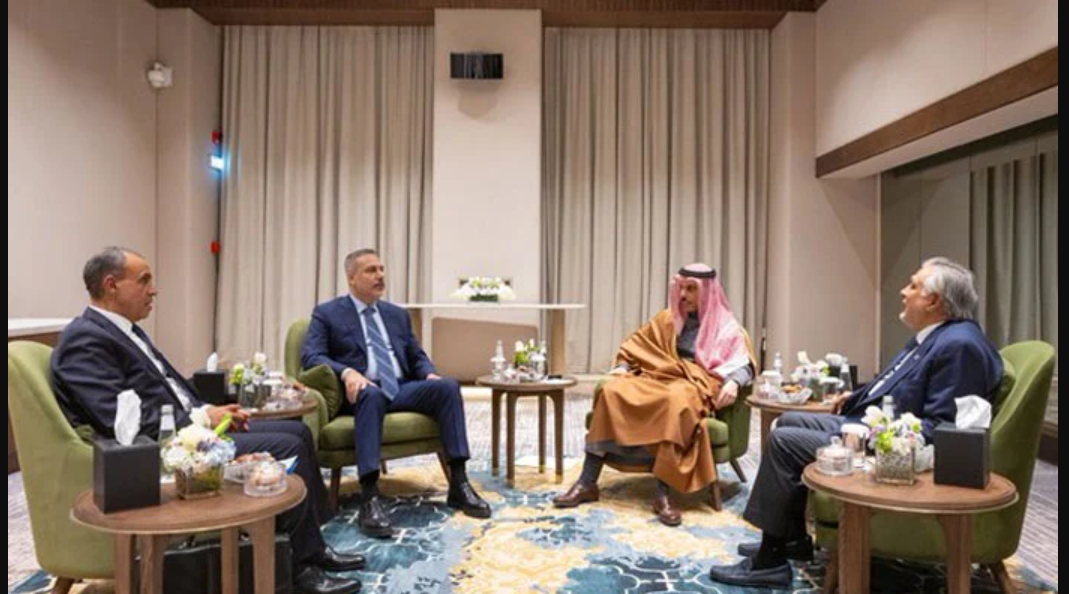

Islamabad is hosting foreign ministers from Saudi Arabia, Turkiye, and Egypt for high-level discussions on pressing regional developments. The meetings, scheduled from March 29 to 30, focus primarily on diplomatic efforts to reduce tensions linked to the ongoing Middle East conflict.
The visit follows an invitation extended by Deputy Prime Minister and Foreign Minister Ishaq Dar. Senior diplomats from the three countries arrived in Pakistan to participate in detailed consultations covering regional stability and broader global issues.
Officials describe the gathering as an important opportunity to strengthen coordination among key Muslim nations during a sensitive geopolitical moment.
Focus on De-Escalation and Regional Stability
During the visit, foreign ministers are expected to engage in in-depth discussions aimed at easing tensions in the region. The talks emphasize dialogue, cooperation, and diplomatic engagement rather than confrontation.
The visiting dignitaries will also meet Prime Minister Shehbaz Sharif to exchange views on political and security developments. Pakistan has reiterated that it values its longstanding relations with Saudi Arabia, Turkiye, and Egypt, describing them as trusted partners.
Moreover, the consultations aim to expand cooperation across political, economic, and strategic sectors of mutual interest.
Pakistan’s Emerging Role as a Diplomatic Mediator
Pakistan has increasingly positioned itself as a facilitator of dialogue amid rising regional tensions. Officials confirmed ongoing diplomatic outreach involving multiple countries to encourage negotiations and prevent further escalation.
Indirect communication channels between the United States and Iran have reportedly been supported through diplomatic messaging efforts. Turkiye and Egypt are also contributing to these mediation attempts.
Due to the sensitive nature of negotiations, authorities have avoided publicly disclosing detailed discussion points. However, officials emphasize that engagement continues with sincerity and caution.
Coordination Among Regional Powers
The meeting was initially planned to take place in Turkiye. However, scheduling adjustments led Pakistan to host the talks instead. This shift highlights Islamabad’s growing diplomatic engagement and willingness to provide a platform for dialogue.
Participants are expected to review regional developments collectively and explore coordinated responses to evolving challenges. Such cooperation reflects shared concerns about stability, humanitarian consequences, and long-term peace.
Additionally, ongoing consultations between regional leaders demonstrate efforts to maintain communication channels during heightened tensions.
Leadership-Level Engagement Supports Diplomacy
Alongside ministerial meetings, leadership-level communication has intensified. Prime Minister Shehbaz Sharif recently held an extended telephone conversation with Iranian President Masoud Pezeshkian.
During the discussion, Pakistan reiterated its condemnation of attacks affecting civilian infrastructure and expressed solidarity with affected populations. The conversation also highlighted Pakistan’s diplomatic outreach aimed at facilitating dialogue between opposing sides.
Both leaders emphasized the importance of trust-building measures to support future negotiations and mediation efforts.
A Critical Moment for Regional Diplomacy
The Islamabad talks arrive at a crucial time as diplomatic channels seek to prevent further escalation in the Middle East. By hosting the meeting, Pakistan aims to promote constructive engagement and collective problem-solving among influential regional actors.
While immediate outcomes remain uncertain, continued dialogue signals a shared commitment to diplomacy over confrontation. Observers believe sustained coordination among participating nations could contribute to reducing tensions and encouraging negotiations.
Ultimately, the discussions reflect a broader effort to stabilize the region through cooperation, communication, and responsible diplomacy.

