

US President Signals Imminent Attack on Fortified Nuclear Site
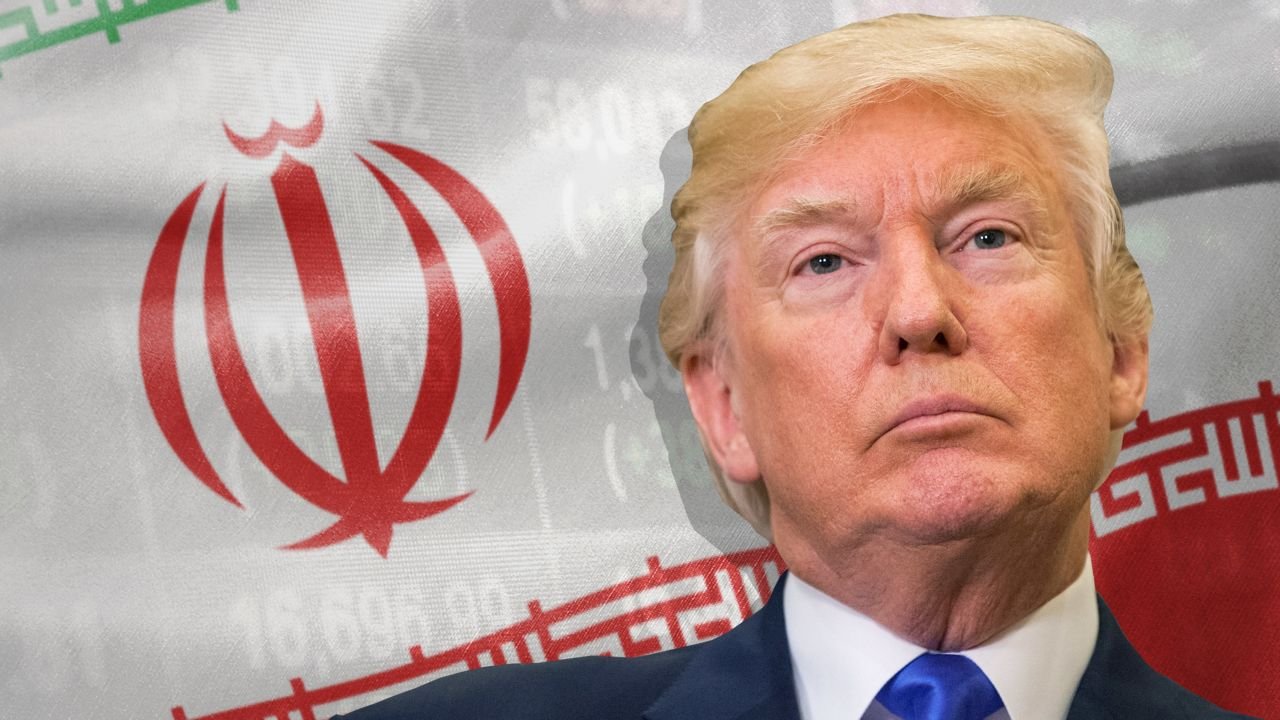
US President Donald Trump has warned that American forces may soon launch a major attack on Iran’s Pickaxe Mountain complex.
The heavily fortified underground site is located close to the damaged Natanz uranium enrichment facility.
Speaking during a White House meeting with Lebanese President Joseph Aoun, Trump said the United States would hit the area “very heavily” and “pretty soon.”
He claimed Iran could do nothing to prevent the planned operation.
Trump had previously threatened to destroy the site. His latest remarks suggest that Pickaxe Mountain has become a major target in the expanding US military campaign against Iran.
The complex, also known as Mount Kolang, contains deeply buried tunnel systems. Western and Israeli officials suspect the tunnels may support Iran’s nuclear programme.
However, the exact activities taking place inside the mountain have not been independently confirmed.
Recent intelligence reports claim Iran may have moved thousands of uranium-enrichment centrifuges into the complex.
Iran has not publicly confirmed those allegations. International inspectors have also not been granted access to determine whether enrichment operations are taking place there.
The site’s depth presents a major military challenge.
Even powerful bunker-penetrating weapons may struggle to completely destroy facilities buried beneath thick layers of rock.
Military analysts say the United States could instead target tunnel entrances, ventilation systems, power supplies and transport routes.
Such strikes could block access and disrupt operations without fully destroying the underground complex.
Trump also said Tehran was desperate to resume negotiations.
However, he insisted that Washington would not participate in talks unless Iran was prepared for serious and meaningful discussions.
His remarks indicated that military pressure would continue alongside limited diplomatic contacts.
Saudi Tankers Reverse Course After Houthi Blockade Threat
The crisis widened further after two tankers carrying Saudi crude oil to Asia reversed course in the Red Sea.
Shipping data showed that the vessels had loaded oil in Saudi Arabia and were travelling towards China and India.
Both tankers changed direction after Yemen’s Iran-aligned Houthi movement announced a maritime blockade against Saudi Arabia.
The vessels were later heading north towards the Suez Canal, according to tracking information.
Saudi Arabia’s Red Sea oil terminal at Yanbu continued operating normally. However, the tanker movements demonstrated the growing security risks facing ships in the region.
The Houthis declared that vessels carrying Saudi oil could become targets.
They described the blockade as retaliation for what they called Saudi restrictions and military pressure against Yemen.
The Saudi-led coalition responded by warning that it would use force to protect its vessels.
It also announced additional security measures for ships travelling through the Bab el-Mandeb Strait.
The narrow passage connects the Red Sea with the Gulf of Aden and the Arabian Sea.
It is one of the world’s most important trade and energy routes.
Saudi Arabia had increased oil shipments through Yanbu to reduce dependence on the Strait of Hormuz, where the Iran conflict had already disrupted maritime traffic.
The Houthi threat now places the alternative Red Sea route at risk.
A serious closure of Bab el-Mandeb could prevent a large share of Saudi oil exports from reaching global markets through their normal routes.
Ships could be forced to travel around Africa, adding time, fuel expenses and insurance costs.
The danger is especially serious because shipping through the Strait of Hormuz has already fallen sharply.
Iran says it controls the strategic waterway and will maintain restrictions while American attacks continue.
The simultaneous disruption of Hormuz and Bab el-Mandeb could place extraordinary pressure on global oil and gas supplies.
Oil prices initially gained around two percent following the latest escalation.
The increase later eased as traders focused on reports that Tehran and Washington remained open to negotiations.
However, shipping insurance costs rose as companies assessed the threat of attacks in both the Gulf and Red Sea.
The Houthi announcement has effectively opened a new front in the US-Iran conflict.
Until now, much of the fighting had focused on Iran, the Gulf states, Iraq, Jordan and American military positions.
The threat to Saudi shipping could draw Riyadh more directly into the confrontation.
Trump said the United States would respond if the Houthis attempted to impose a blockade.
He warned that Washington would “take care of business” if the group followed through on its threats.
The US military has previously attacked Houthi missile, drone and radar positions in Yemen following threats to commercial shipping.
Regional Strikes Continue as Diplomats Seek Ceasefire
The warning against Pickaxe Mountain came as US forces continued striking Iranian military facilities.
US Central Command said its latest operations targeted command centres, missile and drone launch sites, air-defence systems and maritime capabilities.
Explosions were reported in several Iranian locations, including areas near Shiraz, Chabahar and Konarak.
Iranian authorities said recent US strikes had killed civilians and damaged infrastructure.
The figures could not be independently verified.
Iran responded with missile and drone attacks against reported US facilities in Bahrain, Kuwait and Jordan.
The Islamic Revolutionary Guard Corps claimed that it struck a complex housing American forces in Jordan’s Al-Rukban area.
It also claimed attacks on military sites and infrastructure in Bahrain and Kuwait.
American and regional authorities did not immediately confirm several of Iran’s damage and casualty claims.
Jordan said its forces intercepted five Iranian drones.
Bahrain also activated air-raid sirens and reported the interception of incoming projectiles.
Kuwait said recent attacks had damaged power and water facilities. Fires were extinguished, while repair work and damage assessments continued.
A vessel was also hit by an unknown projectile near the coast of the United Arab Emirates.
The United Kingdom Maritime Trade Operations centre said the ship’s steering system was damaged.
All crew members were reported safe, and no environmental damage was recorded.
Despite the widening conflict, diplomatic efforts remain active.
Reports indicate that mediators have presented Iran with proposals for a temporary ceasefire.
Pakistan and Qatar have played leading roles in attempts to bring Washington and Tehran back to negotiations.
An Iranian official reportedly said Tehran had received a proposal for a ten-day halt in fighting.
Iranian Interior Minister Eskandar Momeni also travelled to Islamabad after asking Pakistan to renew its mediation efforts.
Neither side has announced a formal agreement.
The Houthis’ involvement has made the negotiations more complicated.
Any settlement may now need to address the Strait of Hormuz, the Red Sea blockade, US strikes on Iran and attacks against American facilities across the region.
The Association of Southeast Asian Nations has called for an immediate end to hostilities.
Its foreign ministers warned that continued fighting was weakening mediation efforts and threatening global stability.
They urged all sides to exercise maximum restraint and return to diplomacy.
However, Trump’s threat against Pickaxe Mountain suggests that a major new strike could take place before any diplomatic breakthrough.
An attack on the deeply buried complex could provoke further Iranian retaliation.
It could also intensify attacks by the Houthis and other Iran-aligned groups.
The conflict is now threatening two of the world’s most important maritime routes at the same time.
A prolonged disruption could raise energy prices, increase transport costs and deepen economic pressure far beyond the Middle East.

