
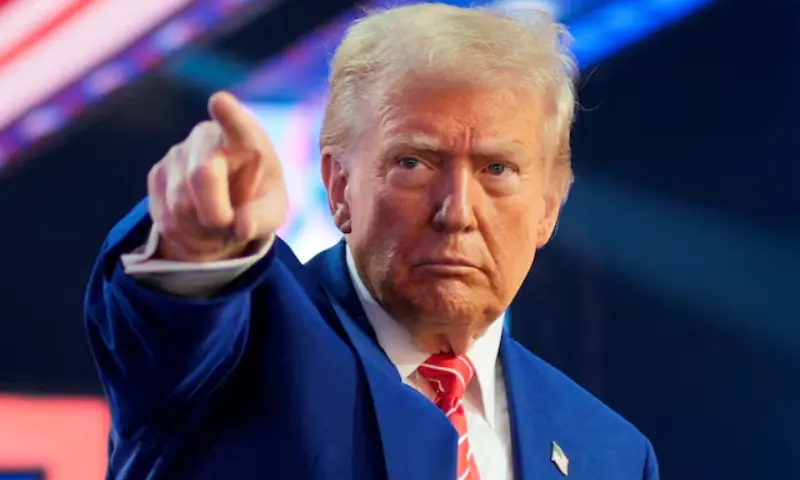

US President Donald Trump said the Strait of Hormuz remains open for commercial shipping despite rising military tensions between the United States and Iran. His remarks came after renewed concerns over the safety of global energy routes.
Speaking during an interview with NBC’s Meet the Press, Trump stated that the United States launched powerful strikes against Iran after recent attacks on commercial shipping in the Strait of Hormuz.
Moreover, he said the military action directly responded to Iranian attacks that threatened vessels passing through the strategic waterway. The Strait of Hormuz handles a significant share of global oil shipments.
Trump also spoke by telephone with CNN, where he discussed the latest military developments. Although the interview mainly focused on the death of Senator Lindsey Graham, Trump addressed the escalating conflict with Iran.
“We hit them very hard last night,” Trump said while describing the US military response. However, he did not provide additional operational details during the interview.
Furthermore, Trump claimed Washington and Tehran had been close to reaching an agreement before the latest confrontation. According to him, negotiations appeared to be progressing until the reported attack on a commercial vessel.
“They were giving up everything,” Trump said. However, he claimed Iran changed course after a drone allegedly struck a ship only hours later.
Trump argued that the reported attack derailed diplomatic efforts and intensified the confrontation. Consequently, tensions between the two countries increased, raising fresh concerns about regional stability.
Despite the military escalation, Trump insisted the Strait of Hormuz remains open to commercial traffic. Nevertheless, security concerns continue to grow because the route remains vital for international oil exports.
The latest developments have drawn global attention as governments and energy markets closely monitor the security situation. Meanwhile, investors remain focused on whether further military action could disrupt shipping through the strategic waterway.

