
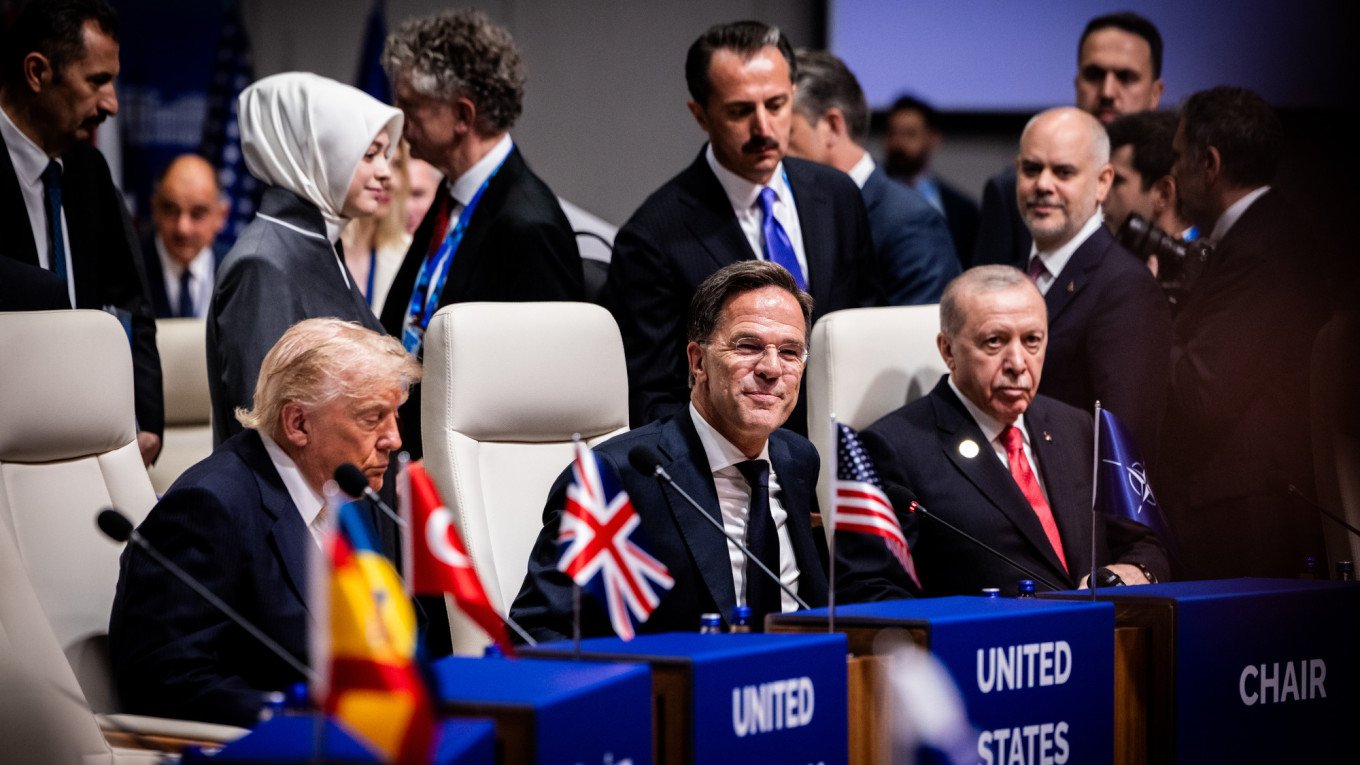

Ankara hosted NATO’s annual summit as alliance leaders focused on strengthening unity while addressing growing concerns about Europe’s long-term security. The meeting also reflected efforts to maintain strong ties with U.S. President Donald Trump. At the same time, European members sought more control over their future defense strategies. Donald Trump rejected the idea of imposing more sanctions on Russia.
Growing Defense Commitments
NATO leaders reaffirmed their commitment to Article 5, the alliance’s collective defense clause, amid concerns about future American security guarantees. After the meeting, Secretary General Mark Rutte and Trump praised the unity displayed by all 32 member states. Meanwhile, Rutte continued his strategy of highlighting increased defense spending to satisfy Washington’s long-standing demands.
However, Trump introduced fresh tensions during the summit. He repeated his demand for U.S. control of Greenland and criticized NATO for supporting Denmark’s position. In addition, he accused several allies of contributing too little to Washington’s military campaign against Iran. He also threatened trade measures against Spain because of its lower defense spending.
Major Investments Signal Strategic Shift
The summit produced major defense investment announcements worth about $50 billion. NATO members outlined plans to acquire Triton surveillance drones, transport aircraft, tanker aircraft, and GlobalEye early warning systems. However, officials acknowledged that several contracts remain unsigned.
Furthermore, allies pledged $40 billion for counter-drone systems, $26 billion for missile defense, and $1.6 billion for new strike capabilities. Leaders also introduced measures to improve defense spending efficiency.
Notably, European manufacturers secured several major projects alongside American companies. Swedish firm Saab and Germany’s Rheinmetall received significant attention, while U.S. companies also won contracts. Consequently, the agreements reflected Europe’s growing desire for strategic autonomy while preserving its partnership with Washington.

