
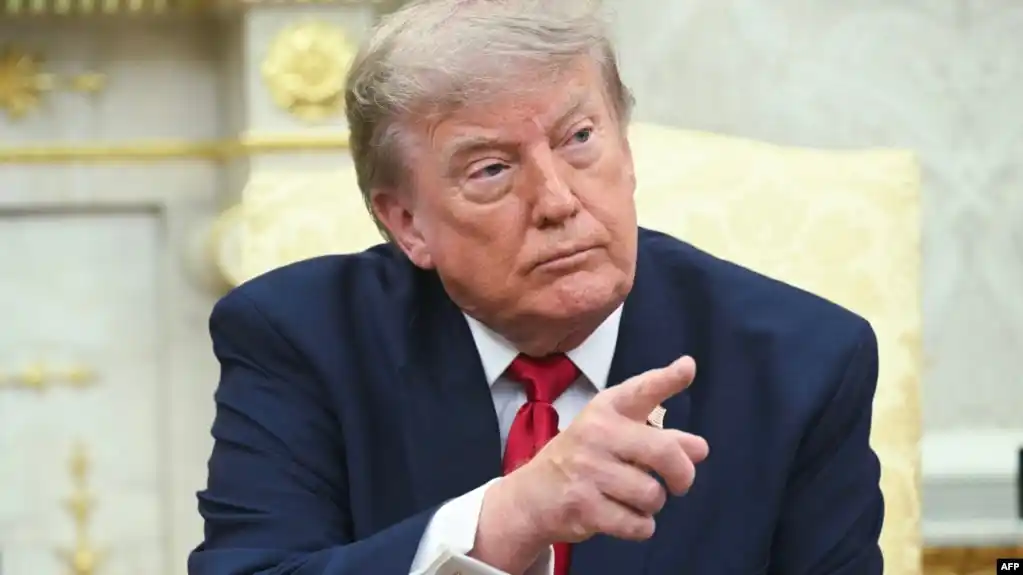

US President Donald Trump has announced that the United States will postpone a planned military strike against Iran, saying he prefers to give diplomacy another opportunity.
The decision comes as regional tensions remain high following months of conflict. However, Trump said the pause depends on the swift completion of an agreement addressing Iran’s nuclear programme and the reopening of the Strait of Hormuz.
His remarks signal a temporary shift from military action toward negotiations, although he warned that the situation could change if diplomacy fails.
Trump Says Deal Takes Priority
In a statement shared on his Truth Social platform, Trump said Iran and “other Middle Eastern Countries” requested time to finalize an agreement.
According to him, the proposed deal would lead to “the Immediate, Complete and Total” reopening of the Strait of Hormuz and “an end to Iran’s nuclear threat.”
He added, “Based on this request, I have agreed, for the future benefit of the WORLD and, likewise, the survival of a successful and prosperous Iran, to cancel the attack, subject to being able to rapidly make a DEAL.”
Trump also stated that Israel supports this approach. However, Israeli authorities had not publicly commented on the matter at the time.
Iran Warns Against Military Action
Despite Trump’s announcement, Iran warned the United States against any new military operation.
Iranian Foreign Minister Abbas Araqchi held separate conversations with senior officials from Türkiye, Pakistan, and Saudi Arabia. During those discussions, he said Iran would respond decisively to any aggression.
He also warned that any direct attack by the United States or Israel, or support from regional countries, would receive what he described as a proportionate response.
The latest exchange highlights how fragile the regional security situation remains despite renewed diplomatic signals.
Regional Concerns Continue
Saudi Arabia also became involved in the latest diplomatic efforts.
According to US officials, Saudi Crown Prince Mohammed bin Salman spoke with President Trump and expressed concern while seeking clarification about Washington’s intentions regarding Iran.
Meanwhile, media linked to Iran’s security establishment warned that attacks on Iranian energy facilities could trigger strikes on oil and gas infrastructure across the region.
Those statements have further increased concerns about the security of vital energy routes.
Strait of Hormuz Remains Central Issue
The Strait of Hormuz continues to play a critical role in the ongoing crisis.
The waterway serves as one of the world’s most important oil shipping routes. Since the conflict intensified earlier this year, security concerns have disrupted maritime traffic and contributed to higher global energy prices.
Analysts expect oil prices to remain under pressure as uncertainty continues across the region.
In addition, concerns have expanded beyond Hormuz. Recent threats against vessels near the Bab el-Mandeb Strait have added another layer of risk for international shipping.
Maritime Incidents Raise Fresh Questions
Authorities also reported new security incidents at sea.
The United Kingdom Maritime Trade Operations received reports of two separate maritime events off the coast of Oman.
In one case, a tanker was reportedly struck by an unidentified projectile, damaging its engine room. In another incident, a vessel’s captain reported an explosion near the ship, although no damage was confirmed.
Separately, Kuwait’s military said it intercepted hostile drones targeting several strategic facilities. Officials reported material damage from falling debris but confirmed that no casualties occurred.
Diplomacy Faces a Critical Test
Trump previously expressed confidence that US negotiators could still secure an agreement with Tehran. However, he also acknowledged growing frustration with the pace of negotiations.
His latest decision to suspend military action suggests diplomacy remains the preferred option for now. Nevertheless, the possibility of renewed confrontation has not disappeared.
As negotiations continue, developments surrounding Iran’s nuclear programme, regional security, and the Strait of Hormuz are expected to remain closely watched by governments and global energy markets alike.

