
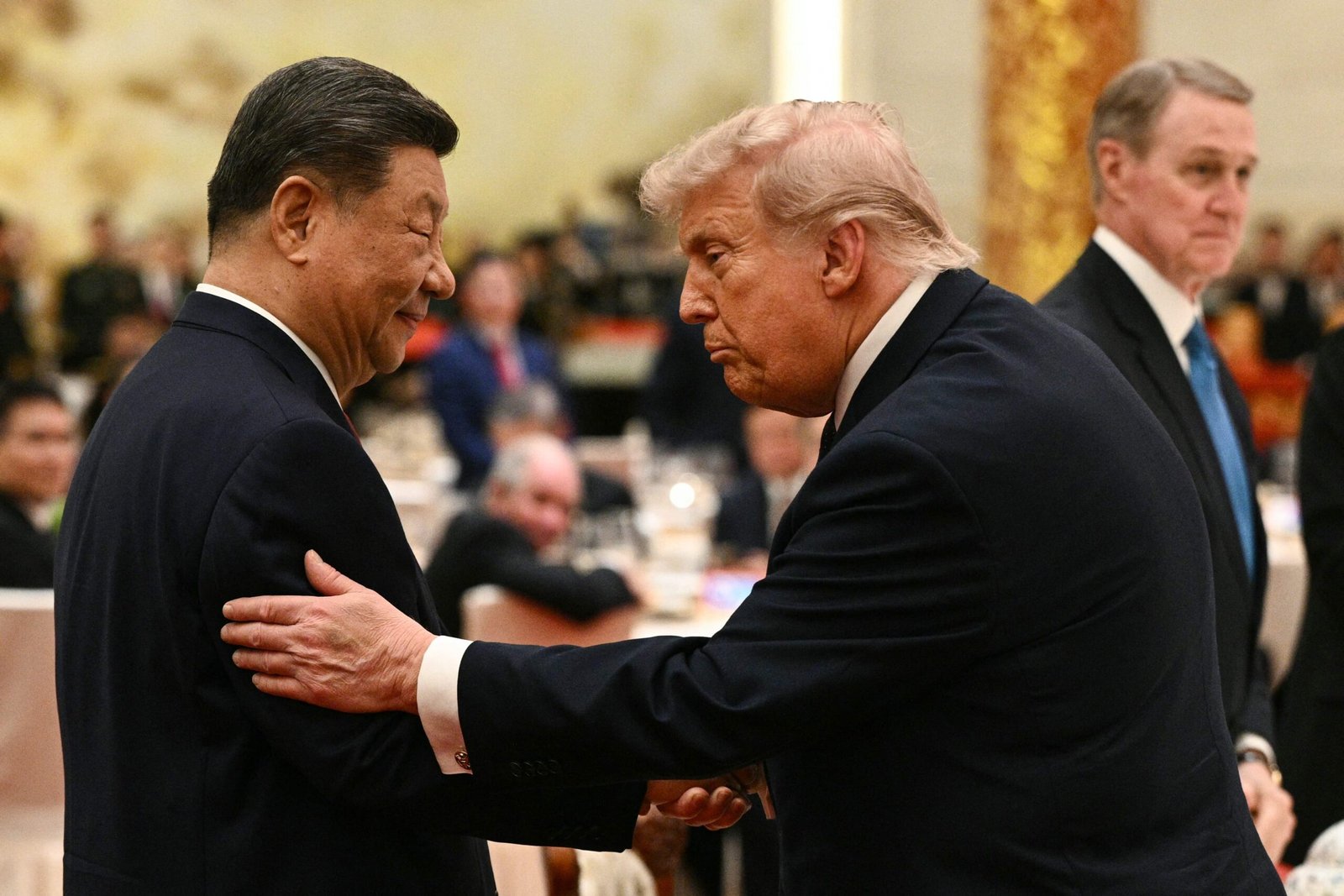

US President Donald Trump asked Chinese President Xi Jinping whether Beijing would be interested in buying American weapons, according to US Ambassador to China David Perdue.
Perdue made the disclosure during an interview with Fox News on Sunday while discussing US arms sales to Taiwan. He did not say when Trump raised the question or how Xi responded.
Washington Rules Out Arms Sale to China
The comments quickly drew attention because the United States currently has no plan to sell weapons to China.
A US State Department official told the South China Morning Post that US law prohibits arms sales to China.
The official also said there was “no offer or plan” to sell weapons to Beijing.
The clarification means Perdue’s comments appear to describe a question or remark by Trump rather than an active weapons proposal.
Perdue made the comments while defending Washington’s policy of selling defensive weapons to Taiwan.
Trump and Xi Hold High-Level Summit
Trump hosted Xi at the White House last week for a closely watched summit.
The Chinese president later held another meeting with Trump before concluding his three-day US state visit.
The discussions covered major issues involving trade, security, technology and US-China relations.
The weapons remark emerged during renewed debate over US arms sales to Taiwan and Washington’s broader policy toward Beijing.
China strongly opposes US arms sales to Taiwan. Beijing considers Taiwan part of China and has repeatedly called on Washington to stop military support for the island.
US Taiwan Policy Remains Unchanged
Perdue said Washington’s policy toward Taiwan had not changed.
He referred to the Taiwan Relations Act, the three US-China joint communiques and the Six Assurances as key elements of US policy.
The Taiwan Relations Act has long provided the legal framework for US policy on defensive arms for Taiwan. US law states that Washington should make available defense articles and services needed to help Taiwan maintain sufficient self-defense capabilities.
Perdue also said Trump had approved major arms transfers to Taiwan and remained engaged on future weapons sales.
China has consistently opposed those sales, arguing that they interfere in what Beijing considers an internal Chinese matter.
China Says Its Military Policy Is Self-Defence
Asked about Perdue’s remarks, Chinese Foreign Ministry spokesperson Guo Jiakun did not confirm that Xi had been offered US weapons.
Guo said China develops its military capabilities according to its own needs and is committed to safeguarding world peace and stability.
The statement came shortly after Xi’s visit to Washington, where both sides sought to manage tensions while continuing negotiations on broader bilateral issues.
US Previously Sold Military Equipment to China
The United States has previously provided military equipment to China.
During closer US-China strategic cooperation in the 1980s, Washington supplied Beijing with some military equipment, including counter-artillery radar systems and Mark-46 torpedoes.
However, government-to-government US arms sales to China were later halted. According to the US Government Accountability Office, no new Foreign Military Sales agreements with China were opened after 1990.
The current US position is therefore substantially different from the period of military cooperation during the Cold War.
Taiwan Remains a Major Issue
Taiwan remains one of the most sensitive issues in US-China relations.
Washington maintains unofficial relations with Taiwan and supplies it with defensive military equipment under US law.
Beijing opposes such arms sales and has repeatedly urged Washington to stop them.
The latest comments by Perdue have added another unusual detail to the discussion surrounding US weapons policy, but US officials have made clear that there is currently no plan to sell American weapons to China.
The White House and State Department clarification is significant because China remains a major strategic competitor of the United States, while Taiwan continues to be a central point of disagreement between Washington and Beijing.

