
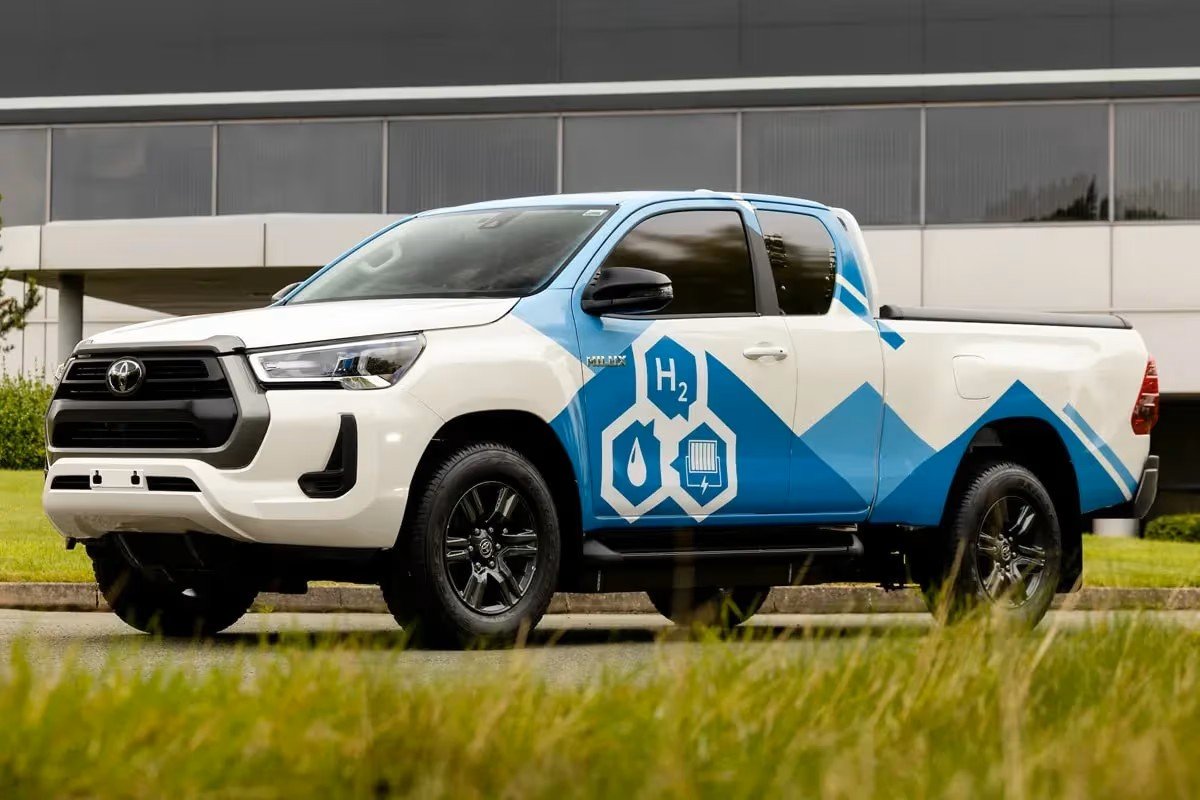

Toyota Plans Hydrogen-Powered Hilux for 2028 With 400 KM Driving Range
Toyota is preparing to introduce a hydrogen-powered Hilux pickup in 2028 as part of its broader push toward cleaner commercial vehicles.
The upcoming model is expected to use hydrogen fuel-cell technology instead of a conventional petrol or diesel engine.
Toyota has already tested fuel-cell Hilux prototypes in the United Kingdom. The project is designed to explore whether hydrogen can offer a practical zero-emission solution for pickup trucks and commercial fleets. (propakistani.pk)
The hydrogen Hilux is expected to offer a driving range of around 400 kilometres.
Its fuel-cell system will generate electricity through a chemical reaction between hydrogen and oxygen. The vehicle will then use that electricity to power its electric motor.
Unlike battery electric vehicles, hydrogen models can usually be refuelled much faster. This could make them attractive for commercial users who cannot afford long charging times.
Toyota has repeatedly argued that future transport will require several technologies rather than a single solution.
The company continues to invest in hybrids, battery electric vehicles and hydrogen fuel-cell systems.
The Hilux project also shows Toyota’s interest in applying hydrogen technology to larger and heavier vehicles.
Pickup trucks often need longer range, higher payload capacity and quick refuelling. These requirements can make hydrogen an appealing option in some markets.
However, limited hydrogen refuelling infrastructure remains a major challenge.
Hydrogen production, storage and distribution are also more expensive and complex than conventional fuel networks.
Toyota is expected to continue testing the vehicle before commercial production begins.
The final design, specifications and market availability may change before the planned 2028 launch.
If successful, the hydrogen Hilux could become one of the most important alternative-fuel pickup trucks in Toyota’s global lineup.
The project may also help determine whether hydrogen can play a larger role in the future of commercial transport.

