
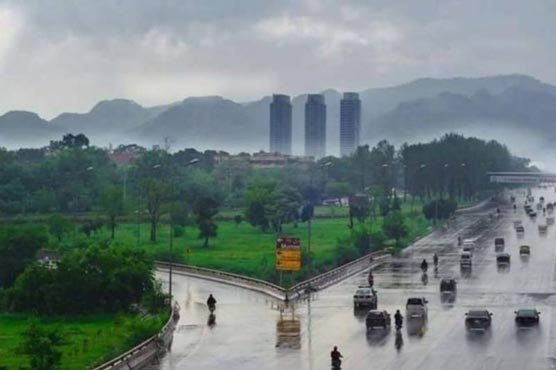

A powerful monsoon system has brought heavy rain, thunderstorms, and widespread disruption across the Potohar region and parts of Khyber Pakhtunkhwa.
Moderate to heavy rainfall has affected Peshawar, Attock, Hassan Abdal, Taxila, Rawalpindi, Islamabad, and surrounding districts. Thunder and lightning have also been reported across several areas.
The prolonged rainfall has increased the threat of urban flooding in Islamabad and Rawalpindi. Roads and streets in several low-lying neighbourhoods are already facing water accumulation.
Commuters have experienced difficult travel conditions. Traffic movement has slowed on several major routes because of standing water, reduced visibility, and slippery roads.
Low-Lying Areas Face Growing Flood Threat
Water accumulation has been reported in Shamsabad, Pir Wadhai, Faizabad, Zero Point, Blue Area, Bhara Kahu, and Bari Imam.
Several connecting roads and underpasses also remain vulnerable during intense rainfall. Poor drainage can cause water levels to rise within a short period.
Residents in flood-prone communities have been advised to closely monitor conditions. People should avoid entering flooded roads because the depth and strength of moving water can be difficult to assess.
The Pakistan Meteorological Department warned that heavy rainfall could cause urban flooding in low-lying areas of Islamabad, Rawalpindi, and Peshawar between July 20 and July 23.
Similar warnings have been issued for Gujranwala, Lahore, Sialkot, Multan, Faisalabad, and other vulnerable cities. The wider monsoon system is expected to produce rain, strong winds, and thunderstorms across several parts of Pakistan.
Thunderstorms are expected to continue with occasional breaks. Some locations could receive heavy or very heavy rainfall during short periods.
These intense downpours may overwhelm urban drainage systems. They could also disrupt electricity supplies, damage weak structures, and affect daily business activities.
Emergency Teams Monitor Lai Water Channel
The Water and Sanitation Agency in Rawalpindi has declared a rain emergency. Field teams have been deployed across vulnerable locations.
Emergency workers are monitoring the Lai water channel, major drains, and low-lying neighbourhoods. Machinery and water pumps are being used where required to clear flooded streets.
Officials are also monitoring changes in water levels. Residents living near major drainage channels have been asked to remain prepared for possible evacuation if conditions deteriorate.
Previous heavy rain events have caused rapid increases in the water level of the Lai water channel. Authorities have therefore placed response teams on alert to prevent loss of life and property.
Blocked drains remain a major concern during continuous rainfall. Waste and debris can restrict water flow and increase flooding in residential and commercial areas.
Citizens have been urged not to throw rubbish into drains. Clear drainage routes are essential for moving rainwater away from populated areas.
Flash Flood and Landslide Warnings Expanded
The latest wet spell could also trigger flash flooding in local streams and seasonal waterways.
Vulnerable areas include Kashmir, Murree, Galiyat, northeastern Punjab, and upper Khyber Pakhtunkhwa. Sudden flooding may affect roads, bridges, homes, and communities near natural waterways.
The risk of landslides has also increased in Murree, Galiyat, Kashmir, and Gilgit-Baltistan. Continuous rain can loosen soil and rocks along mountain roads.
Travellers have been advised to avoid unnecessary journeys towards vulnerable hill stations. Those already travelling should check road conditions and weather alerts before continuing.
The Provincial Disaster Management Authority and district administrations have issued precautionary instructions for affected communities.
Residents should avoid damaged roads, flooded underpasses, electric poles, exposed cables, trees, and drainage channels. Motorcyclists should exercise additional caution because roads may remain slippery.
People should remain indoors during intense thunder and lightning whenever possible. Electronic equipment should be disconnected during severe storms to reduce electrical risks.
Drivers must avoid crossing flooded roads. Even shallow-looking water can hide damaged surfaces, open drains, or strong currents.
Families living in low-lying areas should protect important documents and essential medicines. Emergency supplies, drinking water, flashlights, and charged mobile phones should also remain available.
The unsettled weather is expected to continue through July 23 with occasional breaks. Authorities have urged citizens to follow official weather updates and emergency instructions.

