

Palestinian and Jordanian officials condemn visit while Israeli police oversee access
JERUSALEM: Thousands of Israeli visitors entered the Al-Aqsa Mosque compound in occupied East Jerusalem on Thursday during the Jewish fast day of Tisha B’Av, prompting strong condemnation from Palestinian and Jordanian officials amid heightened tensions at the holy site.
The Jerusalem Governorate said more than 2,300 Israeli settlers and members of nationalist groups entered the compound during the first hours of the day and estimated the total could rise further before sunset. Israeli authorities have not confirmed those figures.
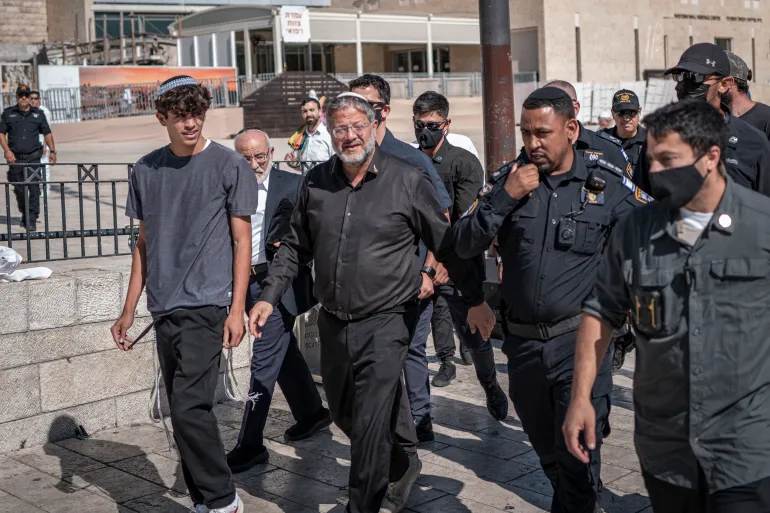
Israeli National Security Minister Itamar Ben-Gvir also visited the compound under heavy police protection. Israeli media reported that more than 1,000 Jewish visitors prayed at the site, despite longstanding arrangements under which non-Muslim visitors may enter the compound but public Jewish prayer has traditionally been restricted.
Restrictions and competing claims
Palestinian officials said Israeli security forces imposed strict entry measures at the compound, limiting access for many Palestinian worshippers and students. They also alleged that some worshippers were assaulted during the operation. Israeli authorities did not immediately respond to those allegations.
The Jerusalem Governorate further claimed that some visitors performed religious rituals inside the compound, while Ben-Gvir said Jewish visitors increasingly “feel like the owners” of the site, according to Israeli media reports.
Regional condemnation follows
The Palestinian Ministry of Endowments and Religious Affairs described the large-scale visits as a dangerous escalation and warned against changes to the site’s longstanding status quo.
Meanwhile, Jordan’s Foreign Ministry condemned Ben-Gvir’s visit, calling it an unacceptable provocation and urging the international community to help preserve the historical and legal arrangements governing the site.
Hamas also condemned the visits, while Palestinian officials warned that continued incursions could heighten tensions in Jerusalem.
The Al-Aqsa Mosque compound, known to Muslims as Islam’s third-holiest site and to Jews as the Temple Mount, remains one of the region’s most sensitive religious and political locations. The area has frequently been a flashpoint for confrontations between Israelis and Palestinians.

