


In a major diplomatic breakthrough, Cambodia and Thailand have agreed to an “immediate and unconditional ceasefire” effective from midnight Monday, following five days of the most intense fighting between the two Southeast Asian neighbors in over a decade. The conflict, which erupted late last week, has left at least 38 people dead—most of them civilians—and displaced more than 300,000 residents from the volatile border regions.
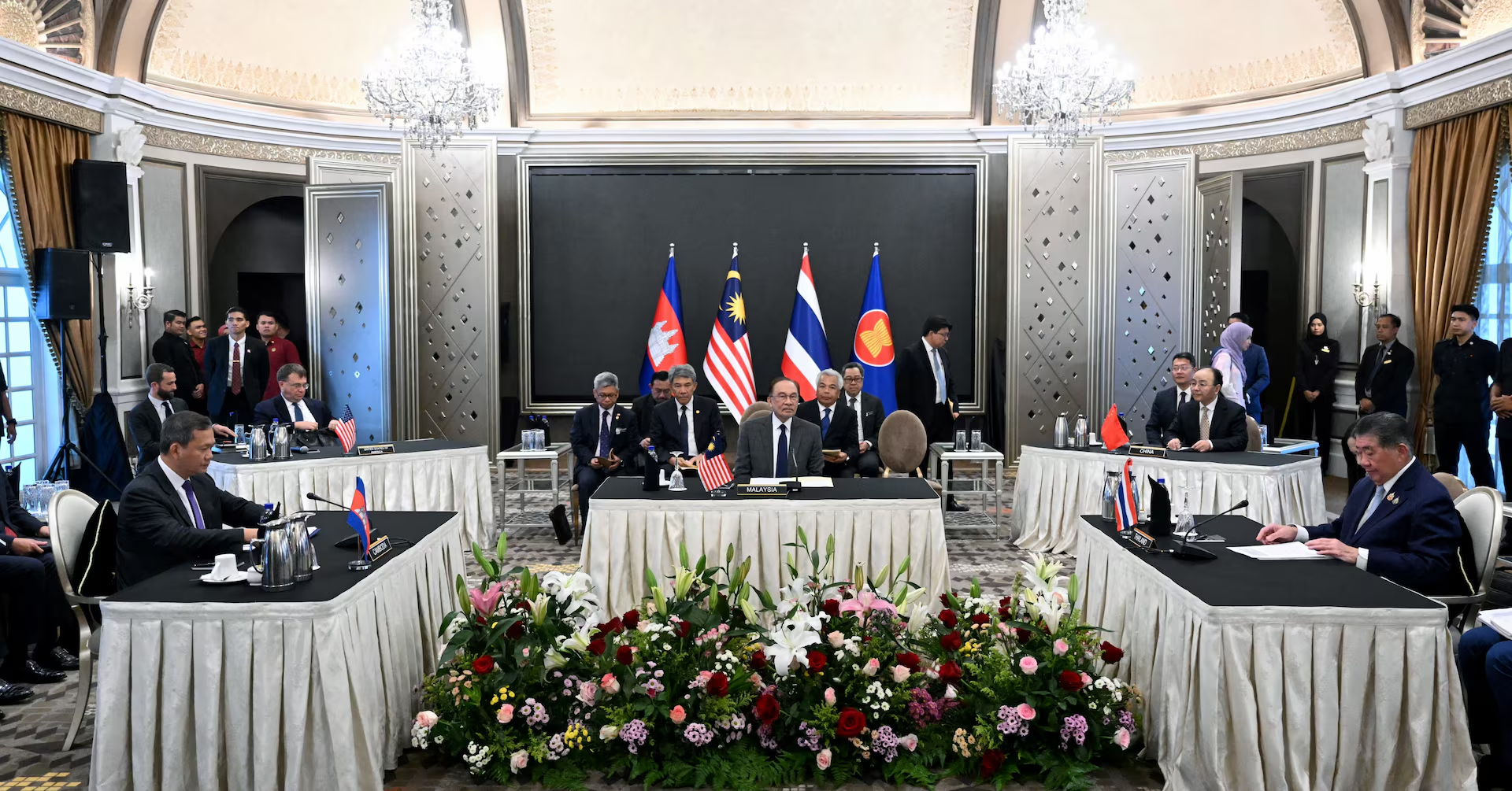
The ceasefire comes after urgent mediation efforts led by Malaysia, the current chair of ASEAN, along with intervention by the United States and China. The agreement was announced after a high-stakes, two-hour negotiation held at the official residence of Malaysian Prime Minister Anwar Ibrahim in Putrajaya. Anwar, flanked by the leaders of Thailand and Cambodia, described the agreement as a “vital first step toward de-escalation and the restoration of peace and security.”
Both countries have committed to resuming direct communication and establishing a joint mechanism to monitor the ceasefire. Diplomatic relations had sharply deteriorated in the preceding week, with the recall of ambassadors and accusations of military aggression flying in both directions.
U.S. President Donald Trump played a significant role in brokering the truce. Over the weekend, he held phone conversations with both Cambodian Prime Minister Hun Manet and Thai acting Prime Minister Phumtham Wechayacha, warning that failure to cease hostilities would result in suspension of key trade negotiations with the United States—their largest export market. Both countries currently face 36% tariffs on goods exported to the U.S., which served as a powerful incentive to comply.
On his Truth Social platform, Trump celebrated the agreement: “By ending this war, we have saved thousands of lives… I have now ended many wars in just six months — I am proud to be the President of PEACE!”
Thailand’s acting Prime Minister Phumtham expressed deep gratitude to Trump, calling his intervention instrumental. “After today, the situation should de-escalate,” he said. Trade talks with the U.S. are now expected to resume under more favorable conditions.
The roots of the current conflict stretch back decades, rooted in disputes over demarcation lines along the 800-kilometer-long land border. Tensions surged in late May following the killing of a Cambodian soldier and escalated when a Thai soldier lost a limb to a landmine, which Thailand accused Cambodian forces of planting—an allegation Cambodia vehemently denied.
What began as a skirmish quickly evolved into a full-scale confrontation involving artillery and, unexpectedly, Thai F-16 airstrikes. Dozens of civilian areas, including schools and homes, were hit in the crossfire. Cambodia has accused Thailand of “unprovoked and premeditated military aggression,” while Thailand insists it was acting in self-defense.
Cambodian Prime Minister Hun Manet welcomed the ceasefire and praised both the Thai leadership and international mediators. “We agreed that the fighting will stop immediately,” he said, adding that efforts would be made to rebuild trust and prevent future flare-ups.
U.S. Secretary of State Marco Rubio echoed Trump’s stance, stating that the U.S. expects both countries to “fully honor their commitments to end this conflict.”
On the ground, the devastation is still being assessed. In Thailand’s Sisaket province, homes have been reduced to rubble by Cambodian artillery, roads remain deserted, and thousands of residents are housed in makeshift evacuation centers. In one shelter, 54-year-old Nong Ngarmsri expressed the sentiment of many: “I want to go to my children who stayed back,” she said quietly. “I want them to cease firing so that I can go home.”
With regional and global powers closely watching, the ceasefire will now be tested by how well both countries uphold their promises and whether this fragile calm can evolve into a more enduring peace.
