
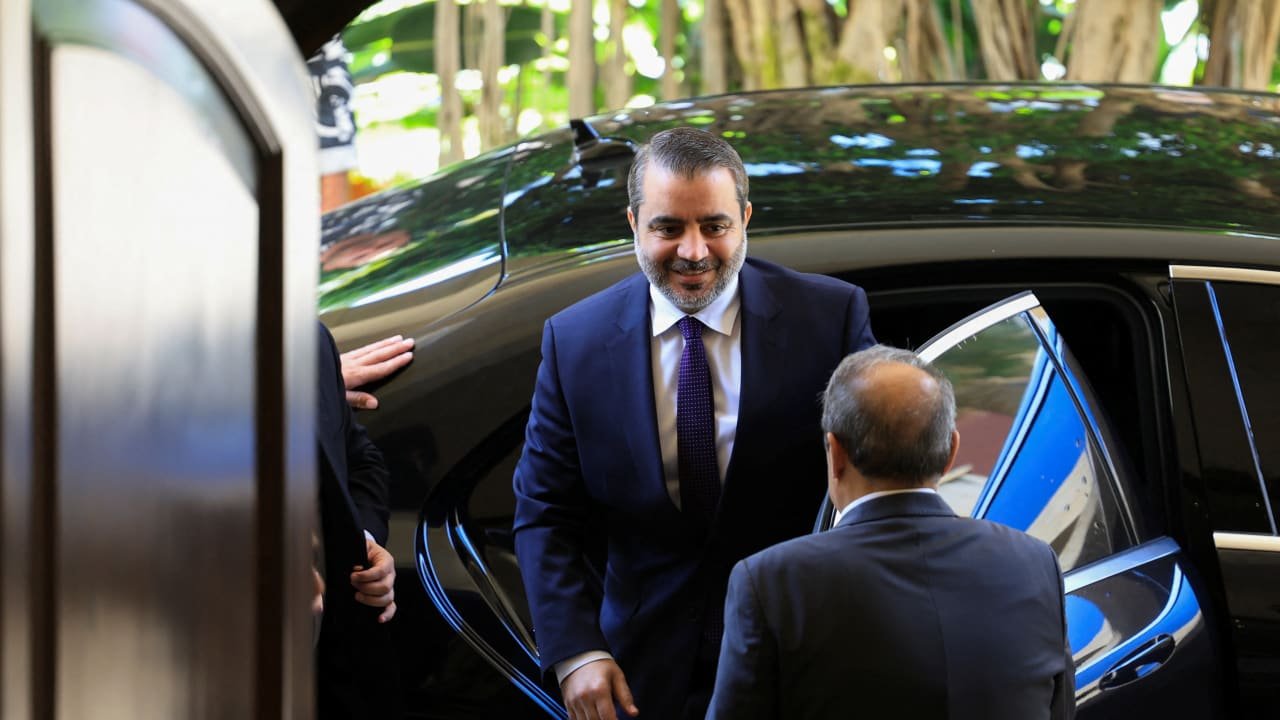

Senior leaders discuss bilateral ties amid evolving regional dynamics
Syrian Foreign Minister Asaad al-Shibani arrived in Beirut on Thursday for high-level meetings with Lebanon’s leadership, marking his first official visit since renewed discussion emerged over Syria’s potential role in addressing Hezbollah’s presence in Lebanon.
Al-Shibani began his visit by meeting Lebanese President Joseph Aoun before holding talks with Parliament Speaker Nabih Berri, a prominent political ally of Hezbollah. The meetings focused on bilateral relations and regional developments as both countries navigate shifting security and political challenges.
The visit comes after US President Donald Trump recently suggested that Syria could play a greater role in confronting Hezbollah, arguing that Damascus might be better positioned to address the group. However, Syrian President Ahmed al-Sharaa has publicly dismissed reports suggesting Syrian forces could enter Lebanon, describing such claims as unfounded.
Damascus rejects reports of military involvement
Earlier this year, Reuters reported that the United States had encouraged Syria to consider deploying forces into eastern Lebanon to support efforts aimed at disarming Hezbollah. Nevertheless, according to the report, Syrian authorities were reluctant to pursue such a course because of concerns that it could draw the country into a broader regional conflict and inflame sectarian tensions.
Following Trump’s remarks, President Sharaa reiterated that Syria has no plans to send military forces into Lebanon. Syrian state media quoted him as rejecting speculation surrounding any such deployment.
The current Syrian leadership, which came to power after the fall of former President Bashar al-Assad in 2024, has largely remained outside the wider regional conflict involving the United States, Israel and Iran while focusing on domestic stabilisation.
Historic ties continue to shape relations
Syria and Lebanon share a long and complex political history. Syrian forces entered Lebanon in 1976 during the country’s civil war and maintained a significant military and political presence until withdrawing in 2005.
Analysts say any future Syrian military involvement in Lebanon would carry significant political and security implications because of the region’s delicate sectarian balance. Consequently, officials in both Damascus and Beirut continue to emphasise dialogue and diplomatic engagement while monitoring ongoing regional developments and maintaining efforts to preserve stability.

