
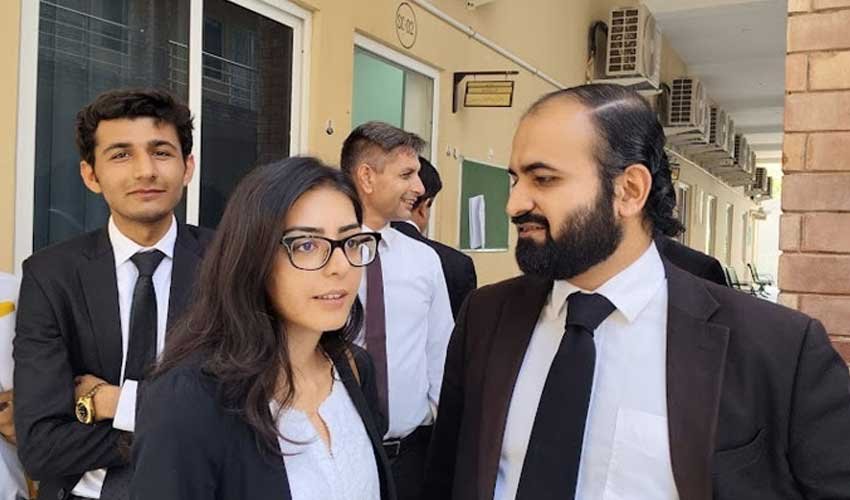

Top Court Pushes for Quick Decision in Controversial Tweets Case
The Supreme Court of Pakistan has directed the Islamabad High Court to decide the petitions filed by human rights lawyer Imaan Mazari and her husband Hadi Ali Chattha within two weeks.
The petitions seek suspension of prison sentences awarded to the couple in a controversial social media case linked to online posts and alleged tweets.
The order was issued on Tuesday during proceedings held before a three-member Supreme Court bench.
The bench included Justice Shahid Waheed, Justice Naeem Akhtar Afghan, and Justice Shafi Siddiqui.
According to the court order, the matter will remain pending before the Supreme Court until the Islamabad High Court gives a decision regarding the suspension pleas.
The development has attracted national attention because of the legal, political, and free speech concerns associated with the case.
During the hearing, senior lawyer Faisal Siddiqui represented the couple before the apex court.
He informed the bench that the Islamabad High Court had not conducted hearings on the suspension petitions for more than two months.
According to the counsel, the prolonged delay left the petitioners without immediate legal relief despite ongoing imprisonment.
He argued that the high court had not moved toward resolving the matter within a reasonable timeframe.
The Supreme Court then observed that the petitions should be decided promptly.
Justice Shahid Waheed remarked that the Islamabad High Court should decide the pleas within two weeks.
The observation signaled the apex court’s concern regarding delays in hearing the matter.
Court Discusses Legal Standards for Suspension of Sentences
During the proceedings, the judges also discussed broader legal principles regarding suspension of prison sentences during appeal hearings.
Justice Naeem Akhtar Afghan questioned what legal standards apply when courts consider suspension requests.
The judge asked under what circumstances a sentence should be suspended while appeals remain pending.
Legal experts say suspension of sentence petitions often depend on factors including length of imprisonment, legal grounds in appeal, and delays in final judgments.
Such pleas are common when convicted individuals challenge trial court decisions before higher courts.
Justice Afghan also noted that the Islamabad High Court had not formally rejected the couple’s petitions.
He observed that while the petitions remained undecided, the high court had not issued any negative ruling against the applicants either.
The exchange reflected judicial caution regarding interference in ongoing proceedings before another court.
Legal observers believe the Supreme Court attempted to balance judicial independence with the need for timely hearings.
Faisal Siddiqui requested the apex court to formally direct the Islamabad High Court to issue a verdict on the pending pleas.
The Supreme Court’s observations are expected to increase pressure for an early hearing and decision in the case.
The matter has generated significant public discussion due to concerns surrounding freedom of expression, social media laws, and judicial processes.
Human rights activists and legal circles continue closely monitoring the proceedings.
Case Continues Drawing National Attention
The controversial tweets case involving Imaan Mazari and Hadi Ali Chattha has remained under public debate for several months.
Supporters of the couple argue that the case raises important questions regarding civil liberties, online speech, and legal protections for activists and lawyers.
Others believe courts must ensure that social media activity remains within constitutional and legal boundaries.
The Supreme Court had earlier announced on May 7 that it would hear the couple’s petitions seeking suspension of sentence on May 12.
Tuesday’s hearing represented the latest major development in the legal proceedings.
Court observers believe the Islamabad High Court may now prioritize the matter following the Supreme Court’s direction.
The outcome of the suspension pleas could significantly affect the couple’s legal position while their broader appeals remain pending.
Legal analysts say delays in appeal hearings often become a major issue in Pakistan’s judicial system due to heavy caseloads and procedural complexities.
The Supreme Court’s intervention in this matter highlights increasing judicial focus on timely disposal of pending cases.
Meanwhile, lawyers, activists, and political observers continue debating the wider implications of the case for constitutional rights and digital expression in Pakistan.
The coming two weeks are expected to be critical as the Islamabad High Court prepares to hear and decide the pending petitions.

