

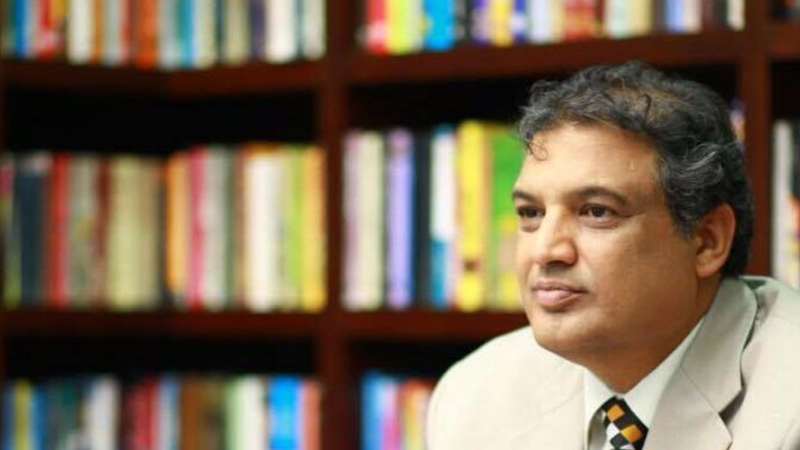

Senior journalist Suhail Warraich on Friday clarified that his recent column, which triggered widespread controversy, had been “misunderstood” and wrongly linked to the May 9 riots. The column, published on August 16 in Jang newspaper, recounted a meeting with Chief of Army Staff (COAS) Field Marshal Asim Munir during a stopover in Brussels after his return from the United States.
In the piece, Warraich quoted the army chief as saying that “political reconciliation is possible only if there is a sincere apology.” The remark, however, sparked speculation and was interpreted in some quarters as a reference to the May 9 events, despite the column not naming anyone or mentioning any incident.
The military’s spokesperson strongly refuted this interpretation on Thursday, asserting that the army chief had made no political statements in Brussels and emphasizing that no such interview had taken place.
The Inter-Services Public Relations (ISPR) also criticized Warraich in comments carried by state-run media. Initially declining to respond, Warraich on Friday issued a statement via X, stressing that the ISPR director general, Lieutenant-General Ahmed Sharif Chaudhry, had misunderstood his column. He explained that the points Chaudhry refuted “were never mentioned” in his writing and invited critics to carefully reread his work. “Nowhere in the column does the word ‘interview’ appear,” he said, pointing out that its title was simply “First Meeting” and that he never claimed it to be a one-on-one conversation.
Warraich categorically denied any link between his column and the May 9 riots or PTI founder Imran Khan. “Kindly reread the column; it contains no mention of May 9, Imran Khan or his apology,” he said, clarifying that he had merely cited the COAS’s use of Quranic verses while discussing reconciliation. According to him, the interpretations drawn from that single line were the responsibility of those making them.
Dismissing criticism directed at him, Warraich said there was no need for rebuttals, as time and history would eventually reveal the truth.
He described the portion he quoted in his column as just a “fragment” of the army chief’s wider address, reiterating that arbitrary interpretations were being made for personal or political motives. He concluded by saying that history alone would expose falsehoods and determine the credibility of journalism.
