
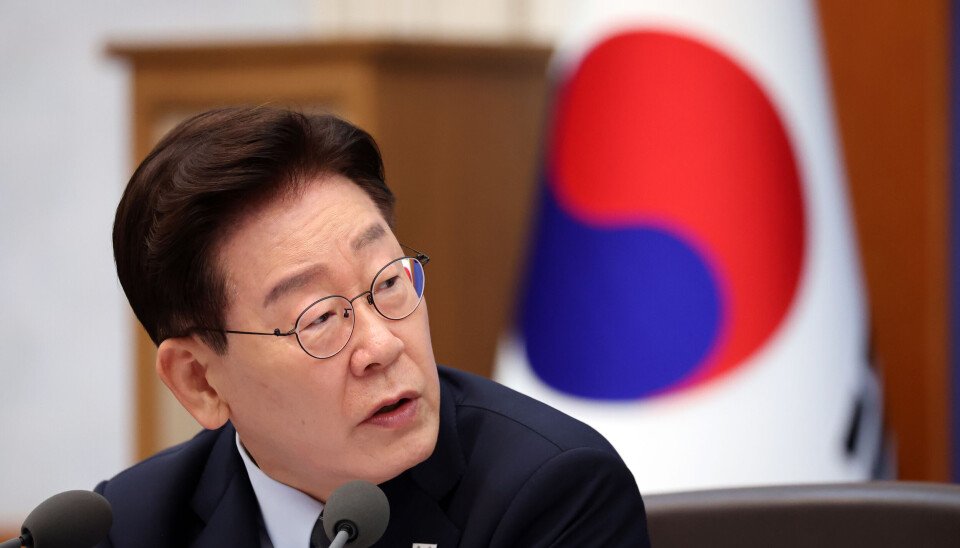

South Korea will not deploy troops or military assets to intervene in the ongoing Iran war, President Lee Jae Myung said Friday.
Lee made the announcement during a press conference at the presidential Blue House.
“There will be no involvement or intervention in the war,” he said.
The president said Seoul would not send combat troops or military assets in a way that could draw South Korea into the conflict.
However, South Korea is considering measures to protect its commercial vessels, crude oil shipping routes and citizens near the Strait of Hormuz.
The government is also considering expanding the activities of the Cheonghae Unit, which is already deployed near the region to respond to threats against ships and Korean nationals.
Lee stressed that any expanded role would remain focused on safety rather than combat operations.
Iran Reports Attack on Oil Tanker
Meanwhile, Iran’s Revolutionary Guards said they struck and detained a Togo-flagged oil tanker in the Strait of Hormuz.
Iranian state media identified the vessel as the Trend.
The Guards said the tanker was targeted after attempting to pass through the waterway without authorization. A fire reportedly broke out aboard the vessel.
The United Kingdom Maritime Trade Operations had earlier reported a security incident about 16 nautical miles northeast of Khasab, Oman.
UKMTO did not identify the vessel involved. It remains unclear whether the incident was connected to the Trend.
The Strait of Hormuz remains a major international shipping route. Disruptions there have raised concerns about energy supplies and global oil markets.
Iran Summons German Ambassador
Iran has also summoned Germany’s ambassador over what Tehran described as inappropriate statements by senior German officials.
The move followed remarks by German Chancellor Friedrich Merz calling on Iran to lift restrictions on shipping through the Strait of Hormuz.
Berlin has also urged Tehran to stop supporting armed groups in the region and address concerns surrounding its nuclear programme.
Iran denies pursuing nuclear weapons.
The diplomatic dispute comes as regional tensions continue to affect shipping and energy routes across the Middle East.

