

Authorities Told to Remove Posters, Banners and Graffiti Immediately
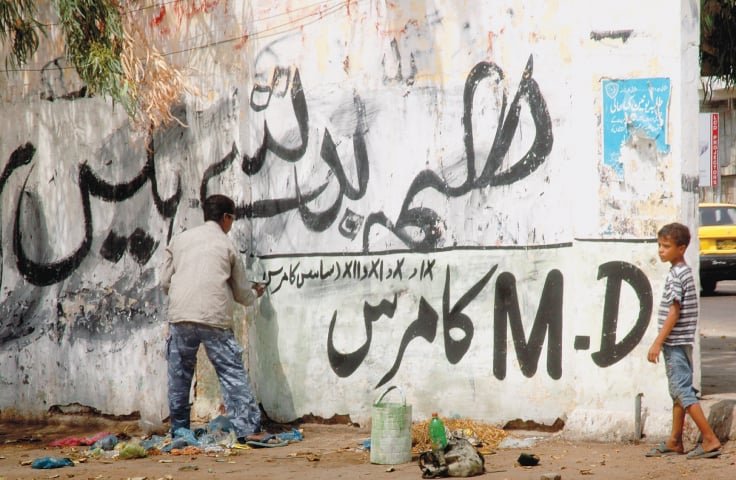
The Sindh High Court has ordered authorities to immediately remove illegal wall chalking, posters and banners from public spaces across the province.
The directives were issued during the hearing of a petition concerning the defacement of public and private property.
The court instructed municipal administrations and local government institutions to launch enforcement operations within their respective areas.
Unauthorized advertisements, political slogans, posters, banners and painted messages must be removed from roads, buildings, bridges and other public locations.
The court observed that the continued defacement of public property damages the appearance of cities and creates disorder in residential and commercial areas.
It added that weak enforcement of anti-defacement laws affects citizens’ right to live in a clean, safe and properly managed environment.
The judges directed authorities to ensure that removed material is not allowed to return after cleanup operations.
Local bodies were also told to take legal action against individuals and organizations responsible for illegal displays.
Chief Secretary Asked About Anti-Defacement Task Force
During the hearing, the Sindh High Court sought a detailed report from the provincial chief secretary.
The court asked whether the Sindh government had established an Anti-Defacement Task Force.
The proposed body is expected to coordinate enforcement efforts across provincial departments, district administrations and municipal authorities.
The court wanted information about the task force’s structure, responsibilities and progress.
However, the Sindh government’s legal representative failed to submit the chief secretary’s report during the hearing.
The government requested additional time to prepare and present the required information.
The court accepted the request and adjourned further proceedings for two weeks.
The provincial authorities are expected to submit the report at the next hearing.
Violators Could Face Prison and Daily Fines
Petitioner’s counsel Tariq Mansoor informed the court that legislation against the defacement of property has been in force in Sindh since 2013.
He said the law prohibits unauthorized writing, painting, posters and advertisements on walls and public structures.
Under the law, violators can face imprisonment for up to six months.
They may also receive a fine of up to Rs. 5,000.
Individuals who continue the violation after receiving instructions may face an additional fine of Rs. 1,000 for every day the offence continues.
The counsel argued that despite the existing penalties, illegal wall chalking remains common in major cities.
Walls, electricity poles, flyovers, public buildings and other structures are frequently covered with advertisements and slogans.
He said authorities must enforce the law consistently instead of conducting temporary cleanup campaigns.
The court was also informed that property owners are permitted to display signboards connected to their own businesses.
However, such signboards must remain within the owner’s premises and comply with applicable municipal regulations.
The exemption does not allow businesses to place advertisements on public property or buildings owned by other people.
The case will now resume after two weeks.
The Sindh government is expected to present its report and explain the steps taken to enforce anti-defacement laws across the province.

