

Environmental Groups Demand Full FCC Review
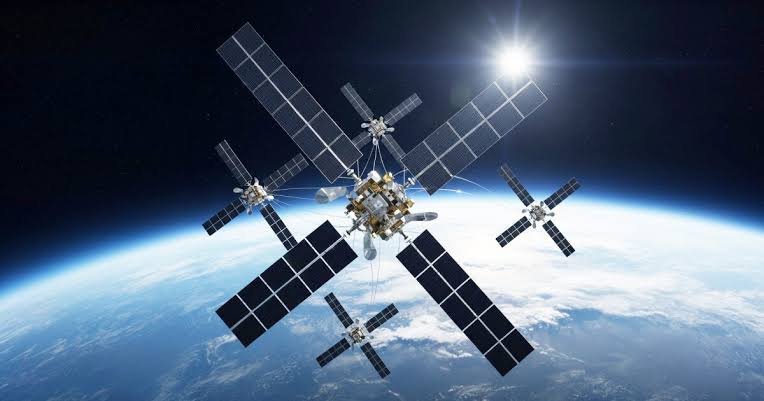
Scientists and environmental organisations have raised serious concerns over plans to establish large data centres in space.
Companies linked to Elon Musk and Jeff Bezos are exploring orbital computing systems to support rising artificial intelligence demand.
SpaceX, Blue Origin and other companies have submitted proposals involving satellite-based data centres in low-Earth orbit.
A coalition represented by environmental law organisation Earthjustice has formally petitioned the US Federal Communications Commission.
The groups want the FCC to conduct a comprehensive environmental review before approving any orbital data centre licences.
They have also asked the regulator to pause pending applications until the potential risks are properly assessed.
The petition was filed on behalf of DarkSky International, Environment America and Public Employees for Environmental Responsibility.
The coalition argues that approving such large projects without environmental studies would be reckless.
It says the FCC must examine the combined impact of launches, satellite operations, collisions and atmospheric re-entry.
Pollution and Debris Could Threaten the Atmosphere
The proposed projects could place more than one million additional satellites into orbit.
SpaceX’s proposal alone seeks permission for up to one million satellite-based data centres.
There are currently around 15,000 active satellites orbiting Earth.
That number was already expected to increase significantly before orbital data centre proposals emerged.
Scientists warn that launches and satellite re-entry could release harmful materials into sensitive parts of the atmosphere.
Rocket launches can produce black carbon, nitrogen oxides, aluminium oxide and other emissions.
Satellites also release metals and chemical particles when they burn up during re-entry.
Researchers are still studying how these materials interact with the stratosphere and the ozone layer.
Environmental experts fear large satellite networks could change atmospheric chemistry.
They could also increase ultraviolet exposure if emissions contribute to ozone damage.
The risks remain uncertain because orbital pollution has not been studied at the scale proposed by technology companies.
Scientists say uncertainty should lead to stronger testing and regulation rather than immediate approval.
The increase in orbital activity could also create more space debris.
Collisions between satellites may produce thousands of dangerous fragments.
Those fragments could threaten communication, navigation, weather monitoring and scientific satellites.
A major increase in bright satellites could also permanently change the appearance of the night sky.
Astronomers warn that light from satellite constellations can interfere with telescopes and scientific observations.
Environmental groups say artificial light can disturb wildlife migration, feeding patterns and natural biological cycles.
DarkSky International has urged the FCC to consider these risks before allowing massive orbital networks.
Musk and Bezos Back Orbital Computing Future
Technology companies argue that space could offer major advantages for artificial intelligence infrastructure.
Orbital data centres could receive extended access to solar energy.
They could also reduce pressure on land, electricity grids and cooling systems used by conventional data centres.
Supporters believe falling launch costs and improved satellite technology could make the concept commercially possible.
Jeff Bezos has predicted that large data centres could operate in space within the next one or two decades.
Elon Musk has also publicly supported orbital computing and indicated that SpaceX intends to pursue the technology.
Blue Origin has applied to develop data centres capable of operating beyond several Earth-based constraints.
SpaceX has proposed using satellites in sun-synchronous orbital regions to receive greater solar exposure.
However, experts say the engineering challenges remain considerable.
Orbital systems would require secure communication, advanced cooling, constant maintenance and reliable protection from radiation.
Replacing damaged or outdated equipment would also be more difficult than servicing facilities on Earth.
Some former space officials have questioned whether networks involving hundreds of thousands of satellites are technically or economically realistic.
The FCC has not publicly announced a final decision on the environmental coalition’s request.
Earthjustice says federal law requires the regulator to consider environmental effects before approving projects of this scale.
The organisation has warned that legal action could follow if licences are granted without a proper review.
Scientists are not demanding a permanent ban on space-based computing.
They are calling for detailed research, public consultation and environmental safeguards before companies transform Earth’s orbit.

