

Central bank expects higher reserves, remittances and export recovery in FY27
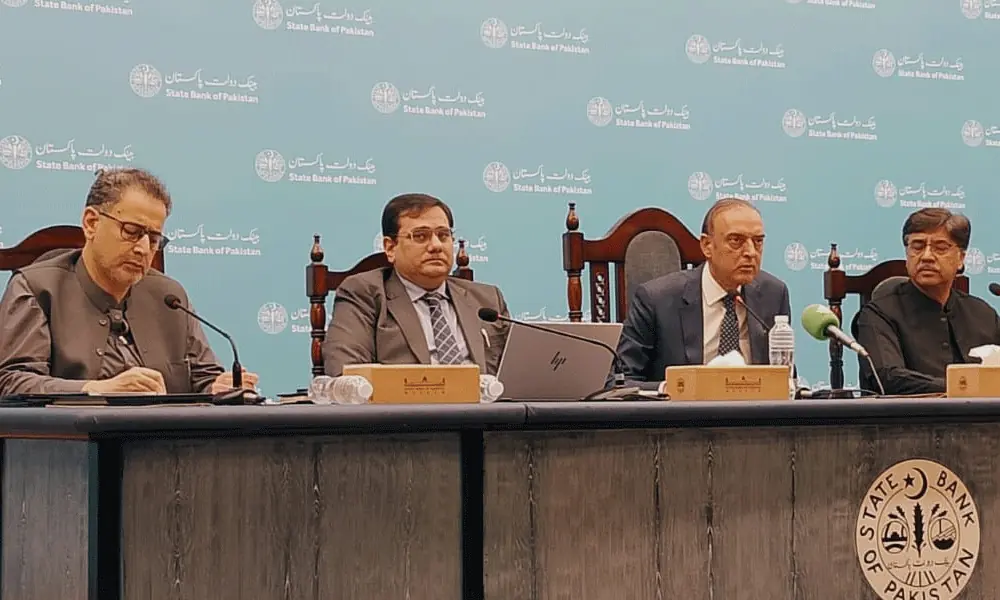
State Bank of Pakistan (SBP) Governor Jameel Ahmad on Friday projected that the country’s economy will expand faster than the government’s provisional estimate of 3.7 percent during fiscal year 2025-26, despite the impact of regional geopolitical tensions.
Speaking at a press conference, Ahmad said Pakistan’s gross domestic product (GDP) is expected to grow between 3.75 percent and 4.75 percent. He noted that earlier projections exceeded four percent, but the ongoing Middle East crisis moderated the growth outlook.
Meanwhile, the governor highlighted a significant improvement in Pakistan’s external position. The SBP’s foreign exchange reserves rose to $18.4 billion during FY26, compared with $13 billion in the previous fiscal year, despite debt repayments of approximately $8 billion in June alone.
Ahmad also said preliminary estimates indicate workers’ remittances exceeded $41.5 billion during FY26, surpassing last year’s total despite regional instability.
Remittances remain resilient as inflation stays above target
According to the governor, remittance inflows reached $38.1 billion during the first 11 months of FY26, marking a 9.2 percent increase from the corresponding period a year earlier. The central bank expects remittances to rise further to $44 billion during FY27.
However, Ahmad acknowledged that inflation averaged around 7.05 percent during FY26, slightly above the official target range of five to seven percent.
He also expressed optimism that export earnings would recover during FY27 after declining in the previous fiscal year, even as Pakistan’s trade deficit widened to $39.47 billion.
Subsidy schemes discontinued
The SBP governor confirmed that the central bank has discontinued the Sohni Dharti Remittance Program and the Telegraphic Transfer Charges Incentive Scheme.
Nevertheless, he said commercial banks and exchange companies will continue offering incentives for remittance inflows, adding that the policy change is not expected to negatively affect money transfers or foreign exchange inflows in the coming fiscal year.

