
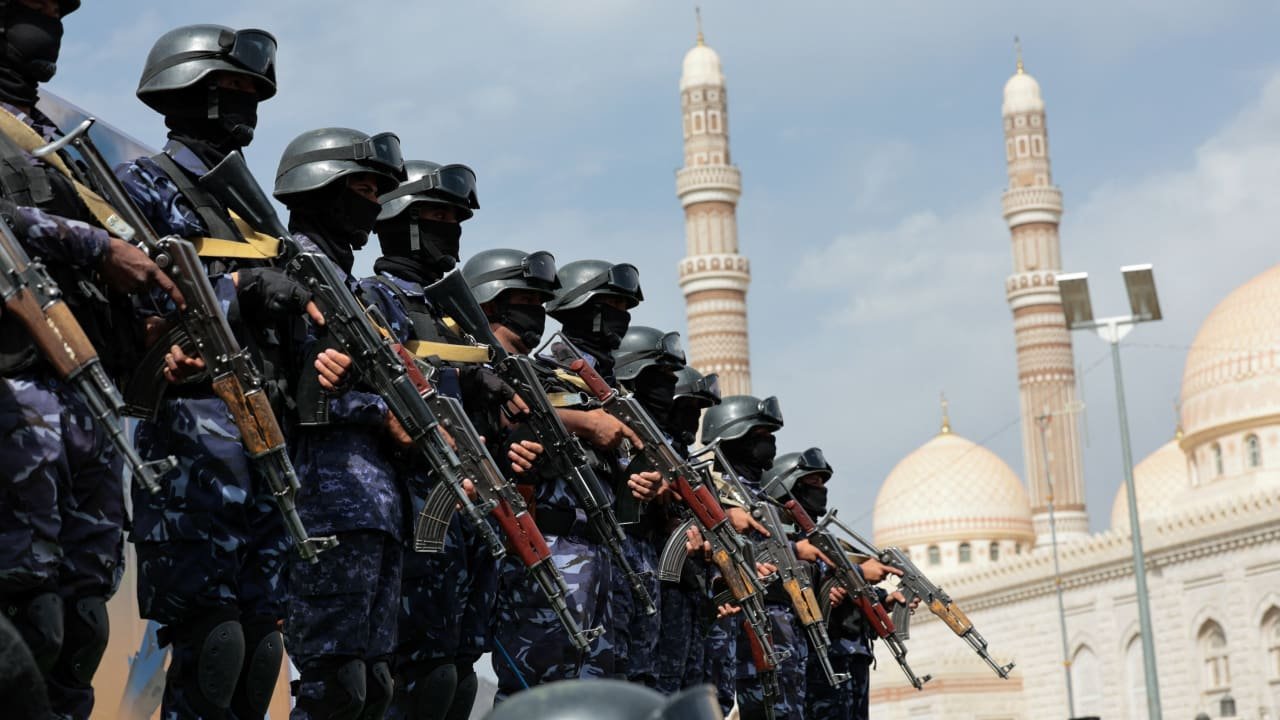

Riyadh considers backing government-aligned forces as Houthi attacks threaten Bab el-Mandeb shipping and Saudi energy infrastructure
RIYADH: Saudi Arabia is weighing support for a Yemeni ground offensive aimed at retaking the Red Sea coastline from the Houthis as missile and drone attacks intensify around the strategically important Bab el-Mandeb Strait.
The potential campaign would test Riyadh’s months-long effort to reorganise rival Yemeni armed factions into a more coordinated force capable of challenging Houthi territorial control.
Pressure increased after missiles struck the commercial vessel Tihama in Bab el-Mandeb on Tuesday. Yemeni authorities reported conflicting casualty figures, while one account said three Pakistanis and an Indonesian crew member were killed.
Meanwhile, the Houthis have intensified attacks on government-held areas and threatened Saudi energy infrastructure.
Red Sea Attacks Increase Pressure on Riyadh
The Houthis have controlled Yemen’s capital and much of northern Yemen since 2014. Their forces also dominate significant stretches of the Red Sea coastline, giving them considerable leverage over international shipping.
Recently, Houthi missiles and drones have repeatedly targeted Mokha and other government-held locations. The group also claimed attacks against Saudi-linked vessels and an Aramco refinery in Jazan.
Consequently, Saudi Arabia has strengthened Yemeni formations while attempting to integrate competing factions previously supported separately by Riyadh and Abu Dhabi.
However, analysts caution that assembling forces does not necessarily mean Saudi leaders have decided to launch an offensive.
Bab el-Mandeb Emerges as Strategic Battleground
Control of the coastline from Bab el-Mandeb through Mokha, Hodeidah, Ras Isa and As-Salif could determine the balance of power in Yemen and affect international commerce.
Furthermore, disruption threatens Saudi Arabia’s alternative oil-export route through Yanbu, as Asia-bound tankers must still cross Bab el-Mandeb.
Shipping disruptions could also increase energy, insurance and commodity costs across Asia.
Analysts argue that air and naval operations alone cannot eliminate the threat.
Therefore, any sustained campaign would likely require Yemeni ground forces, regional military backing and international maritime protection working together to restore coastal control and eventually force renewed political negotiations.

