
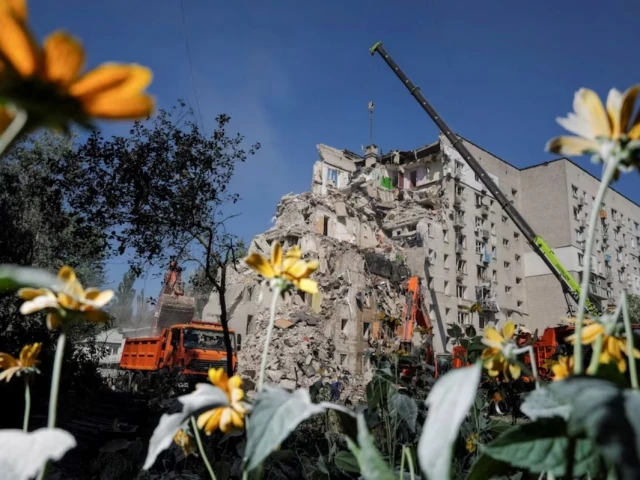

A massive Russian overnight airstrike shook Kyiv, killing at least 21 people and wounding over 90 others in the city’s deadliest attack this year. Moscow deployed 74 missiles and 496 drones in a relentless assault that forced thousands of residents into underground metro stations and bomb shelters. Kyiv Mayor Vitali Klitschko immediately declared an official day of mourning as emergency crews sifted through the burning rubble of a destroyed nine-story residential building.
The intense bombardment damaged more than 20 sites across the capital, including an ambulance station and a diplomatic residence. The strikes also gutted a state-of-the-art laboratory at the National Institute of Biochemistry, destroying rare scientific equipment. President Volodymyr Zelenskiy cut short his official visit to Ireland to manage the crisis. He urged Western allies to accelerate vital deliveries of Patriot air defense missiles, noting that ammunition shortages severely hampered local interception rates during the attack.
The Russian Defense Ministry confirmed the massive strike, claiming its precision weapons targeted critical military and energy facilities. Moscow labeled the assault as direct retaliation for recent Ukrainian drone strikes, which recently hit an oil refinery in Russia’s Nizhny Novgorod region. Kyiv has increasingly targeted Russian energy infrastructure to disrupt the Kremlin’s war economy, triggering domestic fuel shortages inside Russia. The escalating aerial warfare prompted neighboring Poland to scramble fighter jets to protect its airspace.
EU foreign policy chief Kaja Kallas condemned the civilian attacks and proposed new sanctions against entities backing Russia’s military-industrial complex. While Zelenskiy continues to seek peace talks to end the four-year-old conflict, the Kremlin rejects these proposals. Moscow maintains that infrastructure strikes remain legitimate military objectives, despite widespread international condemnation of this deadly and highly destructive air campaign.

