

Washington seeks to reassure Gulf allies as fears grow over missiles, sanctions relief and Hormuz influence
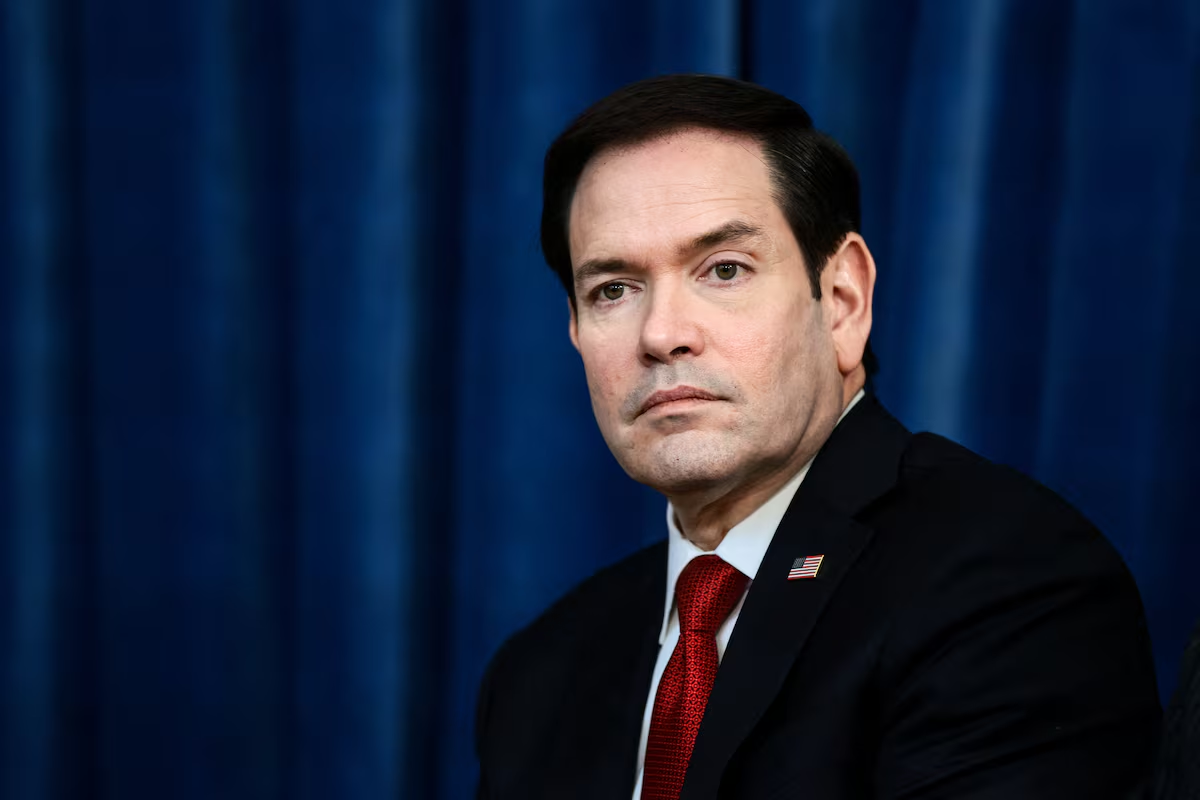
US Secretary of State Marco Rubio began a delicate diplomatic mission in the Gulf this week as he sought to convince Arab allies to back Washington’s peace deal with Iran, despite deep concerns that the agreement could strengthen Tehran and alter the region’s security balance.
Rubio was scheduled to meet Gulf Arab leaders in the United Arab Emirates on Tuesday before travelling to Kuwait and Bahrain for wider talks with the Gulf Cooperation Council. The meetings come as several Gulf states privately question the terms of the US-Iran memorandum of understanding, particularly provisions they believe offer Tehran economic and strategic advantages without curbing its regional power.
Gulf states worry about missiles and regional leverage
At the centre of regional unease are reported elements of the draft agreement that place no restrictions on Iran’s ballistic missile programme, propose a $300 billion reconstruction fund and appear to give Tehran a larger role in managing the Strait of Hormuz.
For Gulf states such as Saudi Arabia, Kuwait, Qatar and Bahrain, those issues are especially sensitive. All remain within range of Iranian missiles and rely heavily on the Strait of Hormuz for oil and gas exports. Regional officials also fear that fresh funds and sanctions relief could allow Tehran to rebuild its military capacity and increase support for allied groups across the Middle East.
Rubio seeks balance between reassurance and loyalty to Trump
Rubio’s task is complicated by the need to calm nervous allies without publicly undercutting President Donald Trump, who signed the accord and continues to defend it despite criticism from within his own Republican Party.
Analysts say Rubio may emphasise Trump’s record of taking a hard line on Iran and argue that Washington still retains the option of renewed military pressure if the agreement fails. Still, Gulf leaders remain wary of any broader US reset with Tehran, fearing that a stronger Iran could reshape regional politics and weaken their own security position.
The meetings are expected to test whether Washington can preserve Gulf confidence while pursuing diplomacy with its longtime rival in Tehran.

