
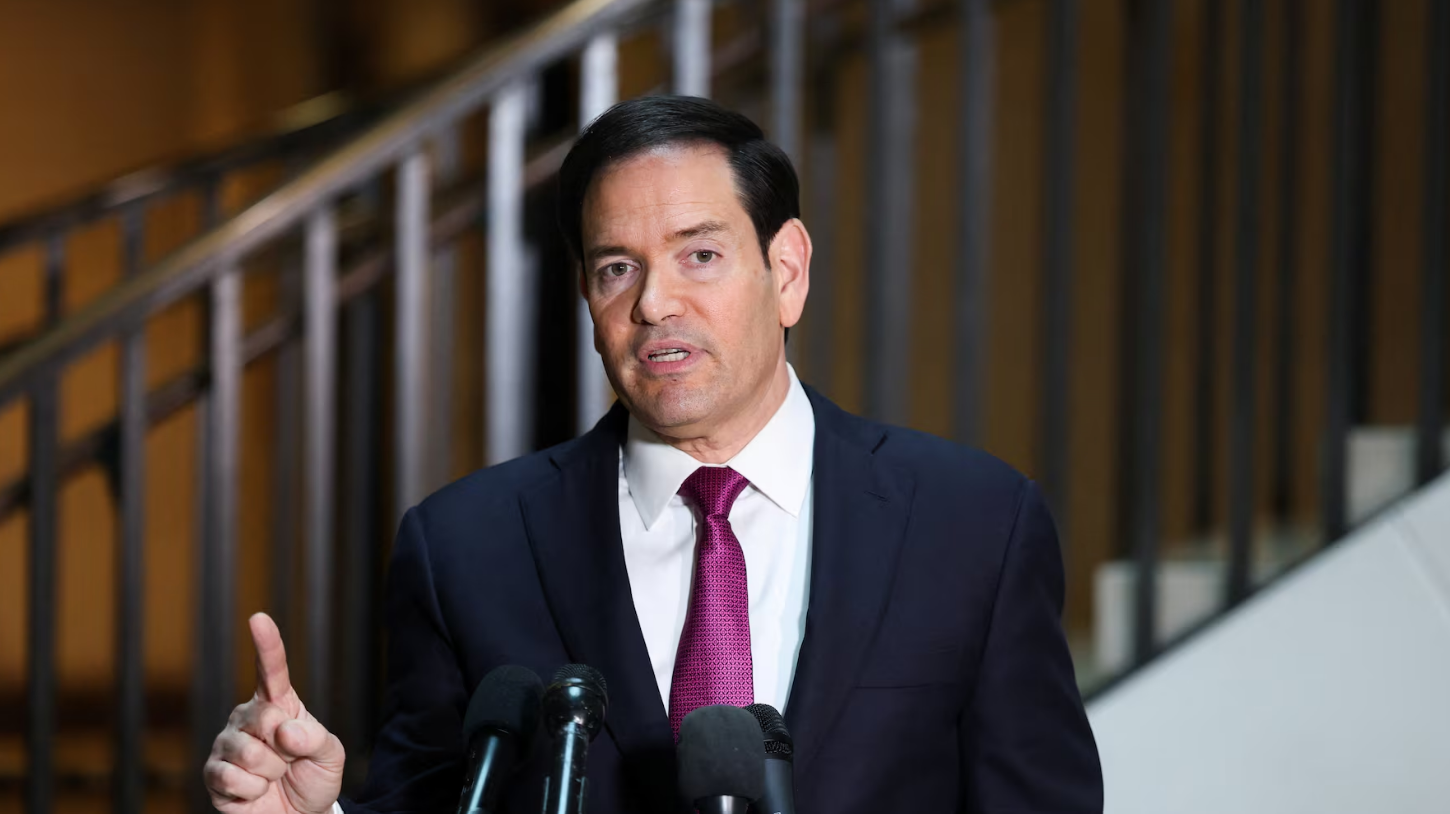

US Secretary of State Marco Rubio concluded a two-day visit to Rome, where he focused on regional security and diplomatic tensions.
A key part of his visit centered on urging European allies to help secure the Strait of Hormuz, a vital global energy route.
Rubio stressed the strategic importance of the waterway and raised concerns over Iran’s influence in the region.
He told reporters after meeting Italian Prime Minister Giorgia Meloni: “The world has to start asking itself, what is it willing to do if Iran tries to normalise control of an international waterway? I think that’s unacceptable.”
Strait of Hormuz Tensions Drive Global Concern
The Strait of Hormuz remains a critical passage for oil, gas, and fertiliser shipments worldwide.
According to discussions in Rome, tensions escalated after military actions in the region triggered wider instability.
US officials argue that control or disruption of the strait could severely impact global energy markets.
Rubio urged European countries, including Italy, to take a stronger role in maritime security operations.
He also criticized what Washington sees as limited European engagement in the ongoing crisis.
Growing NATO and Troop Deployment Debate
Rubio also addressed broader transatlantic security concerns during his visit.
He discussed the possibility of US troop repositioning in Europe, including potential reductions in Germany, Italy, and Spain.
He linked the issue to NATO responsibilities and burden-sharing among allies.
“If one of the main reasons why the US is in NATO is the ability to have forces deployed in Europe that we could project to other contingencies, and now that’s no longer the case, at least when it comes to some NATO members, that’s a problem, and it has to be examined,” he said.
He added that no final decision has been made regarding troop withdrawals or disciplinary measures.
Talks With Italy Described as Frank and Constructive
Rubio held a 90-minute meeting with Prime Minister Meloni at Palazzo Chigi. Italian officials described the discussion as “broad and constructive” but also “frank”. The talks covered bilateral ties, Middle East tensions, Libya, and the war in Ukraine.
Earlier remarks by US leadership had criticized Meloni’s position on several foreign policy issues, adding strain to diplomatic relations.
Despite this, both sides reaffirmed the importance of Western unity.
Meeting With Pope Leo and Vatican Discussions
Rubio, a practicing Catholic, also met Pope Leo XIV during his visit.
He described the meeting as “very good” and focused on humanitarian and geopolitical issues.
The discussion included religious freedom, the Iran conflict, and humanitarian aid to Cuba.
He said, “It’s important to share our points of view, an explanation and an understanding of where we’re coming from. And I thought it was very positive.”
Rubio also met Vatican Secretary of State Pietro Parolin to discuss peace efforts and regional stability.
The Vatican later confirmed that discussions emphasized “the need to work tirelessly for peace”.
Conclusion: Diplomacy Amid Rising Global Pressure
Rubio’s Rome visit highlighted rising tensions across multiple fronts, including Iran, NATO commitments, and global energy security.
While Washington pushes for stronger European involvement, divisions remain over strategy and military engagement.
The Strait of Hormuz continues to be a central flashpoint shaping international diplomacy and security calculations.

