
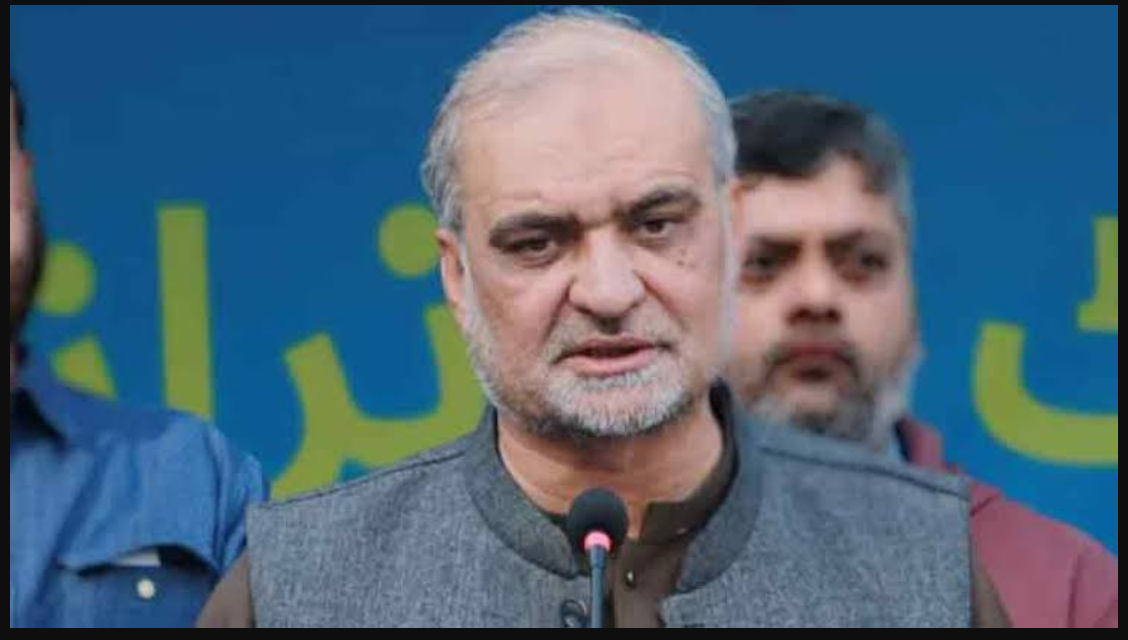

Ameer-e-Jamaat-e-Islami Pakistan, Hafiz Naeemur Rehman, has strongly criticised the government’s petroleum levy policy. He claimed the levy has placed a heavy financial burden on people instead of serving its original purpose.
Speaking at the Bano Qabil graduation ceremony in Multan, Hafiz Naeem questioned the government’s justification for rising fuel prices. He argued that attributing higher petrol prices to increasing global oil rates was misleading.
According to him, citizens continue to pay higher taxes without receiving improved public services.
Hafiz Naeem Questions Petroleum Levy
During his address, Hafiz Naeem said the petroleum levy was initially introduced to expand refinery and fuel storage capacity.
However, he claimed the policy had instead become a source of financial pressure for the public.
“The government has collected Rs. 8.5 trillion from the pockets of the people as petroleum levy,” he claimed.
He described the levy as a form of “exploitation” and criticised the government for continuing to impose additional financial burdens on citizens.
Claims Public Pays Rs125 Per Litre in Taxes
Hafiz Naeem also claimed that people are paying Rs125 in taxes on every litre of petrol.
According to him, Pakistanis are already contributing taxes through several other channels.
He said electricity bills, gas bills, mobile phone cards and food items all carry taxes that directly or indirectly affect consumers.
Furthermore, he argued that even those who are not formally registered taxpayers ultimately bear the tax burden through higher prices.
Criticism Over Government Spending
The Jamaat-e-Islami chief also questioned how public revenue is being utilised.
He accused the government of failing to fulfil its responsibilities despite collecting substantial tax revenue.
In addition, he claimed that Pakistan’s annual budget stands at Rs18 trillion.
According to Hafiz Naeem, nearly Rs8 trillion from that budget is spent on interest payments for foreign loans.
Concerns Over Rising Poverty
Hafiz Naeem further claimed that around 40 percent of Pakistan’s population is living below the poverty line.
He criticised the government for increasing taxes while, according to him, failing to improve public services.
The remarks came during his address to graduates in Multan, where he urged policymakers to reduce the financial burden on citizens and focus on providing better governance.
His comments add to the ongoing political debate over fuel taxation, public spending and the economic challenges facing Pakistan.

