

By Humaira Motala
KARACHI: For millions of teachers, clerks, nurses and daily-wage workers, owning a house has felt like a distant dream. Caught between skyrocketing rents and banks that rarely lend to them, they have spent years waiting for a break. Now, with the Prime Minister’s “Apna Ghar” scheme offering subsidized 20-year loans, that wait may finally be over — if the government can fix the loopholes that sank similar programs in the past.
With rents climbing and home ownership slipping further out of reach, the government’s new housing finance push is back in focus. The Prime Minister’s “Apna Ghar” housing scheme unveils a 20-year financing plan backed by Rs 71 billion in federal subsidies allocated in the budget.
The urgency is clear: Pakistan faces a housing shortfall of over 10 million units, with demand growing each year due to urbanization and population growth.
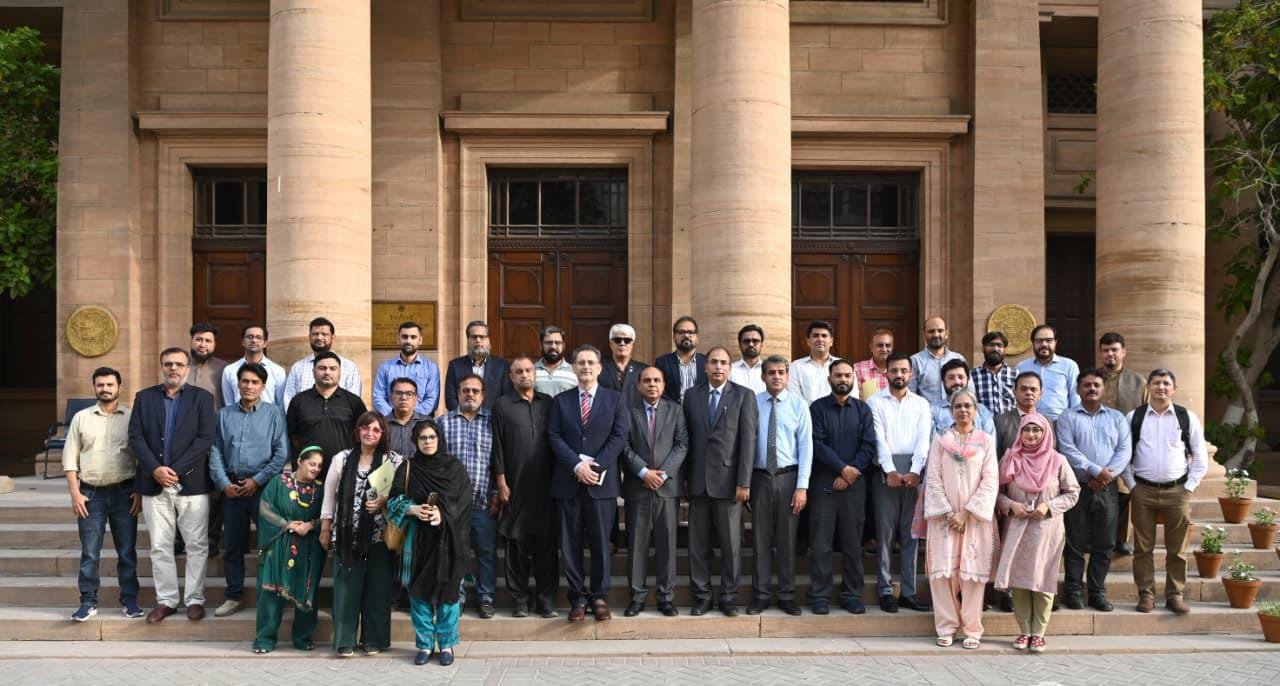
The State Bank of Pakistan arranged a workshop on the Prime Minister’s Housing Scheme — Wazir-e-Azam Apna Ghar Program — to roll out salient features including financing structure, loan amount, tenure, income requirements, and monthly installment.
According to SBP officials Ghulam Muhammad Abbasi, Executive Director, and Dr. Muhammad Saleem, Additional Director, the scheme aims to finance 150,000 houses by June 2027. Under the program, banks will provide loans of up to Rs 10 million for purchase of a ready-made house, flat, or plot, or for construction on a plot.
A house of up to 250 square yards and a flat of up to 1500 square feet will be eligible. The loan tenure is 20 years, with a fixed markup of 5% for the first 10 years.
Who can apply and how?
Salaried individuals can apply with a salary slip, while non-salaried applicants including shopkeepers and daily wage workers can use electricity bills, mobile top-ups, children’s fee challans or other expense receipts as income proof, the State Bank said.
An applicant can apply with 3 to 4 co-borrowers — father with sons, brothers with sisters, or husband with wife. The main applicant must not own any property; if found otherwise, the loan will be cancelled.
An online portal has been created for applications, and forms are also available at bank counters.
“Banks will not charge any processing fee, nor any penalty on balloon payment,” an SBP official added. “Banks will process an application in 15 days. For any complaint, applicants can lodge it on the Prime Minister’s portal against the bank or officer.”
To accelerate home ownership and boost construction, the government has expanded the scheme to include overseas Pakistanis. Overseas Pakistanis/Non-Resident Pakistanis holding NICOP/POC may also obtain financing. Participating Financial Institutions may also extend financing for private developer-led housing projects.
Housing: A basic need slipping away
For Pakistan’s lower and middle class, owning a home has become unaffordable. Rising property prices, inflation, and lack of access to formal credit have widened the 10-million-unit housing gap. Most families either live in rented accommodations, spending 40-50% of income on rent, or in informal settlements without basic facilities. For this segment, “Apna Ghar” could be the first real chance to move from rent to ownership — provided installments stay within budget.
The Benefits: Housing for the missing middle
1. Affordability: 5% fixed markup for 10 years is significantly lower than market mortgage rates.
2. Inclusion: Alternate income proof and NICOP/POC access opens doors for informal workers and overseas Pakistanis.
3. No hidden costs: Zero processing fee and a dedicated portal reduce bureaucratic hurdles.
4. Economic boost: Financing 1.5 lakh units will give a direct push to construction, cement, steel, and labor.
The Shortcomings and Challenges
The scheme may end up benefiting the middle class more than the poor it targets. Most low-income families live in katchi abadis with no legal land titles, which banks require. Without land regularization, the poorest remain excluded.
Other challenges:
1. Scale vs Need: 150,000 homes by 2027 address only 1.5% of the 10-million-unit shortage.
2. Bank appetite: Banks have historically avoided mortgage lending due to documentation and recovery risks.
3. Land and title issues: The scheme assumes legal plots, a major bottleneck in cities like Karachi.
4. Affordability ceiling: Rs 10 million cap and installments may still be unaffordable for the poorest.
5. Implementation: SBP’s 15-day timeline will be tested, as past schemes struggled with delays.
Skepticism on the ground
But for many, doubt runs deep.
“We pay Rs 25,000 rent every month. Owning a house feels like a dream,” said Ali, a private school teacher from Nazimabad. “Every time the government announces a scheme, I hear the same thing — in the end, the rich will take loans in the name of their drivers and peons. Let a few months pass. Then we’ll know if this system is transparent or just another test case.”
That reflects three questions: Will it reach the right people? Will the process be clean? Will the intent hold? With the scheme only a few months old, experts say implementation will be the real test.
Transparency concerns
Applicants and housing experts pointed out banks’ history of demanding informal payments to process files. With “Apna Ghar” relying on banks, many wonder how SBP will ensure it remains bribe-free and trackable.
The SBP Executive Director said an online portal has been launched and complaints can be registered directly with the Prime Minister’s or SBP portal. “Strict action will be taken against banks charging fees or demanding bribes,” he said.
Economic boom Apna Ghar can bring
Economists say the push can do more than provide roofs — it can revive construction and the economy. The sector contributes nearly 2.5% to GDP and employs over 8 million people directly. Every house is estimated to create 8-10 direct and 20-25 indirect jobs. With demand for 150,000 units against a backlog of 10 million, orders for cement, steel, bricks and labor are expected to rise. SBP notes housing has one of the highest fiscal multipliers. If targeted well, it could cut into the housing backlog while acting as a grassroots stimulus.
An opportunity For Shahbaz-led government to bridge the distrust
This is not the first low-cost housing program. A similar scheme launched years ago with fanfare failed to gain traction. Banks showed little interest, land acquisition stalled, and the process proved too complex. Thousands were left in limbo, raising questions about whether “Apna Ghar” will avoid the same fate.
For now, Ali and thousands like him are watching. “If a teacher can actually get a house through this scheme, then people’s distrust will be bridged.”
The writer is a senior journalist and columnist covering crime, law, social issues, governance, energy, health, literature, women and children’s rights across Pakistan’s leading English media houses.
Feedback: mediawomen2014@gmail.com

