
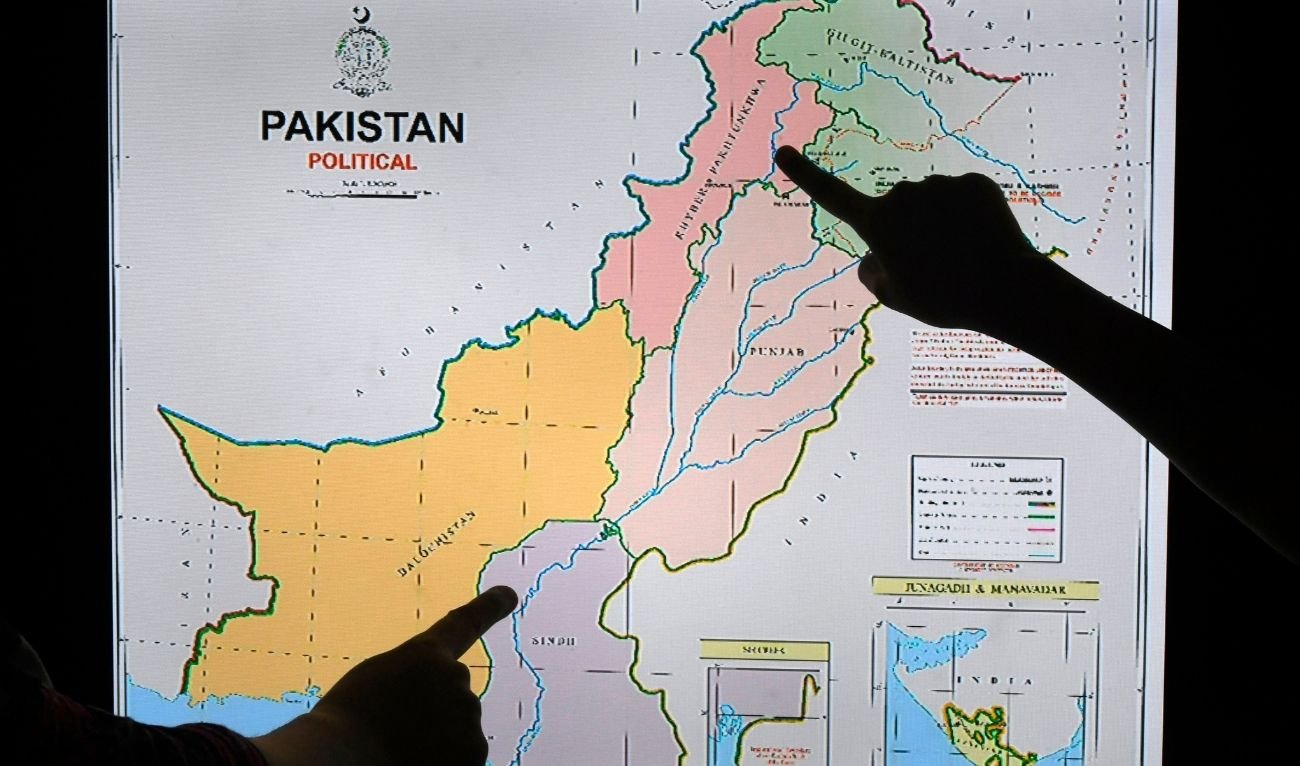

The debate over the creation of new provinces in Pakistan has intensified after Interior Minister Mohsin Naqvi said the final decision should reflect the will of the people.
Naqvi’s remarks have raised an important constitutional question: Can a referendum determine the creation of new provinces, or must the process strictly follow Parliament and the affected provincial assembly?
The issue has gained renewed attention amid discussions about a possible 28th Constitutional Amendment and proposals to restructure Pakistan’s administrative system.
Constitutional experts remain divided over the role a referendum could play. Most agree that public opinion could provide democratic legitimacy, but they stress that a referendum alone cannot create a new province.
Can a Referendum Create a New Province?
Article 48(6) of the Constitution allows the prime minister to seek a referendum on a matter of national importance.
Under the provision, the prime minister can refer the matter to a joint sitting of Parliament. If Parliament approves, the question can then be put before the public in a Yes-or-No referendum.
However, legal experts argue that this provision does not replace the constitutional procedure required to alter provincial boundaries.
Article 239 establishes the procedure for constitutional amendments. Where an amendment involves changing the limits of a province, approval by the relevant provincial assembly is constitutionally required.
Advocate Abdul Moiz Jaferii argued that Article 239(4) establishes a specific constitutional mechanism for changing provincial boundaries.
He said the provision effectively means that the boundaries of a province cannot be altered through a general referendum mechanism when the Constitution already provides a specific procedure.
According to Jaferii, a referendum could therefore establish public support for creating new provinces, but it could not legally bypass the constitutional amendment process.
He also questioned the need to divide provinces when stronger local governments could potentially improve administration without changing provincial boundaries.
Sindh Division Faces Strong Resistance
The debate has become particularly sensitive in Sindh, where proposals to divide the province have faced strong political opposition.
The Pakistan Peoples Party has consistently resisted proposals involving the division of Sindh and changes to the existing provincial structure.
Jaferii described the proposed division of Sindh as an extremely difficult political and constitutional challenge.
He argued that opposition would not come only from political parties. Public sentiment and the historical identity associated with Sindh could also become major obstacles.
The Sindh Assembly has already expressed opposition to proposals for dividing the province.
Naqvi’s latest comments came after strong resistance from the PPP to proposals involving new administrative units and possible changes to provincial autonomy.
His statement that the people would ultimately decide has therefore triggered speculation that the government could consider seeking public opinion through a referendum.
Political analyst Tahir Malik also suggested that Naqvi’s reference to the public could indicate movement towards such a mechanism.
He said creating new provinces through the existing constitutional framework would be difficult and that a referendum could potentially be used to determine public sentiment.
Experts Warn Against Bypassing Constitutional Process
Barrister Tariq Mahmood Khokhar said Pakistan’s constitutional structure differs significantly from countries where central legislatures have greater authority over internal boundaries.
He pointed out that in Pakistan, Parliament cannot independently alter provincial boundaries.
The relevant provincial assembly also has a constitutional role in the process.
Khokhar said there is no constitutional requirement for a national referendum before creating a new province.
However, he acknowledged that a transparent and credible referendum could provide democratic legitimacy and demonstrate public support.
At the same time, he warned against repeating controversial referendum practices associated with Pakistan’s political history.
He argued that any referendum must be conducted freely, fairly and transparently to have genuine democratic value.
Khokhar also questioned whether the current assemblies should undertake such a major constitutional restructuring.
He argued that if the legitimacy of existing political institutions is already being contested, a constitutional amendment passed under political pressure could face further criticism.
In his view, the question of creating additional provinces could instead be left to future legislatures elected through free and fair elections.
Governance Reform or More Provincial Capitals?
Another constitutional expert, Hafiz Ahsaan Ahmad Khokhar, said the debate should not focus solely on creating additional provinces.
He argued that the larger objective should be governance reform, decentralisation and improved public service delivery.
According to him, a referendum could be considered before any major constitutional amendment to understand public opinion about additional provinces, stronger administrative units and empowered local governments.
But he also stressed that public approval could not replace the constitutional procedure prescribed under Articles 238 and 239.
He said any restructuring must comply with the Constitution even if a referendum demonstrates strong public support.
Khokhar argued that creating new provinces should be based on practical considerations such as population, geography, accessibility, economic viability, equitable development, identity and political representation.
He also highlighted Article 140A, which requires provinces to establish local government systems and devolve political, administrative and financial authority to elected representatives.
In his view, Pakistan needs stronger local governments alongside any discussion about new provinces.
He said the country’s existing governance structure should also be examined in relation to legislative powers, resource distribution and intergovernmental coordination.
This includes constitutional arrangements involving provincial legislative authority, the Council of Common Interests and the National Finance Commission.
The objective, he said, should be to bring government closer to citizens while maintaining national unity and constitutional stability.
Fawad Chaudhry Questions Naqvi’s Position
Former federal minister Fawad Chaudhry criticised Naqvi’s remarks, describing his position as unclear and contradictory.
Chaudhry questioned how the government could move towards a referendum when no major political party appeared prepared to fully own the proposal.
He also questioned whether Naqvi was advocating stronger local governments or the creation of additional provinces.
His comments reflected the wider uncertainty surrounding the government’s proposed administrative reforms.
The debate has also drawn attention to examples from international cities, where elected local governments exercise significant administrative authority.
Critics argue that Pakistan’s governance problems may not necessarily require the creation of additional provinces.
Instead, they say stronger local institutions could address many administrative problems without triggering a politically sensitive debate over provincial boundaries.
Why the Debate Matters
Supporters of new provinces argue that Pakistan’s existing administrative structure has become difficult to manage because of population growth, geographic challenges and unequal development.
They believe smaller administrative units could improve representation, accelerate decision-making and bring government institutions closer to citizens.
Opponents, however, fear that provincial division could deepen political and ethnic tensions.
The debate is particularly sensitive in provinces where regional identity has strong historical and political significance.
The constitutional question adds another layer of complexity.
Even if public opinion strongly favours new provinces, constitutional experts maintain that the final process would still have to comply with the requirements of Article 239.
A referendum could therefore become a tool for measuring public sentiment and strengthening the democratic case for reform.
It would not, by itself, replace the constitutional approval process.
The government’s next steps could determine whether the issue develops into a formal constitutional reform process or remains a political debate.
For now, the central question remains unresolved: Will Pakistan seek public approval through a referendum before attempting to redraw its provincial map, or will the matter be left to Parliament and the affected provincial assemblies?

