
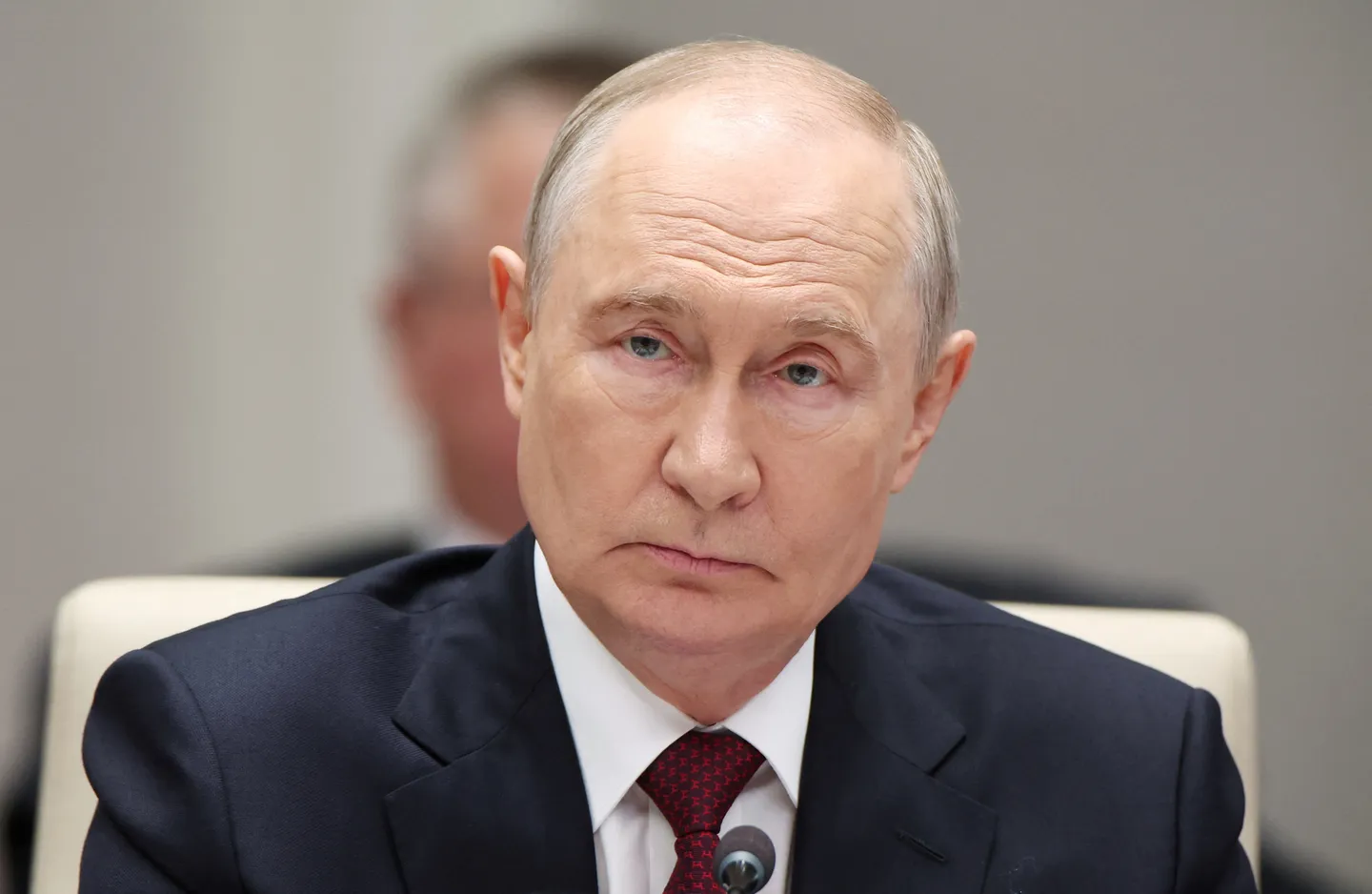

BISHKEK: Russian President Vladimir Putin said on Tuesday that the Shanghai Cooperation Organisation has become the world’s largest regional organisation, with its member states accounting for about half of the global population.
Speaking at the SCO summit in Bishkek, the Kyrgyz capital, Putin highlighted the organisation’s expansion and growing international influence since its establishment 25 years ago.
“The SCO today is in fact the largest regional organisation in the world, where half of the world’s population lives,” Putin said.
Moreover, he described the SCO as an increasingly influential centre within an emerging multipolar international system and said Moscow supported efforts to improve the organisation’s effectiveness.
Putin Calls for Stronger Trade Among SCO Members
Putin identified greater trade and economic cooperation among member countries as a key priority for the organisation.
Meanwhile, he highlighted the increasing use of national currencies for transactions between SCO economies as members seek to strengthen financial cooperation.
According to Putin, more than 98% of Russia’s payments in trade with other SCO countries now take place in national currencies rather than relying on foreign currencies for settlements.
Consequently, Moscow views expanding such arrangements as an important element of deeper economic integration within the organisation.
SCO Expands From Six Founding States to 10 Members
China, Russia, Kazakhstan, Kyrgyzstan, Tajikistan and Uzbekistan established the Shanghai Cooperation Organisation in 2001.
Since then, the organisation has expanded significantly. India and Pakistan joined as full members, followed by Iran and Belarus, bringing the SCO’s full membership to 10 countries.
Furthermore, its geographical reach now stretches across substantial parts of Eurasia and includes several of the world’s most populous countries.
Putin said the organisation had travelled a significant distance during its first quarter-century.
The latest summit comes as SCO governments seek to deepen economic cooperation, increase trade links and strengthen the organisation’s position within a changing international system increasingly characterised by competing centres of political and economic influence.

