
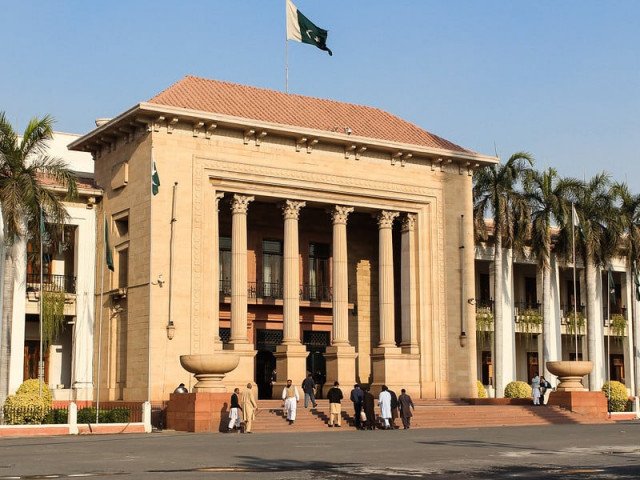

LAHORE: The Punjab Assembly passed the Punjab Anti-Terrorism (Amendment) Bill, 2026 on Monday amid strong opposition protests and a walkout following a heated debate over the legislation’s legal and constitutional implications.
Speaker Malik Muhammad Ahmad Khan ruled that the government could legally place the bill on the assembly agenda, citing Article 142 of the Constitution concerning criminal-law jurisdiction.
Defending the legislation, Khan referred to Pakistan’s heavy casualties during the war on terror and argued that inadequate witness protection had previously allowed terrorism suspects to escape prosecution.
Moreover, he urged opposition lawmakers to propose amendments rather than block the legislation.
Opposition Raises Fair-Trial and Political Victimisation Concerns
Opposition Leader Moin Riaz Qureshi described the legislation as “draconian” and alleged that the government could use it against political opponents, particularly PTI leaders and activists.
He also questioned a provision allowing a designated Grade-20 official to advise the Lahore High Court chief justice on whether cases should receive special security classification.
Meanwhile, opposition lawmaker Ahmar Rashid Bhatti argued that concealing or altering the identities and voices of judges, prosecutors, defence lawyers and witnesses could conflict with Article 10-A, which guarantees the right to a fair trial.
Bill Creates Special Security Case Mechanism
Following the debate, opposition lawmakers chanted slogans and walked out. Lawmaker Waqas Mann subsequently raised the issue of quorum, but treasury members gathered sufficient numbers to continue proceedings.
Consequently, with the opposition absent, the assembly rejected its proposed amendments and approved the bill.
The legislation seeks to insert a new Section 21AAA into the Anti-Terrorism Act, 1997.
Under the proposed framework, a designated authority could classify individual cases or categories of cases as “special security cases” when participants require extraordinary protection.
The government maintains that stronger safeguards are necessary in terrorism proceedings, while opposition lawmakers argue that the new powers could undermine transparency and constitutional protections.

