
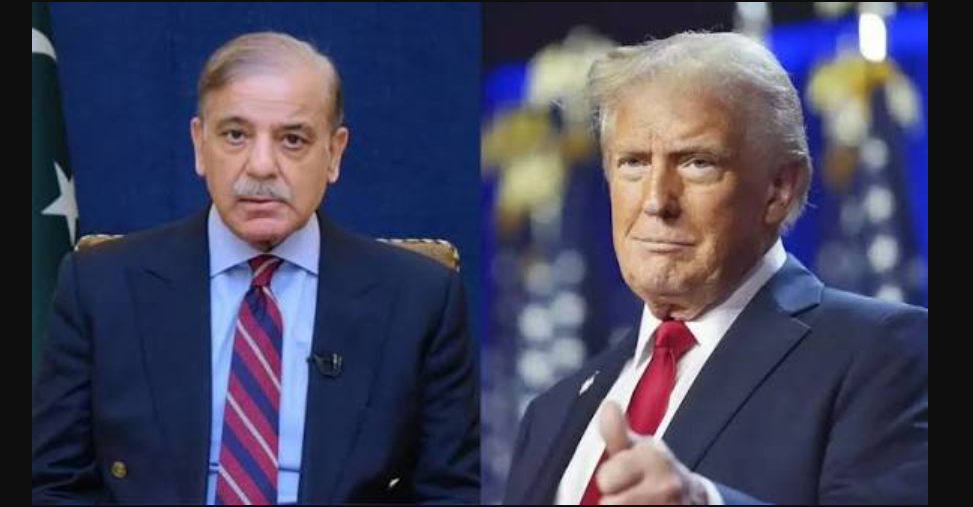

A potential breakthrough in the US-Iran peace negotiations has triggered conflicting claims across Washington, Tehran, and Islamabad. While US President Donald Trump announced a possible Sunday signing, Iranian officials denied the timeline, creating uncertainty over the final agreement.
The talks, mediated with Pakistan’s involvement, are being described as one of the most sensitive diplomatic efforts in recent years.
Trump Says Deal to Be Signed on Sunday
US President Donald Trump stated that a long-awaited agreement to end conflict in the Middle East would be signed on Sunday.
He also linked the deal to reopening the strategic Strait of Hormuz for global shipping.
Trump said:
“The Deal is scheduled to get signed tomorrow, and immediately after it is signed, the Hormuz Strait is OPEN TO ALL,”
He further indicated that the United States would handle Iran’s enriched uranium stockpile.
Trump stated:
“At the appropriate time, when all is calm, we will go in and get the Nuclear Dust, buried deep under the powerful sunken granite mountains, thanks to our beautiful B-2 Bombers and their brilliant pilots, and downblend and destroy it, whether in Iran, or the United States,”
He added that cooperation with Iran could continue in the future:
“We look forward to working with Iran, and the entire Middle East, long into the future.”
However, he also issued a warning over compliance:
“Hopefully, this process will all work out quickly, easily, and smoothly,”
and added:
“If it doesn’t, we have the ultimate alternative, hopefully never to be used again!”
Iran Rejects Sunday Signing Timeline
Iran’s foreign ministry rejected the claim that a signing would take place on Sunday.
Officials clarified that no final date has been agreed.
They said the signing could still take place in the coming days, but stressed that timing depends on further coordination.
Iran also highlighted caution due to what it described as hesitation from the other side.
Pakistan Confirms Progress in Negotiations
Earlier, Prime Minister Shehbaz Sharif confirmed that negotiations had reached an advanced stage.
He said Pakistan was preparing for electronic signing once the agreement is finalised.
He stated:
“We are closer to a peace deal than ever before.”
He further added:
“We are confident that this historic peace deal will form a strong foundation for lasting peace.”
Pakistan has played a mediating role in facilitating communication between both sides. Officials said continued engagement is aimed at preventing further escalation.
Trump Shares Shehbaz Sharif’s Message
In a notable development, Donald Trump reposted Prime Minister Shehbaz Sharif’s message on his platform. However, he did not add any personal comment.
The move highlighted Pakistan’s visibility in the ongoing diplomatic process. It also intensified global attention on the negotiations.
Strait of Hormuz and Military Tensions
Despite diplomatic progress, tensions continued in the Strait of Hormuz.
The United States reported intercepting multiple Iranian drones targeting commercial shipping routes.
US Central Command stated:
“US forces have downed all of them in recent hours as traffic flow through the strait continues unimpeded,”
It also confirmed Iranian drone activity:
“Iran had launched multiple one-way attack drones in an attempt to strike commercial ships transiting the Strait of Hormuz”.
The Strait remains a critical global energy corridor, and maritime security concerns remain high.
Conflicting Draft Terms and Nuclear Demands
Reports from both sides revealed sharp differences over the draft agreement. Iranian accounts suggested the deal includes lifting restrictions on ports and changes in Strait management.
US officials, however, stated that Iran must dismantle its nuclear programme and destroy enriched uranium stockpiles. They also insisted the Strait must reopen fully for global trade.
Iranian officials maintained that enrichment rights remain a key issue. They also rejected claims of full nuclear dismantlement.
Frozen Assets and Financial Disputes
Disagreements also emerged over frozen Iranian funds. Some Iranian reports suggested access to around $24 billion in frozen assets.
However, US officials rejected immediate financial releases. They stated that economic benefits would depend entirely on full compliance.
US Vice President JD Vance said:
“Iran is not receiving any cash, and no funds are being released for simply signing a deal or attending a meeting”.
He added:
“But, if Iran meets its obligations, then economic benefits will flow to them and to the entire region”.
Outlook
The US-Iran peace process remains in a critical and uncertain phase.
While diplomatic engagement continues, no final confirmation of signing has been issued.
Pakistan’s mediation has added momentum to the talks, but contradictions persist between Washington and Tehran.
A final agreement remains possible, but timing and terms are still under negotiation.

