
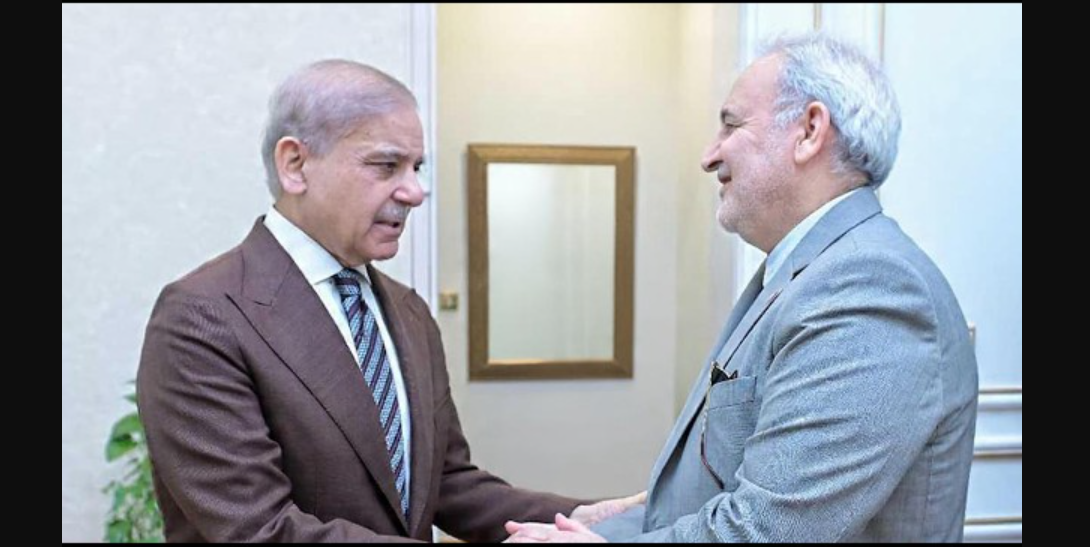

A significant diplomatic development is unfolding as Pakistan intensifies efforts to ease regional tensions. Prime Minister Shehbaz Sharif held a key meeting with Reza Amiri Moghadam to discuss peace initiatives and the evolving situation in the Middle East.
The meeting comes at a critical time. Earlier, Donald Trump announced an extension of the ceasefire with Iran. This decision followed a direct request from Pakistan’s leadership.
Pakistan Steps Forward as a Mediator
Pakistan has increasingly positioned itself as a mediator in the ongoing crisis. During the meeting, both sides reviewed diplomatic efforts aimed at reducing tensions. They also discussed ways to support dialogue between conflicting parties.
At the same time, Pakistan has engaged with global stakeholders. Its role in facilitating communication has gained attention in recent days. Consequently, the country’s diplomatic involvement appears to be expanding.
Trump Extends Ceasefire After Pakistan’s Request
In a statement shared on social media, Trump confirmed his decision to delay further military action. He stated that the United States agreed
“to hold our Attack on the Country of Iran until their leaders and representatives can come up with a unified proposal.”
This announcement followed Pakistan’s appeal for more time to pursue negotiations. The move signals a temporary pause in escalating hostilities.
Moreover, Trump linked the decision to internal instability within Iran. He remarked that the situation in the country remains uncertain. However, the ceasefire extension offers a narrow window for diplomacy.
A Region Under Strain
The conflict, which began on February 28, has caused widespread devastation. Thousands of lives have been lost across the Middle East. As a result, humanitarian concerns continue to rise.
In addition, the global economy has felt the impact. The near closure of the Strait of Hormuz disrupted vital oil and gas supplies. This waterway remains crucial for international energy markets.
Consequently, uncertainty in the region has triggered economic instability. Markets have responded sharply to ongoing developments.
Naval Blockade Remains a Major Obstacle
Despite the ceasefire extension, tensions have not fully eased. The United States continues its naval blockade of Iran’s ports and coastline.
Iranian authorities view this blockade as an act of war. Therefore, it remains a key point of disagreement. This issue has complicated efforts to move forward with negotiations.
Uncertain Path to Peace Talks
Diplomatic efforts now focus on restarting formal negotiations. Islamabad is expected to play a central role in facilitating the next round of talks.
However, both sides have shown hesitation. At times, uncertainty has delayed decisions on sending representatives. Still, the ceasefire extension creates an opportunity to rebuild momentum.
A Fragile Yet Crucial Moment
This moment represents both risk and opportunity. On one hand, tensions remain high. On the other, diplomatic channels are still open.
Pakistan’s role could prove decisive in shaping the outcome. If talks succeed, they may prevent further escalation. However, failure could deepen instability across the region.
For now, the focus remains on dialogue. The coming days will determine whether this pause leads to lasting peace or renewed conflict.

